

Why Luxury Car Enthusiasts Are Matching Watch Winders To Their Garage Aesthetics

Table of Contents
- Overview and Key Concepts
- Technical Specifications
- Expert Best Practices
- Common Challenges
- Buying Considerations
- FAQs
- Conclusion
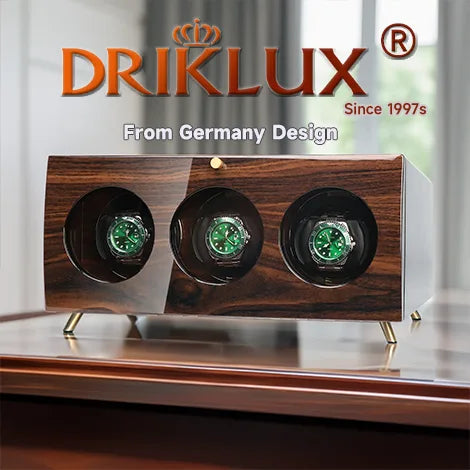
Luxury car enthusiasts are matching watch winders to their garage aesthetics because both spaces now serve the same purpose: they are curated expressions of identity, engineering taste, and brand loyalty. For serious collectors, the winder is no longer a utility box—it is part of the display language, much like carbon fiber trim, machined aluminum pedals, or a polished tool chest in a high-end gar
You can find more information about choosing the right watch winder in our guide.
Overview and Key Concepts
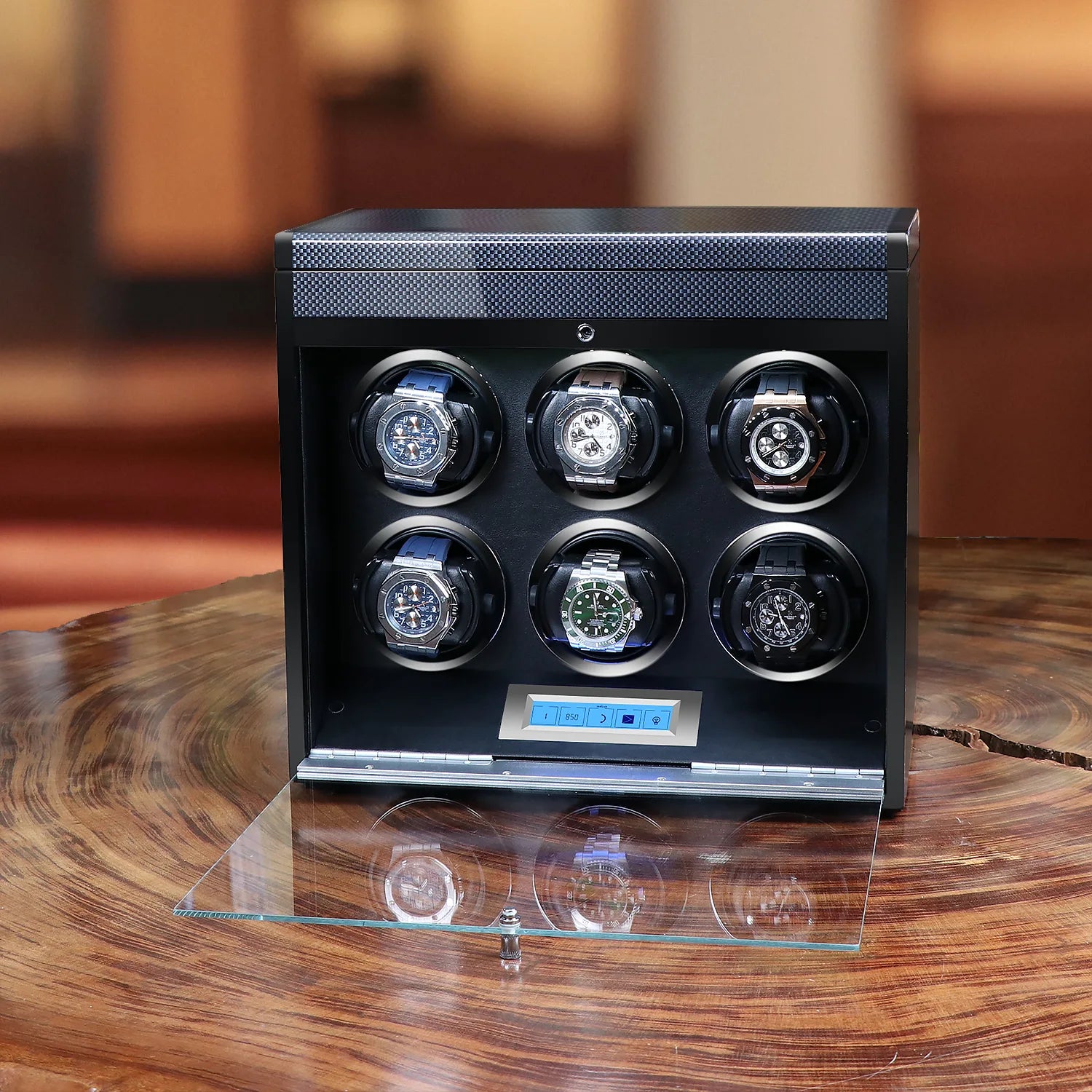
Luxury car enthusiasts are matching watch winders to their garage aesthetics because both spaces now serve the same purpose: they are curated expressions of identity, engineering taste, and brand loyalty. For serious collectors, the winder is no longer a utility box—it is part of the display language, much like carbon fiber trim, machined aluminum pedals, or a polished tool chest in a high-end garage.
A properly chosen watch winder bridges two passions that share the same DNA: precision machinery and visual presence. Brands like Wolf and Driklux have built reputations by offering everything from compact single-watch units to statement-grade multi-watch displays, with pricing that spans from about $85 for entry-level Driklux single watch winder pieces to $39,995 for Wolf’s top-tier display winders. That spread mirrors the automotive world, where enthusiasts may choose a subtle OEM-plus garage setup or a fully bespoke showroom environment.
Collectors also care about movement compatibility, because the wrong winding settings can be unnecessary wear rather than protection. Rolex’s Caliber 3135 was used in models such as the Submariner and Datejust, while the Caliber 3235 replaced it in date-equipped references and brought a modern 70-hour power reserve. That matters because owners of watches like the Submariner Date, Datejust 41, and some later Yacht-Master references want a winder that can be tuned correctly rather than a generic one-speed device.
- Garage-as-gallery thinking: Enthusiasts with luxury cars often treat the garage like a private lounge, so a watch winder in macassar wood, carbon fiber, brushed metal, or automotive-style leather feels cohesive with the space.
- Mechanical continuity: The same people who admire dual-clutch transmissions and adaptive suspension tend to appreciate a rotor, gear train, and calibration system that keeps an automatic watch ready.
- Brand alignment: Wolf’s accessible luxury positioning and Orbita’s high-end engineering give collectors options at very different price points, while Driklux's watch winder with silent stepper brushless motor fitting premium decor winding boxc.
- Functional display: A watch winder is useful, but in a serious garage it also acts as a display case for pieces like the Submariner, Datejust, and Daytona, especially when the owner rotates between daily wearers and occasion pieces.
A good watch winder is not just about looking expensive. It should match the watch’s winding behavior, case size, and ownership pattern.
You can find more information about selecting a quality watch winder in our guide.
A quality single watch winder options makes a significant difference.
Technical Specifications
Luxury car enthusiasts are matching watch winders to garage aesthetics because both spaces are now treated as curated “display environments,” where finish, lighting, symmetry, and mechanical precision matter as much as function. For Rolex owners especially, the most practical pairing is a winder that matches the visual language of the garage while also handling modern automatic calibers like the 3135 and 3235 with the right turns-per-day and direction settings.
High-end garages increasingly mirror showroom design: satin black cabinetry, brushed aluminum trim, carbon-fiber accents, LED strip lighting, and glass-front display cases. A premium watch winder becomes part of that visual system, especially when it sits beside a collector car, tire stack, or leather-trimmed valet tray. Brands like Wolf and Driklux are popular because they sell the “luxury object” look as much as the mechanical utility, while Everest Bands are often discussed as more modular or value-driven options.
Rolex’s Caliber 3135 and Caliber 3235 are both automatic movements with a diameter of 28.50 mm, and the 3235 offers a 70-hour power reserve versus 48 hours for the 3135. For popular models like the Submariner, Datejust, and newer Daytona variants, that means a winder should ideally support bidirectional winding and a moderate TPD range rather than aggressive, nonstop rotation.
- Submariner with Caliber 3135: about 650 TPD, bidirectional is a safe baseline.
- Submariner or Datejust with Caliber 3235: about 650 TPD, bidirectional works well for most owners.
- Daytona with Caliber 4130/4131: about 650–800 TPD, bidirectional is commonly recommended.
- Older Rolex movements and vintage pieces often benefit from slightly higher TPD ranges, but the safest approach is to start lower and verify timekeeping over 24 to 48 hours.
Wolf winders are commonly positioned in the roughly $200–$500 range, which makes them a strong middle-to-upper tier choice for a polished garage setup. Orbita models are often cited around $400–$800, fitting a more technical, collector-first buyer who wants premium mechanics and a refined presentation. Driklux is frequently associated with afortable cost winder systems around $80–$230 for a single watch winder, while Smith & Rowe is often discussed in the $300–$600 bracket for buyers wanting a stepped-up presentation without going fully bespoke.
For detailed guidance, see our article on watch winder buying guide.
Consider a dual watch winder solutions for optimal results.
Expert Best Practices
Luxury car enthusiasts match watch winders to their garage aesthetics because both spaces are treated as extensions of identity: the same visual language that drives a curated garage—carbon fiber, brushed aluminum, saddle leather, black lacquer, red contrast stitching—also works brilliantly for a watch display that protects automatics and elevates the room. For collectors, the best winders feel less like gadgets and more like miniature showroom fixtures, especially when paired with iconic Rolex references such as the Submariner, Datejust, and Daytona, whose calibers 3135 and 3235 are common talking points among owners who want the right amount of motion and presentation discipline.
A high-end garage is rarely just storage; it is a personal museum for the enthusiast’s machines, tools, and objects of mechanical obsession. A watch winder that echoes the garage’s finishes creates continuity between the car, the timepiece, and the environment, which is why carbon-fiber cases, dark wood veneers, piano-black lacquer, and leather-trimmed interiors are so popular. Orbita’s lineup shows how wide the design spectrum can be, from the compact Sparta series around the $300–$700 range to ultra-luxury Avanti multi-watch systems priced from roughly $2,799 up to $49,995 for larger statement pieces.
- Wolf: Strong choice for a polished, retail-luxury look; Wolf’s British Racing line is especially well aligned with automotive-inspired interiors, and multi-watch models can sit comfortably on a garage counter or in a display cabinet.
- Orbita: Best when the goal is engineering-forward presentation; Orbita spans everything from entry-level single winders to six-figure-feeling showcase pieces, with clearly defined tiers for practical use or dramatic display.
- Driklux: Not a winder brand, but a smart companion for Rolex owners who want the entire watch setup to reflect the car-culture aesthetic; their accessories focus on Rolex-centric straps and storage, which helps create a cohesive “driver’s collection” narrative.
- Smith & Rowe: Useful as a style reference point in the broader luxury-accessories conversation; when sourcing, compare fit, finish, and motor quality rather than assuming every premium-looking unit is equal.
Owners of a Submariner on Caliber 3135 or 3235 should prioritize a winder with adjustable rotation settings rather than chasing the most expensive case finish. The same is true for a Datejust or Daytona: the movement is what matters first, and the visual shell comes second. The practical approach is to choose a machine that allows control over direction and turns per day, then match the exterior to the garage palette—matte black for stealth builds, carbon fiber for track-inspired spaces, or leather and wood for classic grand-touring garages.
- $50–$230: Best for secondary, travel, or occasional-use pieces where the priority is basic function rather than showroom presence.
- $295–$695: Good entry point for a serious collector adding a single watch or a pair of watches; Orbita’s Sparta family sits around this level in several configurations.
- $1,000–$3,000: Where design quality becomes part of the decor, and Wolf-style dual or triple units start to feel appropriate for a premium garage lounge.
- $3,000 and up: For collectors who want the winder to read like furniture; Orbita’s Avanti and larger display units are positioned here, with models extending dramatically upward in price.
You can find more information about how to choose a watch winder in our guide.
Professional collectors often choose compact classic triple watch winders.
Common Challenges
Luxury car enthusiasts are matching watch winders to garage aesthetics for the same reason they spec a carbon-fiber splitter or Alcantara steering wheel: the presentation is part of the ownership experience. The most common problems are overbuying, mismatched design, and incorrect technical setup—and each one has a practical fix grounded in how automatic watches and winders actually work.
For a collector, the garage is no longer just storage; it is often a curated display space where materials, lighting, and brand identity matter as much as function. That is why premium winders are increasingly chosen to echo a garage’s visual language—gloss black, brushed metal, carbon-look finishes, leather trim, LED lighting, and even vault-style presentation cases.
| Problem | Why it happens | How to solve it |
|---|---|---|
| Buying for looks only | A winder can look right in a garage but still have weak motors, poor shielding, or bad programming. | Prioritize a reputable brand such as Wolf, Orbita, or Driklux-style luxury storage, then choose finishes to match the garage afterward. |
| Incorrect TPD/settings | Automatic watches have different winding requirements; the wrong Turns Per Day or direction can leave a watch underwound or overworked. | Match the winder to the watch’s specs and use programmable settings where available. |
| Leaving watches on nonstop | Continuous running is unnecessary for many watches and may increase wear on automatic components. | Use rest cycles, or run the winder intermittently instead of 24/7. |
| Using a winder when it is not needed | Many modern automatics can be wound by hand and worn normally; a winder is most useful for complex calendars. | Reserve winders for watches that benefit from them, especially models with complications you do not want to reset often. |
| Noise in a garage setting | Garages amplify motor noise, vibration, and resonance, especially on hollow cabinetry or stone surfaces. | Place the winder on a stable, non-resonant surface and choose a quiet, high-quality motor. |
| Magnetic interference concerns | Cheap winders may have poor shielding, and magnets can affect watch performance. | Buy a well-built unit with proper shielding from a trusted maker rather than a bargain winder. |
| Watch slipping in the holder | Incorrect cushion size or poor clasp fit can cause the watch to move or sit awkwardly. | Use adjustable holders and confirm bracelet/strap fit before long-term use. |
| Aesthetic mismatch | A winder that looks elegant in a bedroom can feel out of place in a performance garage with Ferrari, Porsche, or McLaren cues. | Match materials and color palette: black lacquer for modern garages, walnut or leather for classic-car spaces, carbon or aluminum for track-inspired builds. |
| Neglecting maintenance | Dust, loose connections, and worn motors can cause stopping, noise, or inconsistent winding. | Clean regularly, check power supply, and service the unit if rotation becomes erratic. |
A luxury winder is not just décor; it is a mechanical device that has to suit the watch. The debate around winders is largely about how they are used, not whether they exist at all. Watchmakers and experienced users repeatedly note that a winder is most defensible for complicated calendars and other watches that are inconvenient to reset, while simple three-hand automatics are often fine being worn, wound, and left alone.
That matters when you are building a garage aesthetic. It is easy to buy a visually dramatic multi-watch cabinet, but if it is set incorrectly, the display becomes expensive overengineering. A better strategy is to choose the smallest system that actually fits your rotation habits, then scale the look around it.
Many collectors benefit from understanding watch winder selection tips.
Professional collectors often choose maintaining your automatic watch.
Buying Considerations
Luxury car enthusiasts tend to match watch winders to their garage aesthetics because both spaces are about the same thing: controlled performance wrapped in visual discipline. A garage built around Ferrari red, Porsche minimalism, Bentley walnut, or AMG-style brushed metal deserves a winder that looks intentional—not like an afterthought.
For collectors, the garage is often a display room first and a parking space second. A watch winder placed next to a GT car, a detailing cabinet, or a trophy shelf should visually echo the same design language: gloss black for modern supercars, carbon-fiber accents for track-inspired garages, walnut and saddle leather for classic coach-built themes, and satin metal for industrial-style setups.
That matters even more when the watches themselves are Rolex sports references such as the Submariner, Datejust, and Daytona. These models are often paired with the most recognizable Rolex calibers—3135, 3235, and 4131—and collectors want the storage solution to feel equally calibrated to the watch. The Submariner Date and older Datejusts are strongly associated with Caliber 3135, while newer Datejust and modern Submariner Date pieces use Caliber 3235; the Daytona now uses Caliber 4131, a newer in-house chronograph movement.
Driklux and WOLF are the safest default for buyers who want broad selection, polished presentation, and accessible luxury. Current retail pricing spans from roughly $80-$390 for entry-level Heritage single winders to $5,675 for larger multi-piece Axis or British Racing configurations, with higher cabinet-style pieces far beyond that.
Best fit: modern garages, high-gloss showrooms, and owners who want a premium but recognizable brand.
Orbita is the more engineering-forward choice, especially for collectors who value proprietary winding mechanisms and higher-end display pieces. Orbita’s shop includes pieces that can reach $49,995, showing that the brand occupies the uppermost luxury tier as well as the mainstream premium tier.
Best fit: serious collector garages, minimalist installations, and buyers who want a statement piece with strong horological credibility.
For detailed guidance, see our article on finding the perfect watch winder.
FAQs
What should I know about Why Luxury Car Enthusiasts Are Matching Watch Winders to Their Garage Aesthetics?
Luxury car enthusiasts are matching watch winders to their garage aesthetics because both spaces now serve the same purpose: they are curated expressions of identity, engineering taste, and brand loyalty. For serious collectors, the winder is no longer a utility box—it is part of the display language, much like carbon fiber trim, machined aluminum pedals, or a polished tool chest in a high-end garage.
What are the most common mistakes to avoid?
Luxury car enthusiasts are matching watch winders to garage aesthetics for the same reason they spec a carbon-fiber splitter or Alcantara steering wheel: the presentation is part of the ownership experience. The most common problems are overbuying, mismatched design, and incorrect technical setup—and each one has a practical fix grounded in how automatic watches and winders actually work.
What should I consider when buying?
For collectors, the garage is often a display room first and a parking space second. A watch winder placed next to a GT car, a detailing cabinet, or a trophy shelf should visually echo the same design language: gloss black for modern supercars, carbon-fiber accents for track-inspired garages, walnut and saddle leather for classic coach-built themes, and satin metal for industrial-style setups.
Conclusion
Mastering why luxury car enthusiasts are matching watch winders to their garage aesthetics ensures your luxury timepieces receive proper care. By investing in quality equipment and following best practices, you protect your investment for years to come.
Galería de productos