


Grande Sonnerie And Minute Repeaters: The Absolute Necessity Of Constant Mainspring Tension

Table of Contents
- Overview and Key Concepts
- Technical Specifications
- Expert Best Practices
- Common Challenges
- Buying Considerations
- FAQs
- Conclusion
For serious collectors, grande sonnerie and minute repeater watches matter because they are among the most mechanically demanding complications in horology, and they depend on carefully managed mainspring energy to strike reliably and clearly. The key takeaway is simple: if the movement is not kept within its optimal energy window, chiming quality, timing stability, and overall reliability can all
You can find more information about choosing the right watch winder in our guide.
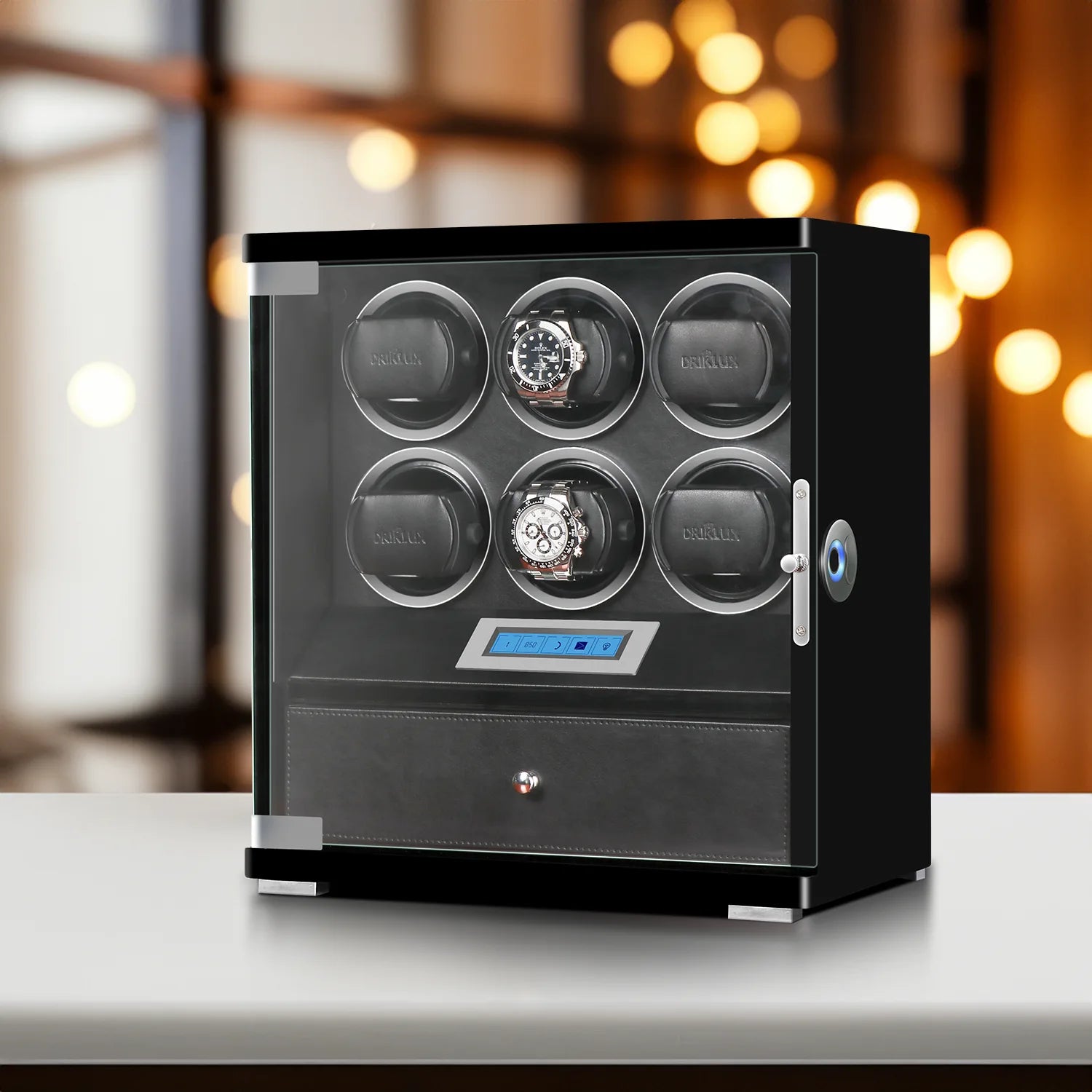
Overview and Key Concepts
For serious collectors, grande sonnerie and minute repeater watches matter because they are among the most mechanically demanding complications in horology, and they depend on carefully managed mainspring energy to strike reliably and clearly. The key takeaway is simple: if the movement is not kept within its optimal energy window, chiming quality, timing stability, and overall reliability can all suffer.
A grande sonnerie is not just a watch that “rings on demand.” It automatically strikes the hours and quarters as time passes, which means the chiming train must be ready at all times and cannot rely on a single brief burst of stored energy the way a basic minute repeater does. That is why many high-level sonnerie constructions use separate mainspring barrels for the going train and the striking train, with the striking barrel wound through the crown or dedicated winding system.
Minute repeaters are slightly different: they are manually activated, but the strike train still needs a properly charged spring to deliver the full sequence of low tones for hours, mixed tones for quarters, and higher tones for minutes. If tension is too low, the hammers can lose power, the cadence can weaken, and the clarity of the chime can drop noticeably.
One practical example is F.P. Journe’s Grande Sonnerie, which uses a single mainspring system designed to provide 24 hours of grand strike capability and 48 hours of movement autonomy. Patek Philippe’s Ref. 6301P uses two tandem-connected twin mainspring barrels, and the four mainsprings include slip bridles to prevent over-tensioning. That is a good illustration of how serious sonnerie watches are engineered around energy management first, aesthetics second.
The most important thing to understand is that these watches are not meant to be treated like ordinary automatics. Sonnerie and repeater mechanisms are sensitive to the state of wind, and their performance is tied directly to how much energy is available in the barrels. In collector terms, that means:
For detailed guidance, see our article on selecting a quality watch winder.
Professional collectors often choose single watch winder options.
Technical Specifications
Grandes sonneries and minute repeaters are not “must-have” complications for a winder in the casual sense, but they do demand disciplined handling: they are either manually wound, or they rely on exact state-of-wind and timing behavior that makes inconsistent power management a real issue. Patek Philippe’s Reference 6301P, for example, uses a manually wound movement; its strikework must be wound separately, and when fully wound the grande sonnerie has a 24-hour power reserve, while the minute repeater can be actuated on demand via the pusher in the winding crown.
For a premium watch-winder article, the key point is that the same “set-it-and-forget-it” thinking that works for a Rolex Submariner or Datejust does not translate cleanly to high-complication striking watches. Rolex movements such as Caliber 3135 and 3235 are associated with models like the Submariner Date, Datejust, Sea-Dweller, and Yacht-Master, with the 3135 powering older generations and the 3235 powering modern ones. Those references matter because they are typical examples of watches that benefit from a winder’s rotation logic, while a grande sonnerie or minute repeater often needs the owner to respect its winding architecture rather than continuously chasing “full” tension.
A grande sonnerie is designed to strike the hours and quarters automatically, so its strike train must remain in a stable energy band to avoid weak or irregular strikes. In Patek Philippe’s Reference 6301, the user instructions explicitly distinguish between the movement power reserve and the strikework power reserve, and note that the strikework mechanism should be wound until its indicator reaches the topmost position. That separation is the technical lesson collectors should understand: in a striking watch, energy management is not just about keeping the timekeeping train running, but about preserving strike amplitude and consistency.
A minute repeater is simpler in use but more demanding in execution. The repeater is activated only when needed, and the watch should not be manipulated while the striking sequence is running or for 30 seconds afterward. For owners, that means the “constant tension” idea is really about avoiding low-energy edge cases, not forcing the watch to sit at maximum tension at all times.
- Manual-wind grand complications: do not assume a standard automatic winder is the right answer; many grande sonnerie and minute repeater pieces are manually wound and require the owner to follow the manufacturer’s winding protocol.
- Automatic Rolex sport and dress models: a programmable winder is appropriate for models using Caliber 3135 or 3235, including the Submariner Date, Datejust, Sea-Dweller, and Yacht-Master families.
- Modern Rolex families: the 3235 is the current-generation date movement for the modern 3-hand sport line, while the 3230 handles no-date models and the 3285 handles GMT variants.
- If you are covering “collector essentials,” a winder is more useful for a Submariner Date 126610, Datejust 41 126334, or older 116610/116610LN-type pieces than for a hand-wound repeater that should be controlled by its owner and maker instructions.
You can find more information about optimal TPD settings for your watch in our guide.
A quality watch winder safe options makes a significant difference.
Expert Best Practices
Grande sonnerie and minute repeater watches are not “set it and forget it” complications; they reward a consistently wound movement, careful handling, and storage that avoids letting the barrel sit near the weak end of its torque curve. For collectors, the practical takeaway is simple: keep these watches at a healthy state of wind, and use a quality winder only when the movement is an automatic and the brand specifically supports that approach.
A repeater’s choreography depends on stable power delivery. When the mainspring is weak, the train can lose amplitude, chiming can become less crisp, and some pieces are designed to avoid being triggered when the power reserve is too low. One current Credor instruction manual explicitly recommends that the mainsprings be sufficiently wound before the minute repeater is activated, and warns to rewind if the mainsprings are nearly unwound. Patek Philippe’s manual for its minute repeater shows the same philosophy: wind gently and uniformly, stop when the crown’s clicks indicate full tension, and do not force the mechanism at the end of winding.
For a collector, that means the safest habit is not “wind it occasionally,” but “keep it comfortably charged.” That is especially true for high-complication pieces where the repeater mechanism should never be asked to perform on a tired barrel.
- Keep the watch near full wind when you plan to use the chiming function.
- Wind slowly and stop at the point where resistance or crown clicks indicate the watch is fully wound.
- Do not force the crown at the end of winding; some watches use torque-limiting or dynamometric systems to prevent damage.
- Engage the repeater only when the watch has adequate power reserve.
- Avoid letting the watch sit dormant until the mainspring is nearly exhausted before checking the time or chiming it.
A premium winder for a complicated automatic should prioritize:
- Low vibration
- Gentle, consistent rotation
- Programmable turns per day where possible
- Quality watch cushions and secure fit
- Reliable power options for long-term storage
Many collectors benefit from understanding watch winder buying guide.
Professional collectors often choose quality single watch winders.
Common Challenges
A grande sonnerie or minute repeater is unforgiving because it depends on predictable mainspring torque: if power drops, chime amplitude, timing, and sequence accuracy can suffer or the mechanism may stop altogether. The practical answer is disciplined winding, correct use, and avoiding any behavior that drains or shocks the strike train at the wrong moment.
A minute repeater is usually not triggered by the timekeeping train alone; it uses a dedicated striking mechanism, and many repeaters use a separate mainspring or energy path for the hammers so the timekeeping balance is not robbed of power during chiming. A grande sonnerie is even more demanding because it chimes automatically at set intervals and therefore must store enough energy internally to keep striking without user input.
That is why sonnerie movements often need:
- a longer mainspring in the chiming barrel,
- a dedicated barrel or second power source,
- and safety mechanisms to prevent damage when functions overlap.
| Problem | What causes it | What it leads to | How to solve it |
|---|---|---|---|
| Weak or uneven chimes | Low mainspring tension or insufficient stored striking power | Soft, inconsistent sound; incomplete strike sequence | Keep the watch properly wound and avoid running the power reserve too low before expecting reliable chiming. |
| Incorrect strike sequence | Manipulating the repeater at the wrong time or while the sequence is partially engaged | Wrong count of hours, quarters, or minutes | Use the repeater only as intended; modern pieces often add blocking or deferment systems to prevent overlap damage. |
| Power reserve depletion | Grande sonnerie uses power continuously because it chimes in passage | The watch stops chiming until rewound | Rewind more frequently and understand the watch’s sonnerie reserve; some modern grande sonneries have relatively limited autonomous striking endurance. |
| Damage from improper operation | Older repeaters could be manipulated incorrectly or the slider could be released before full cocking | Broken parts, partial chiming, or mis-strikes | Prefer modern sonneries with integrated safety systems, and have vintage pieces handled only by specialist watchmakers. |
| Timing interference | Chiming draws sudden energy from the mechanism | Timekeeping can be disturbed during strike events | Choose movements engineered with separated or buffered strike energy paths. |
| Phantom quarters / awkward transitions | Design gaps around the quarter-hour change | A slightly awkward audible pause | Modern calibers may eliminate this by refining the logic and sequencing of the strike train. |
The biggest real-world mistake is assuming a sonnerie or repeater will sound correctly when the mainspring is near exhaustion. Because striking requires a significant burst of energy, the result can be weak hammer action or incomplete sound if reserve is low.
Many collectors benefit from understanding how to choose a watch winder.
A quality 4 watch winder case efficient maintenance durability makes a significant difference.
Buying Considerations
Grandes sonneries and minute repeaters are among the most demanding mechanical complications, and they reward the collector who treats consistent power delivery as non-negotiable. For a buying guide, the key question is not just “which winder is best,” but “which setup minimizes friction, slipping, and unnecessary wear while keeping a complicated movement ready when you need it.”
A grande sonnerie or minute repeater depends on highly controlled energy release. These watches can be extremely sensitive to inconsistent torque because chiming performance, strike clarity, and reserve stability all depend on a predictable power curve.
For collectors, that means:
- Avoid letting the watch sit in a low-tension state for long periods.
- Prefer a winder that can maintain reliable rotation cycles without over-winding.
- Favor gentle, repeatable motion over aggressive, high-speed programs.
- Keep servicing discipline strict; chiming complications are not forgiving of dried lubricants or worn hammers, racks, and governors.
For complicated watches, the best practical features are:
- Adjustable TPD so you can match the movement’s needs.
- Bidirectional rotation for broad compatibility.
- Quiet, low-vibration motors to reduce mechanical stress.
- Secure watch cushions or modules so the watch does not shift.
- Programmable rest cycles to avoid unnecessary continuous motion.
- Build quality over gimmicks; leather, wood, and strong internal hardware matter more than flash.
Here’s the practical collector view of the brands you asked about:
Many collectors benefit from understanding proper turns per day configuration.
FAQs
What should I know about Grande Sonnerie and Minute Repeaters?
For serious collectors, grande sonnerie and minute repeater watches matter because they are among the most mechanically demanding complications in horology, and they depend on carefully managed mainspring energy to strike reliably and clearly. The key takeaway is simple: if the movement is not kept within its optimal energy window, chiming quality, timing stability, and overall reliability can all suffer.
What are the most common mistakes to avoid?
| Problem | What causes it | What it leads to | How to solve it |
|---|---|---|---|
| Weak or uneven chimes | Low mainspring tension or insufficient stored striking power | Soft, inconsistent sound; incomplete strike sequence | Keep the watch properly wound and avoid running the power reserve too low before expecting reliable chiming. |
| Incorrect strike sequence | Manipulating the repeater at the wrong time or while the sequence is partially engaged | Wrong count of hours, quarters, or |
What should I consider when buying?
Grandes sonneries and minute repeaters are among the most demanding mechanical complications, and they reward the collector who treats consistent power delivery as non-negotiable. For a buying guide, the key question is not just “which winder is best,” but “which setup minimizes friction, slipping, and unnecessary wear while keeping a complicated movement ready when you need it.”
Conclusion
Mastering grande sonnerie and minute repeaters: the absolute necessity of constant mainspring tension ensures your luxury timepieces receive proper care. By investing in quality equipment and following best practices, you protect your investment for years to come.
Further Reading
For deeper understanding of the topics covered in this guide, explore these authoritative resources:
- Introducing: The Greubel Forsey Grande Sonnerie — Hodinkee
- Grand Complications Grande Sonnerie ref. 6301P-001 — Patek Philippe Official
- DOC Grande Sonnerie ANG — fpjourne.com
Galería de productos