

Friction And Viscosity: Why 650 Tpd Is Often The Magic Number For Eta 7750 Movements

Table of Contents
- Why TPD and Winding Direction Matter
- Exact TPD and Direction Requirements
- Setting Up Your Watch Winder Correctly
- Common Winder Setup Mistakes
- Choosing the Right Winder for Your Watch
- FAQs
- Conclusion
Turns Per Day (TPD) is the measure of how much a watch winder rotates in 24 hours; for an ETA 7750, the critical variables are direction and effective turns delivered to the rotor. The 7750 family is widely treated as a unidirectional, clockwise-winding chronograph, so a winder set to the wrong mode can spin all day while contributing little or no useful energy.
For detailed guidance, see our article on optimal TPD settings for your watch.

Why TPD and Winding Direction Matter
Turns Per Day (TPD) is the measure of how much a watch winder rotates in 24 hours; for an ETA 7750, the critical variables are direction and effective turns delivered to the rotor. The 7750 family is widely treated as a unidirectional, clockwise-winding chronograph, so a winder set to the wrong mode can spin all day while contributing little or no useful energy.
For that reason, 650 TPD is often the “magic number” for many standard automatics, but not usually the ideal setting for a true ETA 7750. In practice, 650 TPD in bi-directional mode can be too low for a 7750 because only the clockwise portion actually winds the movement, leaving the effective output closer to half that amount. Most current setting guides place Valjoux/ETA 7750 chronographs closer to 800 TPD clockwise only.
A watch winder is not just about keeping a watch moving; it is about maintaining enough mainspring tension to keep the amplitude stable and the watch running within its intended power reserve window. With a 7750, the rotor’s uni-directional behavior means the winding program has to match the movement’s architecture, or the watch can slowly run down even though it sits on a winder.
This is especially relevant for chronographs because the 7750’s energy demand is higher than simpler three-hand movements. If the setting is too low, the watch may stop overnight or after a short off-wrist period; if the setting is too high, you are not usually “overwinding” a modern automatic in the classic sense, but you can create unnecessary wear, heat, and constant rotor motion that adds long-term stress.
If the winder delivers too few effective turns, the movement never reaches a reliable state of charge. On a 7750, that often shows up as the watch starting, then lagging, then stopping after being removed from the winder.
You can find more information about proper turns per day configuration in our guide.
Professional collectors often choose dual watch winder solutions.
Exact TPD and Direction Requirements
For an ETA/Valjoux 7750, the practical setting is 800 TPD, clockwise only; a bidirectional setting effectively wastes half the turns because the movement is unidirectional in its winding behavior. If you are writing around the “650 TPD magic number,” the important nuance is that 650 TPD bidirectional is usually fine for Rolex-style calibers, but not ideal for a 7750 chronograph because the counterclockwise turns do not contribute meaningfully to winding.
| Caliber | Typical models / examples | Recommended TPD | Direction | Notes |
|---|---|---|---|---|
| ETA / Valjoux 7750 | Breitling, IWC, Panerai, many Mido/Festina/Louis Erard chronographs | 800 | CW | Unidirectional winding; CW only |
| Rolex 3135 | Submariner, older Datejust | 650–700 | Bidirectional | Classic Rolex automatic, safe on CW/CCW programs |
| Rolex 3235 | Datejust 41, newer Sea-Dweller/Yacht-Master references | 650–750 | Bidirectional | Modern Rolex cal. 3235 also uses both directions |
-
650 TPD bidirectional is a strong all-around setting for many mainstream automatics, especially Rolex-style calibers like the 3135 and 3235.
-
The 7750 is different: its rotor effectively benefits from clockwise-only winding, so a bidirectional winder set to 650 TPD delivers much less useful winding than the number suggests.
-
That is why many collector tables and winder databases place the 7750 family at 800 TPD CW rather than 650 TPD bidirectional.
-
Choose a winder with independent direction control so you can set CW-only for a 7750 and bidirectional for Rolex calibers like the 3135/3235.
-
If you own multiple watches, buy a unit with programmable per-slot settings; brands like Wolf , Driklux and Orbita are commonly chosen in the premium segment for that reason.
-
For a budget-minded setup, the market often starts around $80–$230, but lower-cost units may have limited direction control and less consistent torque delivery.
-
If your collection includes Submariner, Datejust, or Daytona-type references, verify the movement before setting the winder; the Daytona automatic variants based on the 7750 family need different handling than a Submariner or Datejust.
-
For a 7750 chronograph, prioritize a winder that can hold a steady CW program at about 800 TPD rather than one that advertises a broad “650 TPD” universal mode.
-
If a watch runs slightly behind after several days, increase TPD one step at a time; many winder tables recommend starting at the minimum usable setting and tuning upward.
-
Rolex 3135 / 3235: 650–750 TPD, bidirectional
-
ETA / Valjoux 7750: about 800 TPD, CW only
-
When in doubt: use the movement, not the brand name, to set direction and TPD
For detailed guidance, see our article on correct winding parameters.
Professional collectors often choose TPD requirements for automatic watches.
Setting Up Your Watch Winder Correctly
For ETA 7750-based chronographs, the practical setup target is usually clockwise-only winding at around 800 TPD, not 650 TPD, because the 7750 winds unidirectionally; on a bi-directional program, only the clockwise half of the rotations actually contribute to winding. That means 650 TPD bi-directional can behave like roughly 325 effective winding turns, which is often not enough to keep a 7750 fully powered in continuous rotation.
- Set direction to clockwise only for a true ETA/Valjoux 7750 family movement.
- Start at the lowest recommended effective setting that still matches the movement, typically 800 TPD CW for a 7750, rather than overshooting immediately.
- If your winder only offers presets like 650, 900, 1350, or 1800, choose the closest lower or exact practical match for the caliber and direction, then confirm performance over time.
- If you are winding a different ETA family, the setting changes: ETA 2824-2 and similar bidirectional calibers commonly work well around 650 TPD bi-directional, while Rolex Caliber 3135 and 3235 are also typically treated as bidirectional/modern automatic references in winder-setting guides, but they do not follow the 7750’s unidirectional rule.
- Confirm the caliber
- Check whether the watch is truly ETA/Valjoux 7750-based before assigning a setting.
- This matters because a Rolex Submariner or Datejust with Caliber 3135 or 3235 follows a different winding profile than an ETA 7750 chronograph.
- Choose rotation direction
- For 7750: CW only.
- For many Rolex and ETA 28xx-family automatics: bi-directional is generally acceptable.
- Set TPD conservatively
- Begin at 800 TPD CW for the 7750, especially if the watch is worn only occasionally and you want it ready to go.
- If your winder offers only broad presets, move up one step only if the watch falls behind after testing.
You can find more information about Tudor watch winder guidance in our guide.
A quality understanding TPD specifications makes a significant difference.
Common Winder Setup Mistakes
For an ETA 7750, the real setup issue is usually direction, not just TPD: this movement is typically clockwise-only on the winder, and the common 650 TPD bi-directional setting used for movements like the Rolex Caliber 3135 or 3235 is often insufficient if the watch is on a generic “both directions” program. In practice, a 7750-based watch usually performs best at about 800 TPD in CW mode, which is why 650 TPD is often called the “magic number” for standard automatics but not for many 7750 chronographs.
- Wrong direction selection: A 7750 rotor winds in one direction only, so a bi-directional setting can waste half the rotations if the watch is effectively only accepting CW input.
- Assuming 650 TPD means fully wound: On a unidirectional chronograph, 650 TPD in “both directions” does not equal 650 effective windings; the usable output can be much lower.
- Using a cheap, shaky motor: Low-grade winders can introduce vibration, which is bad for a movement that already relies on smooth rotor action and stable lubrication; premium brands like Wolf,Driklux and Orbita are known for steadier rotation, while entry-level units are often found around $50–$230.
- Over-relying on one universal setting: A Submariner or Datejust with a Rolex 3135/3235-type movement may be happy around 650 TPD bidirectional, but a Daytona-style chronograph with a 7750 architecture needs a different strategy.
The 7750’s winding system is more sensitive to inefficient rotor input because the rotor must overcome friction in the winding train and oil viscosity in the gear path. If the watch sits for a while, thicker lubricants and rotor resistance can make under-winding more likely, which is why a slightly higher CW-only setting is often safer than a “set-and-forget” 650 TPD bi-directional program.
- Choose a winder with independent CW/CCW programming and enough granularity to move from 650 to 800 TPD.
- Prefer a stable motor and solid case construction over flashy lighting or display features.
- If you rotate multiple watches, look for multi-unit winders from brands such as Wolf, Driklux ,Orbita, or Smith & Rowe rather than no-name models.
- Budget-wise, expect basic functional units around $50–$230, while premium systems cost more but usually deliver better consistency, less vibration, and longer service life.
- For Rolex owners, use a separate profile for the Submariner/Datejust family versus a chronograph like a Daytona or any Valjoux/ETA 7750 derivative.
Start with 800 TPD, CW-only, then check whether the watch maintains reserve without gaining excessive time. If it still runs down, increase only after confirming the movement actually needs more input; if it runs well, do not chase higher TPD just because the winder offers it.
Many collectors benefit from understanding choosing the right watch winder.
A quality ideal turns per day setup makes a significant difference.
Choosing the Right Winder for Your Watch
For an ETA 7750, the “magic number” is usually closer to 800 TPD clockwise only, not 650 TPD, because the movement winds unidirectionally; a bi-directional setting can effectively halve the winding action and leave the watch undercharged. In practice, 650 TPD is the sweet spot for many bidirectional automatics like Rolex Caliber 3135 and 3235 in watches such as the Submariner and Datejust, but not for the 7750 family.
For a 7750-based watch, choose a winder with:
- Clockwise-only mode or a highly configurable direction setting.
- A minimum programmable step around 800 TPD so you can tune down if needed.
- A gentle motor and stable rotation so the watch is not constantly hitting high-friction starts and stops, which matters more on chronographs with heavier rotor systems.
| Tier | Models / Brands | Typical price range | Why they fit ETA 7750 |
|---|---|---|---|
| Entry-level | Smith & Rowe dual/watch winders, basic programmable units | $100–200 | Good starting point if the unit offers CW-only and 800 TPD; avoid fixed 650-only programs for 7750s. |
| Mid-range | Driklux single and double winders, select stepper brushless motor models | $160–500 | Better motor quality, more precise programming, and more reliable long-term use for heavier chronographs. |
| Premium | Higher-end Wolf, Driklux and Orbita multi-watch systems, luxury cabinet-style winders | $500+ | Best if the collection includes an ETA 7750 plus Rolex 3135/3235, Daytona-style chronographs, and other mixed calibers that need different TPDs. |
-
Wolf: A strong choice if you want polished construction and dependable programming across different calibers, especially if you also own Rolex watches with 3135 or 3235 movements.
-
Orbita: Useful for collectors who prioritize robust mechanical design and consistency; a good premium pick when the collection includes chronographs and larger sports watches.
-
Everest Bands: Better known for straps and Rolex accessories than winders, so it is not usually the first brand I’d choose for a dedicated ETA 7750 solution.[search results showed no watch winder lineup]
-
Smith & Rowe: A practical entry-level option if you are price-sensitive and just need a programmable winder for a single 7750-powered watch.
-
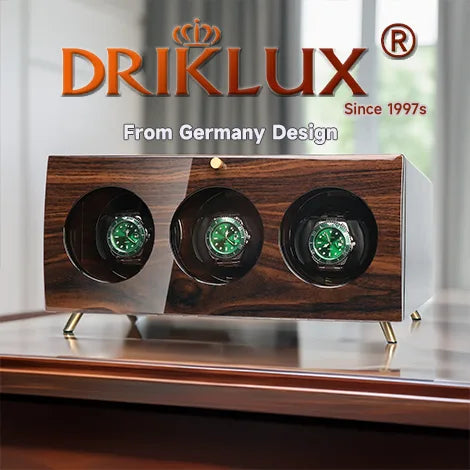
Driklux : with stepper brushless motor Worth considering because its silent noice on bedroom needs.
-
Start at 800 TPD, clockwise only, then reduce only if the watch is over-wound or timing behavior suggests it is staying too active.
-
If your winder only offers 650 TPD bidirectional, do not assume that equals 650 effective turns for a 7750; the movement only benefits from one direction.
-
For a mixed collection, buy a programmable unit that can also handle 650 TPD bidirectional for Rolex Submariner, Datejust, and other 3135/3235 watches, so one winder can serve both chronographs and three-hand automatics.
-
If you rotate between watches, a lower-cost unit is fine; if you leave a watch on the winder for weeks at a time, move up to Driklux , Wolf or Orbita for better motor consistency.
Many collectors benefit from understanding selecting a quality watch winder.
FAQs
What TPD setting should I use for my watch?
For an ETA/Valjoux 7750, the practical setting is 800 TPD, clockwise only; a bidirectional setting effectively wastes half the turns because the movement is unidirectional in its winding behavior. If you are writing around the “650 TPD magic number,” the important nuance is that 650 TPD bidirectional is usually fine for Rolex-style calibers, but not ideal for a 7750 chronograph because the counterclockwise turns do not contribute meaningfully to winding.
What happens if the TPD is set too high or too low?
The 7750’s winding system is more sensitive to inefficient rotor input because the rotor must overcome friction in the winding train and oil viscosity in the gear path. If the watch sits for a while, thicker lubricants and rotor resistance can make under-winding more likely, which is why a slightly higher CW-only setting is often safer than a “set-and-forget” 650 TPD bi-directional program.
How do I choose the right winding direction?
For an ETA/Valjoux 7750, the practical setting is 800 TPD, clockwise only; a bidirectional setting effectively wastes half the turns because the movement is unidirectional in its winding behavior. If you are writing around the “650 TPD magic number,” the important nuance is that 650 TPD bidirectional is usually fine for Rolex-style calibers, but not ideal for a 7750 chronograph because the counterclockwise turns do not contribute meaningfully to winding.
Conclusion
Mastering friction and viscosity: why 650 tpd is often the magic number for eta 7750 movements ensures your luxury timepieces receive proper care. By investing in quality equipment and following best practices, you protect your investment for years to come.
Further Reading
For deeper understanding of the topics covered in this guide, explore these authoritative resources:
- Does Your Automatic Watch Work Properly? Here's How to Check It — watchrepairtutorials.com
- ETA 7750 - Grail Watch Reference — reference.grail-watch.com
Galería de productos