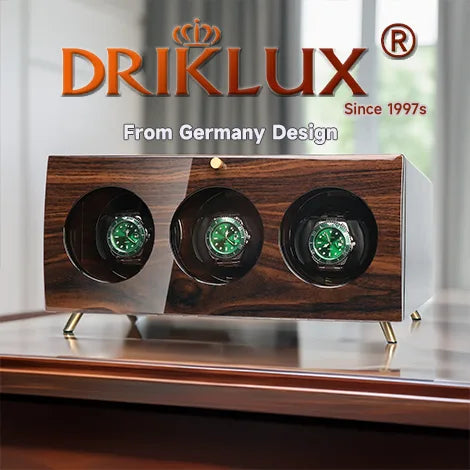


How Geopolitical Climates Are Driving Demand For Fireproof Watch Winder Safes

Table of Contents
- Overview and Key Concepts
- Technical Specifications
- Expert Best Practices
- Common Challenges
- Buying Considerations
- FAQs
- Conclusion
Geopolitical uncertainty is pushing collectors to treat watches less like display pieces and more like portable assets that need discreet, fire-resistant, and access-controlled storage. For serious owners, the demand is no longer just for a winder; it is for a fireproof watch winder safe that protects value in a home crisis while keeping high-end automatic movements ready to wear.
Many collectors benefit from understanding choosing the right watch winder.
Overview and Key Concepts
Geopolitical uncertainty is pushing collectors to treat watches less like display pieces and more like portable assets that need discreet, fire-resistant, and access-controlled storage. For serious owners, the demand is no longer just for a winder; it is for a fireproof watch winder safe that protects value in a home crisis while keeping high-end automatic movements ready to wear.
Luxury watch demand and luxury watch infrastructure are being shaped by the same macro forces: conflict risk, tariffs, currency volatility, and supply-chain disruption. In 2026, commentary on the Swiss watch sector pointed to geopolitical shock as a reason brands are cautious, while broader market coverage tied sector weakness to war-related uncertainty and broader geoeconomic confrontation.
That climate changes collector behavior in a very practical way: owners want to reduce exposure to burglary, fire, and forced liquidation risk by consolidating storage into a single secure unit rather than keeping watches in drawers, bedside boxes, or separate winders. For collections that include Rolex references such as the Submariner, Datejust, and Daytona, the right safe is increasingly seen as part of the collection itself, not an accessory.
Automatic Rolex references with modern calibers like the 3235 are designed for long power reserve and daily wear convenience, but they still need proper storage when not on wrist. The 3135 remains relevant in older serviced pieces, while the 3235 now powers major date models such as the modern Submariner Date and Datejust lines, making winder compatibility and safe movement protection especially important for owners who rotate pieces frequently.
For a collector, that means the ideal setup does three things at once:
- Keeps the watch wound and ready
- Provides fire protection and burglary resistance
- Organizes multiple pieces without exposing them on open shelving
Many collectors benefit from understanding selecting a quality watch winder.
Consider a watch winder safe options for optimal results.
Technical Specifications
Geopolitical instability is pushing collectors toward fire-rated watch winder safes because the risk profile has changed: people now want one secure enclosure that protects both the watches and the papers, boxes, and service records that prove provenance and value. For a premium buyer, the sweet spot is no longer just a quiet winder; it is a safe with verified fire resistance, biometric access, steel construction, and programmable rotation settings matched to the movement inside each watch.
High-end watch owners are increasingly treating their collections like portable wealth stores, especially as political unrest, sanctions, protests, and localized crime spikes raise concern about theft, evacuation, and fire loss. That is why products that combine safe + winder + document protection are gaining attention over open-display winders or standard jewelry boxes.
A serious fire-rated winder safe should have a published fire standard, not just “fire-resistant” marketing language. The strongest consumer examples in the market emphasize UL-certified testing, 60–120 minute fire resistance, and interior temperatures held below paper-burn thresholds.
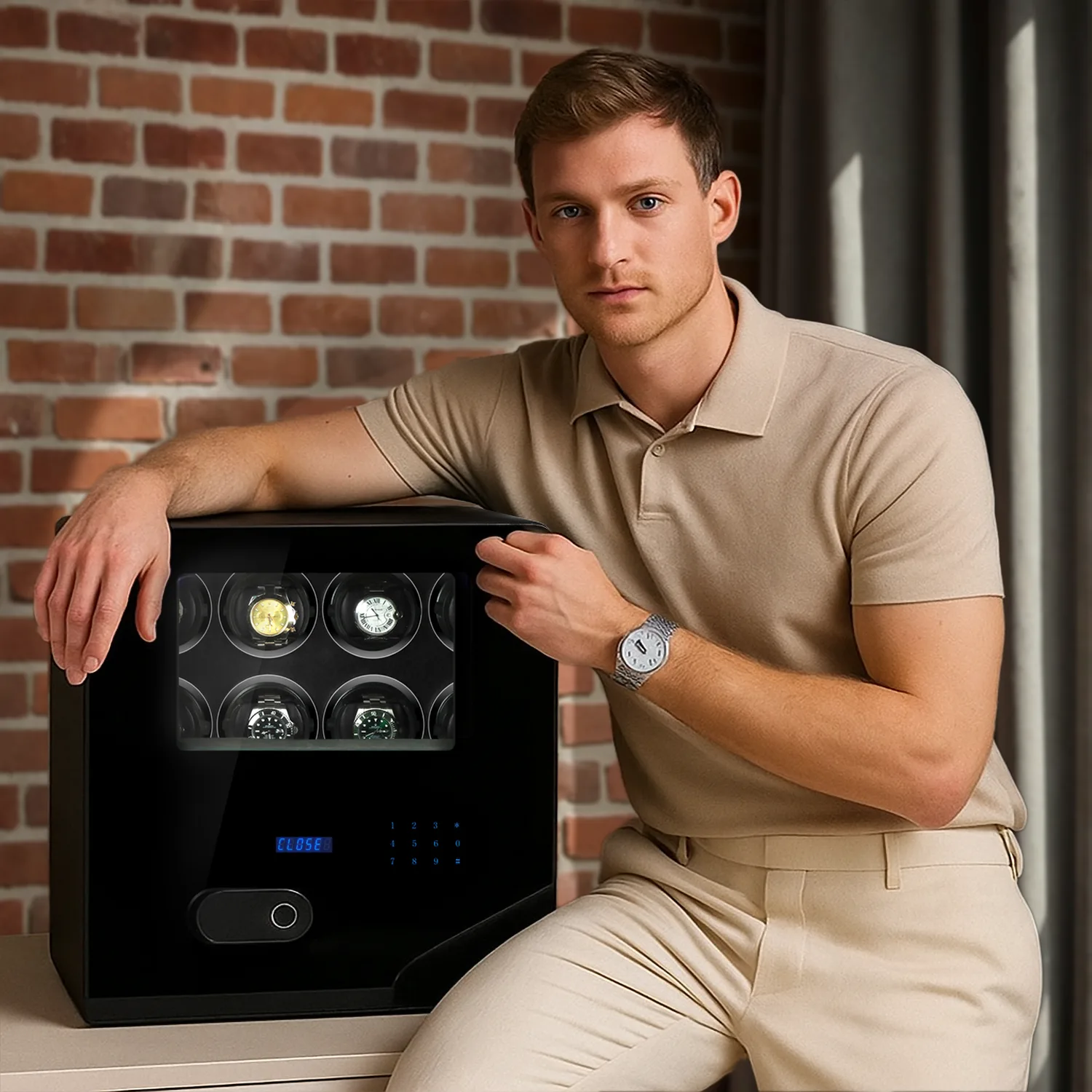
- Driklux 12-Piece Winder Safe: certified independent testing; tested in a fire at 1,00°C for 60 minutes, the safe maintained an internal temperature below 160°C, helping keep documents and banknotes intact. It providing reliable protection for your valuables..
- WOLF safes with winders: larger configurations can be individually programmed via the WOLF Bluetooth app, and the 4-piece Den units are pre-programmed to 900 turns per day.
- Enigwatch fire-rated vaults: fire-resistant composite rated for 60 minutes at 1,000°C under EN 15659, with ballistic protection options up to EN 1522 FB4 on custom orders.
Collectors often buy the safe first and discover later that the winder settings do not suit their watches. That is a mistake, especially for Rolex references with different winding behavior and case sizes.
For detailed guidance, see our article on watch winder buying guide.
Professional collectors often choose protecting your watch collection.
Expert Best Practices
Geopolitical uncertainty is pushing collectors toward fireproof watch winder safes because they now want one cabinet to solve three problems at once: secure storage, ongoing automatic winding, and disaster protection. The strongest demand is for solutions that can protect watches like a Rolex Submariner Date 16610/116610 with Caliber 3135 or a Submariner Date 126610 / Datejust 41 with Caliber 3235, where owners are preserving both monetary value and daily usability.
-
Luxury-watch ownership is increasingly treated like movable wealth, so collectors want safes that do more than hide watches; they want burglary resistance, fire resistance, and winding capability in one unit.
-
Fire-protected winding systems are especially attractive for owners of high-value Rolex sport models such as the Submariner, Datejust, and Daytona, where the movement and casework can be expensive to replace and the secondary-market value can be significant.
-
The market is also being shaped by practical security concerns: safe makers now advertise fire resistance, burglary protection, and even ballistic protection on higher-end units, which shows buyers are looking for a vault-style solution rather than a simple desktop winder.
-
Wolf offers luxury watch safes with integrated winding, including high-capacity models such as the Churchill 16 Piece Winder Safe priced at $128,299 on its site.
-
Orbita is a major name in the secure-winding category, with the WallSafe Rotorwind and InSafe Rotorwind systems designed to sit inside a safe and run on long-life lithium D cells, avoiding the need to drill power access through the safe body.
-
Driklux products are sold through watch winder and safe retailers as combined fireproof storage and winding systems with stepper brushless motor, reflecting the same “one secure enclosure” buying trend.
-
Everest Bands and Smith & Rowe are often discussed by collectors as trusted accessory brands in the luxury-watch ecosystem, but they are not the core safe/winder players; buyers should treat them as complement brands rather than primary safe manufacturers.
-
Fire rating first: choose a safe with a clearly stated fire standard, not just “fire-resistant” marketing language. Some premium vaults advertise 60 minutes at 1,000°C under EN 15659, and higher-end custom builds may add ballistic protection.
-
Power strategy: inside-safe winders that use batteries or sealed power modules are often preferred because they avoid drilling holes through the safe wall.
-
Capacity matching: do not overbuy winding slots. If the core collection is a Submariner Date, Datejust, and Daytona, a 3–6 piece secure winder safe may be more practical than a giant cabinet that is harder to anchor and insure.
-
Movement compatibility: Rolex references matter. A watch on Caliber 3135 typically belongs to older references such as the 16610 Submariner Date and many pre-2020 Datejusts, while Caliber 3235 is the modern platform used in newer Submariner Date 126610 and Datejust 41 references.
-
Insurance alignment: a fireproof winder safe is only useful if the declared contents, fire rating, and installation meet the insurer’s requirements. Buyers should document serial numbers, receipts, and photos before locking the collection away.
-
Buy for the most valuable 20% of the collection. If a few watches represent most of the value, put those in the fireproof winder safe first and store less-critical pieces elsewhere.
-
Prefer modular winders over all-in-one glass displays. Modular systems are easier to service, and if one motor fails, the entire cabinet does not become unusable.
-
Check winding settings before purchase. Rolex pieces with Caliber 3135 and 3235 do not need aggressive winding; choose programmable rotation modes rather than generic “high-speed” motors.
-
Choose safe placement carefully. A wall or floor-anchored unit is better than a freestanding cabinet in an exposed room.
-
Avoid unnecessary voltage vulnerability. Battery-based or low-penetration solutions are safer in a fire scenario than systems that rely on external cords entering the safe.
-
Inspect locking hardware. Mechanical or biometric access is useful, but the real protection comes from steel thickness, pry resistance, and fire-rated composite construction.
-
Match the safe to the collection style. A collector rotating between a Daytona, Submariner, and Datejust may need fewer winding programs than a broader collection of mixed brands and complications.
You can find more information about how to choose a watch winder in our guide.
Consider a secure watch storage solutions for optimal results.
Common Challenges
Geopolitical uncertainty is pushing more collectors to treat watch storage as asset protection, not just convenience, and that is increasing demand for fireproof watch winder safes. The main buyer pain points are deciding between protection levels, avoiding humidity damage, and choosing a safe that protects both the movement and the collection value during a disruption, fire, or burglary.
-
Problem: buyers assume a standard safe is enough. Standard safes may offer basic security, but collector-focused watch winder safes are designed to combine fire resistance, intrusion resistance, and winding/storage for automatic watches.
-
Solve it: prioritize a safe with a recognized fire standard such as UL 72 Class 350 or an equivalent verified rating, because lower-end decorative units may provide only minimal thermal protection.
-
Why it matters now: global instability, political risk, and economic uncertainty are increasing interest in secure storage for valuables, which helps explain why premium safes are becoming more attractive to collectors.
-
Problem: people buy for theft protection but forget fire and heat damage. Fire can destroy lubricants, dials, crystals, straps, and case finishing even if the safe itself survives.
-
Solve it: look for fire-rated construction with intumescent seals, and choose a model built to keep internal temperatures low for at least 30–60 minutes under fire conditions.
-
Buying tip: if your collection includes pieces worth over $25,000, or hard-to-replace references, treat fire rating as mandatory rather than optional.
-
Problem: humidity is ignored. A sealed safe can still allow moisture issues, which is a serious problem for automatic watches because oxidation and strap degradation can occur over time.
-
Solve it: choose a watch winder safe with humidity control in the 45%–55% RH range, plus temperature monitoring if available.
-
Buying tip: this matters especially for watches with leather straps, display backs, or long-term storage rotations.
-
Problem: buyers choose a winder that does not match their caliber. Automatic movements vary in winding behavior, and a mismatch can leave a watch underwound or unnecessarily stressed.
-
Solve it: verify the safe’s winding settings against your movement specifications before buying. For example, Rolex’s Caliber 3135 and 3235 are both robust automatic calibers, but they are different generations and should be checked against the winder’s TPD and direction settings rather than assumed interchangeable.
-
Buying tip: common Rolex models such as the Submariner, Datejust, and Daytona often sit in collections with multiple movement types, so the safe should support flexible programming for mixed ownership.
You can find more information about watch winder selection tips in our guide.
Professional collectors often choose watch winder security features.
Buying Considerations
Geopolitical instability is pushing more collectors to treat their watches as portable wealth that needs home-based, physically anchored protection rather than simple display storage. In practice, that has increased demand for fire-rated, burglary-rated watch winder safes with certified protection, larger capacity, and professional installation, because collectors want a single solution for security, continuity, and insurance compliance.
A useful way to think about the market is that buyers are no longer choosing between a winder and a safe; they are choosing a secure storage system that can keep automatic watches ready to wear while also protecting them from theft, fire, and power outages.
| Tier | What to prioritize | Typical use case |
|---|---|---|
| Entry | UL RSC home safe, 60-minute or better fire rating, pre-drilled anchor holes | Smaller collections, lower insured values, first serious upgrade |
| Mid | Larger rated safe with room for growth, better fire duration, stronger burglary rating | Collectors who expect the collection to expand |
| High end | Certified winder safe with UL burglary and fire certification, integrated modules | Serious collectors and high-value collections |
For most home collections, a Class B burglary rating plus at least a 60-minute fire rating is a practical baseline, while collections above about $100,000 should move toward TL-15 or higher burglary resistance. If your insurer specifies a standard, follow the insurer’s standard first; several guides explicitly recommend confirming insurer requirements before purchase.
Many collectors benefit from understanding finding the perfect watch winder.
FAQs
What should I know about How Geopolitical Climates are Driving Demand for Fireproof Watch Winder Safes?
Geopolitical uncertainty is pushing collectors to treat watches less like display pieces and more like portable assets that need discreet, fire-resistant, and access-controlled storage. For serious owners, the demand is no longer just for a winder; it is for a fireproof watch winder safe that protects value in a home crisis while keeping high-end automatic movements ready to wear.
What are the most common mistakes to avoid?
- Problem: buyers choose a winder that does not match their caliber. Automatic movements vary in winding behavior, and a mismatch can leave a watch underwound or unnecessarily stressed.
- Solve it: verify the safe’s winding settings against your movement specifications before buying. For example, Rolex’s Caliber 3135 and 3235 are both robust automatic calibers, but they are different generations and should be checked against the winder’s TPD and direction settings rather than ass
What should I consider when buying?
What to buy: the practical hierarchy
Conclusion
Mastering how geopolitical climates are driving demand for fireproof watch winder safes ensures your luxury timepieces receive proper care. By investing in quality equipment and following best practices, you protect your investment for years to come.
Galería de productos