

Trust And Estate Planning For Horology Collections: Safe Winders As Asset Protection

Table of Contents
- Overview and Key Concepts
- Technical Specifications
- Expert Best Practices
- Common Challenges
- Buying Considerations
- FAQs
- Conclusion
For serious watch collectors, trust and estate planning is not just about who inherits the watches; it is about preserving value, provenance, condition, and liquidity so the collection transfers cleanly and privately. A well-structured plan can help avoid probate delays, reduce family disputes, and ensure pieces are stored, sold, or distributed according to the owner’s instructions.
For detailed guidance, see our article on choosing the right watch winder.
Overview and Key Concepts
For serious watch collectors, trust and estate planning is not just about who inherits the watches; it is about preserving value, provenance, condition, and liquidity so the collection transfers cleanly and privately. A well-structured plan can help avoid probate delays, reduce family disputes, and ensure pieces are stored, sold, or distributed according to the owner’s instructions.
The core idea is simple: a horology collection should be treated like a high-value asset class, not an informal hobby cabinet. Collectors commonly use a trust because it can provide privacy, ongoing control, and faster administration than a will alone, while also allowing specific instructions for individual pieces or categories of watches.
Watch collections are uniquely vulnerable in estate transitions because their value depends on more than metal and movement. Market price is affected by model, reference, service history, originality, box-and-papers, and caliber correctness, so a poorly documented transfer can destroy value even when the watch itself is intact.
That is especially true for highly collectible references such as the Rolex Submariner, Datejust, and Daytona, where buyers and heirs may need to distinguish between modern and vintage variants, original dials, and factory-correct parts. For example, a Submariner or Datejust built around a Caliber 3135 or 3235 may be easy to identify broadly, but estate value can change materially if the movement, bracelet, or service components are not properly recorded and preserved. This is why documentation and storage planning matter as much as legal drafting.
- Inventory is foundational. A detailed inventory with descriptions, photographs, purchase records, appraisals, and provenance documents creates the baseline for valuation and transfer.
- Trusts offer control. Trusts can specify who gets which watch, whether certain pieces must be held, and whether others may be sold; they also avoid the public probate process associated with wills.
- Executor selection matters. The executor or trustee should ideally understand collections or have access to an advisor who does, because watch estates often involve authentication, appraisals, and market timing decisions.
- Insurance and security are essential. High-value watches should be insured appropriately and stored securely; relying on a standard homeowners policy may be inadequate for collectible assets.
- Heirs need instructions, not just ownership. Family members may not know the difference between a service dial and an original dial, or understand why a full set matters. Clear written guidance reduces the risk of accidental sale, loss, or improper servicing.
Many collectors benefit from understanding selecting a quality watch winder.
A quality watch winder safe options makes a significant difference.
Technical Specifications
For a trust or estate plan, the right safe winder functions as both a custody control and a movement-preservation system: it secures the collection, keeps automatics ready to wear, and creates a clearer handoff for heirs and trustees. For high-value horology collections, the most relevant specifications are fire rating, internal humidity control, winding programmability, compartment dimensions, and movement compatibility.
- Why this matters in estate planning: a watch safe that is both secure and self-winding reduces the chance that heirs receive a collection of dead watches, dried lubricants, or compromised straps, while also keeping high-use pieces operational for appraisals, insurance, or immediate sale.
- Best-practice safe-winder features: look for certified fire protection, humidity control around 45%–55% RH, quiet precision winding modules, individual cushioned compartments, and interior materials that resist tarnish and abrasion.
- Capacity and construction: premium units range from compact multi-winder safes to large cabinet-style systems; examples in the market include 8-winder, 12-winder, 16-winder, 20-winder, and even 40+ winder configurations, depending on collection size.
For collectors of Rolex and similar automatics, the most useful technical details are usually tied to the movement, not just the brand. A well-configured safe winder should be able to support common Rolex calibers such as Caliber 3135, Caliber 3235, and, where applicable, older or adjacent family movements used in models like the Submariner, Datejust, and Daytona; the safe should allow separate programming for different TPD and rotation direction so each watch can be matched to its movement requirements.
Practical compatibility guidance for common collector references:
- Rolex Submariner: older references often use Caliber 3135; newer references commonly use Caliber 3235.
- Rolex Datejust: many modern examples use Caliber 3235, while earlier references often used Caliber 3135 or related variants.
- Rolex Daytona: manual-wind references do not need winding, but automatic variants or other chronograph automatics should be checked individually before being placed on a winder.
- Mixed-brand collections: a programmable safe winder is more useful than a fixed-speed cabinet because different calibers often require different winding profiles and storage positions.
Model-level examples worth noting:
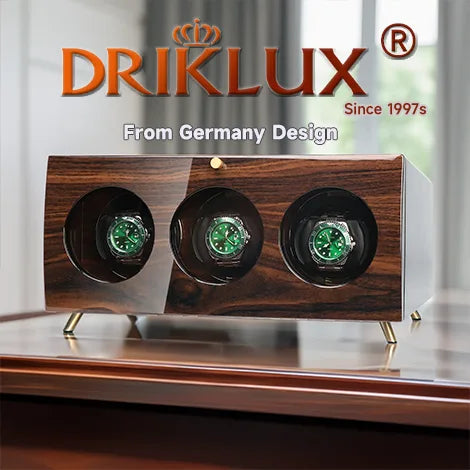
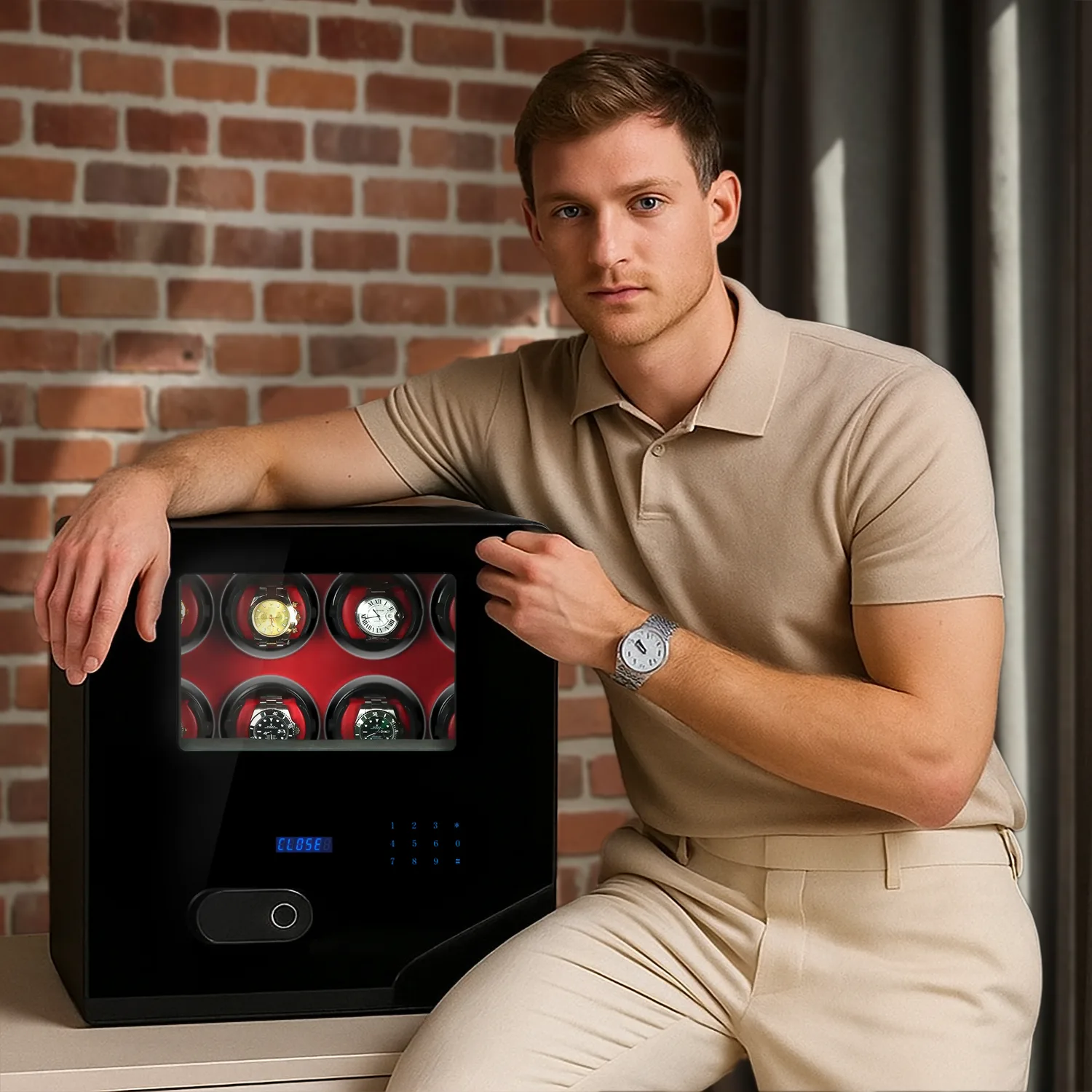
- Driklux watch safes: their hot selling series WWS8,WWS12 and custom safe are good choice.
- WOLF Atlas: available in 12, 16, and 20 piece configurations, with a 120-minute fire resistance claim for the Atlas safe line and app-based programming for individual winders, TPD, and rotation settings.
- Brown Safe Chronos: built with reinforced armor construction, multiple locking bolts, integrated winding modules, and a high-security safe architecture suited for very high-value collections.
For detailed guidance, see our article on watch winder buying guide.
A quality protecting your watch collection makes a significant difference.
Expert Best Practices
For a horology collection, the strongest estate plan combines a detailed inventory, specific transfer language, and a trust-based structure for privacy and control. Collectors and estate-planning sources consistently recommend naming each watch, documenting value, and using a trust when you want private, enforceable instructions for how pieces are held, maintained, or sold.
For a premium watch collection, that means treating pieces like a Rolex Submariner, Datejust, or Daytona as individually identified assets rather than “personal property” in the abstract. Estate-planning guidance for watches specifically recommends listing the brand, model, and even serial number in the will or trust to avoid disputes and confusion among beneficiaries.
- Build a watch-by-watch inventory. Include brand, model, reference, serial number, movement/caliber, case material, bracelet or strap, box and papers, service history, and current location.
- Add photos and appraisals. Collectibles guidance recommends clear photographs and professional appraisals so heirs, trustees, and insurers can verify what exists and what it is worth.
- Use exact identification for iconic references. For example, note a Rolex Submariner with Caliber 3135 or 3235, a Datejust with its specific reference, or a Daytona with its exact model and movement generation. This helps separate a modern service replacement from an original example, which can materially affect value. This recommendation follows from the broader guidance to specify brand, model, and serial details, and from the collector emphasis on authenticity and valuation accuracy.
- Prefer a trust when privacy and control matter. Multiple sources note that trusts avoid probate and give the collector more flexibility over how assets are handled, maintained, appreciated, or sold.
- Use a will only for simpler bequests. Wills can work for straightforward gifts, but they generally lack the ongoing oversight and flexibility of a trust.
- Consider an independent fiduciary for complex collections. For high-value or potentially contentious estates, a professional trustee, executor, or fiduciary can reduce family conflict and improve execution.
- Keep instructions for storage and maintenance. Estate-planning sources recommend specifying how items should be stored, maintained, and whether they may be sold or retained, especially when the collection includes pieces that need periodic winding or servicing.
- Revisit appraisals regularly. Values change, and sources recommend periodic reappraisal so your estate plan stays aligned with current market reality.
- Coordinate the estate plan with insurance. Specialized insurance should reflect current appraised value to protect against theft, loss, or damage.
For safe winders specifically, they should be treated as part of the asset-protection system, not just accessories. A winder can help preserve readiness for automatic watches, but it also creates an inventory-control issue: if the watch sits in a winder inside a safe, the executor or trustee should know whether the piece is supposed to remain wound, be stopped, or be rotated into storage. The practical takeaway from the estate-planning sources is that your instructions should cover both the watch and the environment it lives in.
A collector-grade approach is to assign watches and accessories in three layers:
You can find more information about how to choose a watch winder in our guide.
Professional collectors often choose secure watch storage solutions.
Common Challenges
Trust and estate planning for a horology collection fails most often at the handoff point: heirs cannot identify what is valuable, cannot maintain the watches correctly, or cannot execute the owner’s intended sale, gift, or retention plan. The most effective fix is a written inventory, a trust-based distribution plan, and clear instructions for storage, insurance, servicing, and liquidation—especially for high-value pieces like Rolex Submariner ref. 116610/126610, Datejust ref. 126334, or Daytona ref. 116500/126500, whose value can be materially affected by originality, provenance, and condition.
| Problem | Why it happens | How to solve it |
|---|---|---|
| No inventory | Heirs do not know which watches exist, where they are stored, or which are most valuable. | Create a spreadsheet with model, reference number, movement/caliber, serial number, purchase date, current value, service history, photos, receipts, and location. |
| Incomplete provenance | Vintage and limited-production pieces lose value if originality cannot be proven. | Keep service papers, warranty cards, box, bracelets, removed parts, and any auction or dealer documentation with each watch. |
| Wrong valuation | Appraised value and market value drift over time, which can distort estate division and insurance coverage. | Reappraise regularly and update the estate plan whenever a watch is sold, serviced, or replaced. |
| Heirs do not want the collection | Family members may not share the owner’s interest in collecting or preserving watches. | Name backup beneficiaries, authorize sale through a dealer or auction house, or direct certain pieces to charity or a watch museum/association. |
| Conflicts among heirs | Watches can be emotionally significant and unevenly distributed in value. | Use a trust with specific item-by-item instructions, or equalize inheritances with cash so the collection does not become a source of dispute. |
| Counterfeits or swapped parts | Collectors sometimes own watches with replacement dials, bezels, movements, or outright fakes that are hard for non-specialists to detect. | Have the collection authenticated by a reputable watchmaker or specialist before finalizing the estate plan; document all non-original parts clearly. |
| Improper storage | Watches can deteriorate from moisture, dust, magnetism, shock, and inactivity. | Store pieces in a secure safe with climate stability and, for automatic watches, use quality winders sized to the movement and rotation requirements. |
| Insurance gaps | Homeowners’ policies often exclude or cap collectible watch coverage. | Add a scheduled valuables policy or collector policy based on current appraised value and keep proof of ownership and appraisals on file. |
| No servicing plan | Mechanical watches need periodic maintenance, and neglected pieces can lose value or stop running. | Maintain a service calendar and set instructions in the trust for who may authorize servicing, where it may be done, and what parts may be replaced. |
| Liquidity problems after death | Estates can be forced to sell quickly, often at a discount, if taxes or expenses are due. | Give the trustee authority to sell selectively, hold the best pieces longer, and use a cash reserve or life insurance to avoid fire-sale pricing. |
A watch collection is not just sentimental property; it is often a mixed asset class of wearable luxury goods, mechanical instruments, and investment-grade collectibles. Estate documents that simply say “divide my personal effects equally” usually fail because one heir may receive a Rolex Daytona while another receives several lower-value pieces, creating disagreement over fairness.
Best fix: use a trust or similarly detailed estate structure that names each watch, each beneficiary, and the intended outcome—keep, sell, trade, or donate. That level of specificity is especially important for modern Rolex references such as the Caliber 3135 era Submariner and Datejust, as well as newer Caliber 3235-equipped models, because reference, movement, and condition materially affect value.
For horology collections, documentation is not optional; it is part of the asset itself. A watch with full box, papers, service records, and provenance is usually easier to insure, easier to appraise, and easier to sell than the same reference without records.
You can find more information about watch winder selection tips in our guide.
A quality watch winder security features makes a significant difference.
Buying Considerations
A safe winder strategy is useful in estate planning because it helps preserve the condition, organization, and operating rhythm of automatic watches while also making the collection easier to inventory, insure, and transfer through a trust or will. The most effective setup pairs a documented estate plan with the right winding equipment: a secure watch safe, a reputable winder brand, and clear instructions for heirs or trustees on what to keep, service, or sell.
For a horology collection, the practical goal is not just storage; it is asset protection. Trust-based planning can help keep a collection out of probate, preserve privacy, and reduce conflict among heirs, while detailed inventories, photos, appraisals, and distribution instructions reduce ambiguity.
A well-structured trust can hold the watch collection and specify who receives each piece, which is especially useful for high-value collections where family members may disagree about sentimental versus resale value. For collectors, that means your trust can say, for example, that a Rolex Submariner, Datejust, or Daytona goes to a specific beneficiary, while the safe winder, service records, and spare bracelets go to another—or remain with the collection for the trustee to manage.
Safe winders are most useful when the estate plan already identifies:
- which watches are kept as a long-term collection,
- which are wearable assets that should remain running,
- which should be sold,
- and who is responsible for access, insurance, and periodic servicing.
For estate-ready storage, prioritize these features:
- Programmable TPD: Look for adjustable turns per day; Driklux recommends 500–800 TPD as a practical baseline for many automatics.
- Directional control: Bi-directional and clockwise/counterclockwise options matter because different calibers prefer different winding directions.
- Individual modules: Independent controls per watch are important in mixed collections.
- Quiet motors: Important for safes, bedrooms, and offices.
- Sleep/charge intervals: Prevents unnecessary wear.
- Proper fit for case size: Larger modern sports watches need deeper cushions and stronger mounts.
- Integration with a secure safe: The winder should sit inside a burglary-rated safe or watch safe when the collection is valuable.
You can find more information about finding the perfect watch winder in our guide.
FAQs
What should I know about Trust and Estate Planning for Horology Collections?
For serious watch collectors, trust and estate planning is not just about who inherits the watches; it is about preserving value, provenance, condition, and liquidity so the collection transfers cleanly and privately. A well-structured plan can help avoid probate delays, reduce family disputes, and ensure pieces are stored, sold, or distributed according to the owner’s instructions.
What are the most common mistakes to avoid?
Trust and estate planning for a horology collection fails most often at the handoff point: heirs cannot identify what is valuable, cannot maintain the watches correctly, or cannot execute the owner’s intended sale, gift, or retention plan. The most effective fix is a written inventory, a trust-based distribution plan, and clear instructions for storage, insurance, servicing, and liquidation—especially for high-value pieces like Rolex Submariner ref. 116610/126610, Datejust ref. 126334,
What should I consider when buying?
Safe winders are most useful when the estate plan already identifies:
- which watches are kept as a long-term collection,
- which are wearable assets that should remain running,
- which should be sold,
- and who is responsible for access, insurance, and periodic servicing.
Conclusion
Mastering trust and estate planning for horology collections: safe winders as asset protection ensures your luxury timepieces receive proper care. By investing in quality equipment and following best practices, you protect your investment for years to come.
Further Reading
For deeper understanding of the topics covered in this guide, explore these authoritative resources:
- Bequests - National Association of Watch & Clock Collectors, Inc. — nawcc.org
- Estate Planning In World Of Watch Collecting - Family Wealth Report — familywealthreport.com
- Collectibles Estate Planning: Protect Heirlooms & Legacy (2025) — polarisplans.com
Galerie de produits