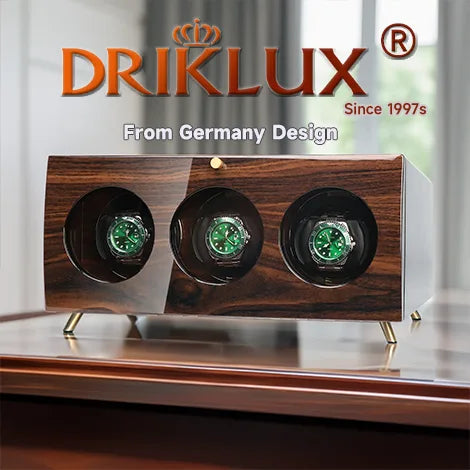


Building A Thematic Watch Collection: Symmetrical Winder Displays For Chronographs Vs. Divers

Table of Contents
- Overview and Key Concepts
- Technical Specifications
- Expert Best Practices
- Common Challenges
- Buying Considerations
- FAQs
- Conclusion
A thematic collection built around chronographs vs. divers works because the two categories are visually and mechanically distinct, yet equally important in serious collecting. For collectors, the real value is not just owning “sports watches,” but curating a coherent display that highlights dial architecture, functional design, and winding needs across the collection.
Many collectors benefit from understanding choosing the right watch winder.

Overview and Key Concepts
A thematic collection built around chronographs vs. divers works because the two categories are visually and mechanically distinct, yet equally important in serious collecting. For collectors, the real value is not just owning “sports watches,” but curating a coherent display that highlights dial architecture, functional design, and winding needs across the collection.
For a premium watch display, that distinction matters even more: chronographs often look best grouped with other multi-register pieces, while divers create a cleaner, more symmetrical block of bold, high-legibility tool watches.
Chronographs and divers represent two different horological philosophies. Dive watches prioritize water resistance, a unidirectional bezel, and readability, while chronographs emphasize elapsed-time measurement through pushers and sub-dials. That makes them ideal for collectors who want a display that tells a story rather than simply showing expensive watches.
Collectors also care about how these watches sit on winders because the two categories often use different movement architectures and power-reserve behavior. A chronograph is typically more mechanically complex, while a diver may be mechanically simpler but still require proper winding support depending on the caliber.
Chronographs are defined by sub-dials, pushers, and a busier dial layout that creates strong symmetry or asymmetry depending on the model. Iconic examples include the Rolex Daytona, Omega Speedmaster, and many classic racing-inspired designs.
For detailed guidance, see our article on selecting a quality watch winder.
A quality 3 watch winder for automatic timepieces makes a significant difference.
Technical Specifications
For a thematic collection split between chronographs and divers, the safest technical rule is to match each watch’s caliber family, winding direction, and TPD rather than assuming one “universal” setting will suit both groups. In practice, most modern automatics land in the 600–800 TPD range, but many calibers prefer either bidirectional or one-direction winding, so a properly programmable winder matters more than brand name alone.
Chronographs and divers often look symmetrical as display objects, but they are not always mechanically symmetrical.
- Chronographs often use more complex automatic calibers, and some require clockwise-only or other movement-specific settings; for example, Swiss Watch Int’l lists its ETA 7750- and 7751-based automatic chronographs at 800 TPD, clockwise only.
- Divers are usually simpler automatic three-hand or date watches, and many modern sports divers are comfortable with bidirectional winding around 650 TPD; Swiss Watch Int’l lists several diver and sports models at 650 TPD, both directions, while also listing some diver variants at 800 TPD, clockwise only.
- SwissKubik notes that many of its standard programs use 1,600 total rotations per day split into 800 clockwise + 800 counterclockwise, and says this covers the needs of about 90% of automatic watches on the market.
If you want a display that looks intentionally curated, it helps to group watches by movement architecture as well as by style.
| Watch family | Example model | Typical caliber reference | Winding note | Collecting implication |
|---|---|---|---|---|
| Rolex diver | Submariner | Caliber 3135 on older generations; Caliber 3235 on newer generations | Modern Rolex automatics are commonly run bidirectionally around 650 TPD in winder guides | Good choice for a left-side “dive” pod in a symmetrical display |
| Rolex sport chronograph | Daytona | Commonly associated with automatic chronograph calibers in Rolex’s sport line; older quartz and manual references differ | Chronographs may need more careful direction matching than divers | Best kept in a dedicated chronograph pod with programmable settings |
| Rolex dress/date | Datejust | Caliber 3135 on older references; 3235 on current references | Often comfortable at ~650 TPD bidirectional | A useful “bridge” watch between sport and dress themes |
| Zenith / ETA-style chrono | Many automatic chronographs | ETA 7750 / 7751 | Swiss Watch Int’l lists CW / 800 TPD for these chronograph calibers | Strong candidate for a chrono-specific winder module |
| Generic modern diver | Submariner-like or other automatic diver | Varies by brand; many are ETA/Sellita/in-house three-hand automatics | Many run well at 650 TPD, both directions | Easier to standardize across a diver row |
For detailed guidance, see our article on watch winder buying guide.
Consider a axis 6 watch winder case for optimal results.
Expert Best Practices
A thematic collection built around chronographs and divers works best when the display logic matches the watches’ design language and the winder programming matches each caliber’s winding behavior. For a symmetrical presentation, collectors usually place divers as the more visually uniform group and chronographs as the more mechanically expressive group, then use different pillow heights, dial symmetry, and rotation settings to make the case look intentional rather than crowded.
The cleanest approach is to organize the collection by function, then by case geometry. Divers are typically easier to “grid out” visually because they emphasize legibility, a unidirectional bezel, and straightforward dial layouts, while chronographs add sub-dials and timing scales that naturally create more visual complexity. That difference matters in a winder display: a row of three divers can look highly symmetrical if the bezels align consistently, while a row of three chronographs often looks best when the watches are spaced with slightly more negative space so the dial architecture can breathe.
- Group by complication type first. Put all divers together and all chronographs together, rather than mixing them by brand or price tier, because the visual language is different and the collection reads more coherently that way.
- Use bezel orientation intentionally. With divers, align the 12 o’clock markers or luminous pip consistently so the display feels uniform; the unidirectional bezel is a defining element of the category and should be part of the presentation.
- Give chronographs more visual breathing room. Sub-dials, applied markers, and tachymeter scales can make the dial feel busier, so avoid crowding them shoulder-to-shoulder in the case.
- Match winder motion to the movement, not the watch style. Many modern automatics are fine on standard winding programs, but uni-directional movements can be poorly served by a bi-directional winder if the winder’s rotation pattern is inefficient, because the movement may only wind on half the turns.
- Prioritize gentle, reliable cycles for dive watches. Water-resistant watches often have screw-down crowns and seals, and repeated unnecessary crown manipulation is best avoided; a properly set winder reduces how often you need to reset the time and date.
- Use a quiet, stable display case. Divers and chronographs are often sport watches with larger cases, so a winder with solid pillow support and low vibration helps prevent the display from looking sloppy and helps protect bracelet shape over time. This is especially useful for Rolex-format sports watches such as the Submariner and Daytona.
Collectors often build these displays around well-known Rolex references and their movements:
- Rolex Submariner Date: commonly associated with Caliber 3135 in earlier generations and Caliber 3235 in newer ones.
- Rolex Datejust: also commonly seen with Caliber 3135 in older references and Caliber 3235 in current models.
- Rolex Daytona: modern automatic versions use Rolex’s in-house chronograph architecture, while collectors often display them with other sports chronographs as a visual family rather than as “tool” watches only.
For detailed guidance, see our article on how to choose a watch winder.
Professional collectors often choose multi-watch winder systems.
Common Challenges
A thematic collection built around chronographs and divers looks strongest when the display logic matches the watches’ actual use cases: chronographs are often complication-driven and frequently left on a winder for convenience, while divers are usually more robust daily watches but still require careful handling of TPD, direction, and moisture control. The most common mistakes are wrong winding settings, poor fit/holder sizing, noisy or unstable placement, and treating every automatic watch as if it needs the same winding treatment.
-
Mistake: Using the same winder settings for every watch
- Automatic watches have different winding requirements, including different turns per day (TPD) and rotation directions.
- Chronographs and calendar-heavy watches are often the most practical candidates for a winder because resetting them can be tedious, but they still need the correct program rather than a generic setting.
- Fix: Check the movement’s winding profile before assigning a slot. If the watch has a bidirectional movement, a bidirectional mode may work; if not, matching the winding direction matters because bidirectional mode is not universally better.
- Collector tip: Build your collection around groups that share similar winding behavior, such as Rolex sports models with a known caliber family and matching slot settings. For example, modern Rolex references using Caliber 3135 and 3235 are often discussed by collectors as practical candidates for repeatable, standardized winding routines; for a display focused on symmetry, this helps keep both sides of the case visually and mechanically consistent.
-
Mistake: Assuming a watch “should” stay on the winder all the time
- A winder is not mandatory for every automatic watch; modern movements can stop and restart without harm, and letting a watch rest can reduce wear.
- Fix: Use the winder strategically. Keep the most complication-heavy pieces ready to wear, and let simpler three-hand watches rest when you are not using them.
- Collector tip: For a collection split between Daytona-style chronographs and Submariner-style divers, prioritize the chronographs for active winding if you wear them intermittently, while divers can often be rotated in and out of the winder based on use.
-
Mistake: Buying a cheap winder with weak motor control
- Cheap winders can have inadequately regulated motors, incorrect TPD settings, and weak shielding that may expose watches to magnetization or unnecessary stress.
- Fix: Choose a brand with known control over motors and programming. Premium names like Driklux,Wolf and Orbita are widely recognized in the watch-winder market for better build quality, while entry-level options from brands such as trible tree may appeal on price but should still be evaluated for motor consistency, return policy, and noise.
- Buying tip: A realistic budget range for a single-quality winder often falls around $50–$230 at the accessible end, with premium multi-watch systems costing more. If you are displaying paired collections symmetrically, invest more in the motor and holder quality than in decorative extras.
-
Mistake: Ignoring fit and bracelet/clasp security
- A watch that is not secured properly can slip, shift, or be damaged, especially if the holder is the wrong size.
- Fix: Use adjustable cushions or holders that fit both slimmer chronographs and heavier divers snugly. Make sure the clasp is fully secure before the cycle starts.
- Collector tip: Divers such as a Submariner tend to sit differently on a cushion than a thinner chronograph. If your display is symmetrical, test both halves of the case with the actual watches you plan to store, not just a generic sample.
You can find more information about watch winder selection tips in our guide.
Professional collectors often choose watch winder for collections.
Buying Considerations
Creating a thematic watch collection is less about accumulating the most expensive pieces and more about curating a narrative that reflects your lifestyle, aesthetic preferences, and appreciation for horological engineering. The two most distinct and popular categories for such a collection are Dive Watches (rugged, functional, water-resistant) and Chronographs (complex, precision-focused, mechanical).
While the prompt mentions "Symmetrical Winder Displays," in the context of building a collection, this likely refers to the symmetry of the watch dial and how it presents on a watch winder (a device used to keep automatic watches running). Dive watches often feature bold, asymmetrical layouts due to the elapsed-time bezel, while chronographs strive for dial symmetry with sub-dials. This guide will help you navigate the differences, compare brands, analyze price ranges, and avoid common pitfalls.
Dive watches are built for extremes. Their primary function is to provide accurate timekeeping underwater with maximum durability.
- Key Features: Unidirectional rotating bezel (for tracking oxygen), high water resistance (ISO 6425 standard: min 100m), and luminescent markers for low-light readability.
- Dial Symmetry: Often asymmetrical. The bezel and the "12 o'clock" marker dominate the visual field. The dial is designed for quick, legible reading, not intricate beauty.
- Best For: Active lifestyles, water sports, and those who appreciate "tool" aesthetics.
Chronographs are tools for measuring elapsed time intervals, originally designed for aviation, racing, and sports.
- Key Features: Pushers (buttons) to start/stop/reset, sub-dials (registers) for minutes/hours, and often a tachymeter scale.
- Dial Symmetry: Typically symmetrical. The sub-dials are arranged to create a balanced, intricate visual pattern (e.g., the "3-6-9" layout).
- Best For: Enthusiasts who love mechanical complexity, motorsport fans, and those who appreciate the "watchmaker's art."
Many collectors benefit from understanding finding the perfect watch winder.
FAQs
What should I know about Building a Thematic Watch Collection?
When building a thematic collection, movement references are part of the story. For Rolex sports watches, collectors commonly discuss:
- Caliber 3135 in earlier Datejust/Submariner-era references
- Caliber 3235 in newer Rolex generations with updated architecture and improved power reserve *(movement examples are collector-relevant context; the provided sources establish the importance of movement differences and elapsed-time functionality, while the caliber references here are standard
What are the most common mistakes to avoid?
A thematic collection built around chronographs and divers looks strongest when the display logic matches the watches’ actual use cases: chronographs are often complication-driven and frequently left on a winder for convenience, while divers are usually more robust daily watches but still require careful handling of TPD, direction, and moisture control. The most common mistakes are wrong winding settings, poor fit/holder sizing, noisy or unstable placement, and treating e
What should I consider when buying?
- Define Your "Theme": Are you building a "Racing & Aviation" collection (Chronos) or a "Deep Sea & Exploration" collection (Dives)? Stick to the theme.
- Check the Movement: For chronographs, look for in-house movements (e.g., Rolex 4130, Breitling B01) or high-quality Swiss modules (e.g., ETA 7750). For dive watches, Caliber 3235 (Rolex) or MT5402 (Tudor) are top choices.
- Try the Bezel: For dive watches, the bezel must be unidirectional. If it rotates bo
Conclusion
Mastering building a thematic watch collection: symmetrical winder displays for chronographs vs. divers ensures your luxury timepieces receive proper care. By investing in quality equipment and following best practices, you protect your investment for years to come.
Further Reading
For deeper understanding of the topics covered in this guide, explore these authoritative resources:
- Delma Unveils The Quattro Dive Watch - aBlogtoWatch — aBlogtoWatch
- Divetrack, the World's first mechanical diving chronograph — singerreimagined.com
Galerie de produits