

The 'One Watch' Collector: Is A Single Winder Necessary If You Wear The Same Watch Daily?

Table of Contents
- Overview and Key Concepts
- Technical Specifications
- Expert Best Practices
- Common Challenges
- Buying Considerations
- FAQs
- Conclusion
For the 'One Watch' collector who wears the same automatic daily—like a Rolex Submariner with Caliber 3135 or Datejust powered by Caliber 3235—a single watch winder is not strictly necessary. Your wrist provides ample motion (typically exceeding 650-900 turns per day) to keep the mainspring fully wound, with power reserves of 48-70 hours covering overnight rest without harm to the movement. Mo
Many collectors benefit from understanding choosing the right watch winder.
Overview and Key Concepts
For the 'One Watch' collector who wears the same automatic daily—like a Rolex Submariner with Caliber 3135 or Datejust powered by Caliber 3235—a single watch winder is not strictly necessary. Your wrist provides ample motion (typically exceeding 650-900 turns per day) to keep the mainspring fully wound, with power reserves of 48-70 hours covering overnight rest without harm to the movement. Modern automatics like Omega or Tudor models self-lubricate during regular wear, avoiding oil drying issues from prolonged inactivity.
Even loyal one-watch owners grapple with this: convenience trumps necessity. If your Rolex Daytona (Caliber 4130) or a Patek Philippe with perpetual calendar sits unused for weekends or travel, resetting complications (date, day, moonphase) becomes tedious—taking 10-30 minutes per session. Daily wearers report no accuracy loss from brief stops, as resting lets the escapement "breathe," potentially improving long-term precision over constant motion. However, low-activity lifestyles (desk jobs) might underwind, making a winder's 800 TPD bidirectional cycle a smart backup.
Key themes from collector forums and experts:
- Myth Busting: Winders don't "wear out" movements; quality ones mimic wrist motion with rest intervals (e.g., 2-minute rotations every 12).
- Lubrication Reality: Continuous running isn't essential—service every 3-5 years handles oils for calibers like Rolex 3235.
- One-Watch Psychology: It preserves "ready-to-wear" status for impulse switches or display appeal, turning your nightstand into a showcase.
This matters for serious collectors because one-watch loyalty (e.g., "my Submariner for life") evolves—many upgrade to rotation, revealing winders as future-proof investments starting at $200.
Opt for one if:
- You travel frequently, leaving it idle >48 hours.
- Complications demand frequent resets (e.g., Breitling chronographs).
- Security/display appeals—glass-fronted models deter dust/theft.
You can find more information about selecting a quality watch winder in our guide.
A quality single watch winder options makes a significant difference.
Technical Specifications
For the 'one watch' collector who wears the same automatic timepiece daily—like a Rolex Submariner ref. 124060 (40mm case, Caliber 3230 with 70-hour power reserve) or Datejust ref. 126300 (41mm, Caliber 3235, 70-hour reserve)—a single watch winder is not necessary. Your wrist motion provides ample winding, typically exceeding 650-1200 turns per day (TPD) for most modern automatics, keeping the rotor spinning and lubricants active without added devices.
Automatic movements like Rolex's Caliber 3135 (found in older Submariner ref. 116610LN, 48-hour reserve) or Omega's Caliber 8800 (in Seamaster 300 ref. 234.30.41.21.01.001, 55-hour reserve) self-wind via a swinging eccentric rotor during natural arm movement. Power reserves of 38-70 hours cover overnight downtime, and brief manual winding (20-30 crown turns) restores full power if needed—no resetting for three-handers without date complications. Complications change this: a Rolex Daytona ref. 126500 (Caliber 4131, 72-hour reserve, bidirectional winding) or Patek Philippe Nautilus ref. 5711/1A (unidirectional vintage-style rotor) benefits from a winder only if stored for weeks, as resetting chronographs or dates disrupts precision.
Myth busting: Winders don't prevent oil drying (that's from years of inactivity, not days off-wrist) or improve accuracy; excess motion can even accelerate wear on over-wound movements like ETA 2824 clones (unidirectional, 38-hour reserve in many Tudor Black Bay models).
Even daily drivers gain convenience from a winder for low-activity days (e.g., desk jobs yielding <650 TPD) or secure display. Opt for intermittent cycles (e.g., 2 minutes on/6 off) mimicking wrist motion, with bidirectional rotation for 90% of modern calibers (Rolex, Omega, Tudor) or unidirectional for vintage Patek. Target 650-900 TPD for Rolex Caliber 3235 or Omega METAS; avoid constant 24/7 spinning—30 minutes daily suffices.
Compatibility specs:
- Bracelet size: Cushion beds fit 140-210mm (most Rolex Oyster bracelets); adjustable pillows for NATO/rubber straps.
- Watch dimensions: Single winders handle up to 52mm diameter, 20mm thick (e.g., Submariner at 40x12.5mm or Daytona at 40x12.4mm).
- Power: Dual AC/battery for portability; USB-rechargeable on premium models.
Many collectors benefit from understanding watch winder buying guide.
A quality quality single watch winders makes a significant difference.
Expert Best Practices
For the 'One Watch' collector who wears the same automatic timepiece daily—like a Rolex Submariner with Caliber 3135 or Datejust powered by Caliber 3235—a single watch winder is not strictly necessary. Your wrist provides ample motion (typically exceeding 650-900 turns per day) to keep the mainspring fully wound, with power reserves of 24-80 hours covering overnight rest without harm to simpler three-hand or date models.
Automatic watches self-wind via rotor movement during regular activity, mimicking natural wrist motion better than most winders. Experts note that constant running on a winder offers minimal lubrication benefits over periodic wrist wear, debunking myths about oil drying or accuracy loss from short inactivity. For a single daily driver, letting it stop overnight avoids over-winding risks and unnecessary wear on components.
That said, even one-watch owners benefit in specific cases:
- Low-activity lifestyles: Sedentary days or weekends may underwind calibers like Omega's Co-Axial (e.g., Caliber 8500, bidirectional) or Tudor models.
- Complications: Prioritize a winder for perpetual calendars or GMTs (e.g., Rolex Daytona Caliber 4130), as resetting is tedious.
- Long-term storage: If sidelined for weeks, a winder prevents oil congealing.
Seasoned collectors emphasize quality over quantity—a winder is a tool, not a default. Actionable tips:
- Verify necessity first: Wear your watch 8-10 hours daily; if power reserve holds (check Rolex: 70 hours for 3235), skip it.
- TPD and direction matching: Use 650-1200 turns per day (TPD) with breaks; bidirectional for modern Rolex/Omega/Tudor, unidirectional for vintage Patek Philippe.
- Intermittent cycles: Select winders with rest periods (e.g., 2-minute wind, 6-minute pause) to replicate wrist use and reduce strain.
- Power and placement: AC for home (stable), battery for travel; position away from magnets/heat.
Start budget-conscious if testing—under $300, prioritize Wolf or Wolf for reliability. Here's a comparison for one-watch setups:
Many collectors benefit from understanding how to choose a watch winder.
Professional collectors often choose best single-watch winding solutions.
Common Challenges
For the 'one watch' collector who wears the same automatic watch daily (like a Rolex Submariner with Caliber 3135 or Datejust with Caliber 3235), a single winder isn't strictly necessary—your wrist provides ample 650-1200 turns per day (TPD) to keep it powered, with power reserves of 24-80 hours covering overnight rest without harm. However, many still use one for convenience or low-activity days, leading to these frequent issues. Here's each challenge, why it happens, and targeted fixes with brand-specific advice.
-
Problem: Cheap winders run continuously without rest periods, mimicking excessive motion that strains the slip clutch or dries lubricants faster than natural wear—especially risky for unidirectional calibers like vintage Patek Philippe or bidirectional ones in Omega/Tudor.
- Solution: Match your watch's specs exactly: Set bidirectional rotation with intermittent cycles (e.g., 800 TPD in 2-3 sessions with 8-12 hour pauses) to replicate wrist movement. For a Rolex Daytona (Caliber 4130), use 650-900 TPD bidirectional. Opt for adjustable models like Wolf Single Heritage ($200-$400) or Driklux ($180-$250), which offer customizable TPD/direction via digital controls and rest modes—avoid generics under $100 that lack these.
-
Problem: Daily wear makes the winder redundant, turning a $200+ purchase into desk junk, especially for simple three-handers or date models with 48+ hour reserves—no reset needed after one night off.
- Solution: Test before committing—buy from retailers with 30-day returns like those offering Wolf Cub Single ($150-$250), portable via battery/AC for travel/low-motion weekends. If it feels clutterish, repurpose as secure storage (many have velvet pillows and glass fronts for dust protection). Actionable tip: Skip if your lifestyle is active; invest only if desk-bound (e.g., office job)—prioritize the watch over winder under $1,000 budget.
-
Problem: Misbelief that resting stops self-lubrication, prompting constant winder use that accelerates wear—oils don't dry from short inactivity in quality calibers like Rolex 3235 (70-hour reserve).
- Solution: Limit to low-activity scenarios; daily wear is ideal lubrication. Choose winders with Driklux brushless motors for gentle simulation, like Orbita Attrattivo Single ($400-$600), which pauses to prevent strain. Service every 3-5 years regardless—continuous running extends life to 150 years only if balanced, not forced. Pro tip: Consult manufacturer TPD (Rolex recommends ~650-800); use apps from Barrington Winders for presets.
-
Problem: Bulky divers like Submariner (41mm) or Daytona with oyster bracelets slip or overstretch on small pillows, causing uneven winding or strap damage.
- Solution: Select adjustable cuffs: Driklux Bands Single Winder ($150-$200) or Smith & Rowe Siena ($450-$700) accommodate 40-52mm cases and NATO/oyster bands with expandable pillows. Measure lug-to-lug first—aim for 10-20mm height clearance. Buying tip: Prioritize leather-lined holders for high-end steel; avoid plastic for $5K+ watches.
For detailed guidance, see our article on watch winder selection tips.
A quality Rolex watch winder recommendations makes a significant difference.
Buying Considerations
For the one-watch collector who wears their daily driver consistently, a single watch winder is often unnecessary—automatic movements like Rolex's Caliber 3135 or 3235 (found in the Submariner or Datejust) gain ample power reserve from wrist motion alone, typically 70 hours when fully wound, outlasting a standard 40-48 hour reserve without it.
Daily wear provides 1,000-1,500 semi-rotations (SPRs) per day from natural arm movement, far exceeding the 650-800 SPRs most modern automatics need to stay powered. Popular one-watch picks like the Rolex Submariner (Caliber 3235, ~$9,000-$10,500 retail), Omega Aqua Terra (Caliber 8800 or 8900 in 38mm/41mm, $5,500-$6,500), or Tudor Black Bay (in-house MT5612, ~$4,000) thrive on this, with no reported long-term accuracy loss from consistent wear. Only if you occasionally bench the watch for weeks (e.g., during travel or repair) does a winder justify its $50-$500 cost—set to the caliber's optimal TPD (turns per day), like 650 for Rolex or 900 for ETA 2824-based movements.
Focus on modular single winders with adjustable TPD, quiet operation (<30dB), and watch-specific cushions. Avoid cheap no-name Amazon imports ($20-$50) prone to motor burnout after 6-12 months.
| Brand/Model | Price Range | Key Features | Best For | Drawbacks |
|---|---|---|---|---|
| Wolf Single Winder (e.g., Cub or Heritage) | $200-$400 | 650-900 TPD bidirectional, leather interior, 2-year warranty, app control on premium models. | Rolex Submariner/Datejust (Caliber 3135/3235); compact for nightstands. | Basic models lack rotation pause for overwind protection. |
| Orbita Siena Single | $400-$600 | Rotorwind tech mimics wrist (no fixed axis wear), 650 TPD, wood/glass cabinet. | Omega Aqua Terra (Caliber 8900) or Grand Seiko Spring Drive; luxury aesthetics. | Higher price; limited color options. |
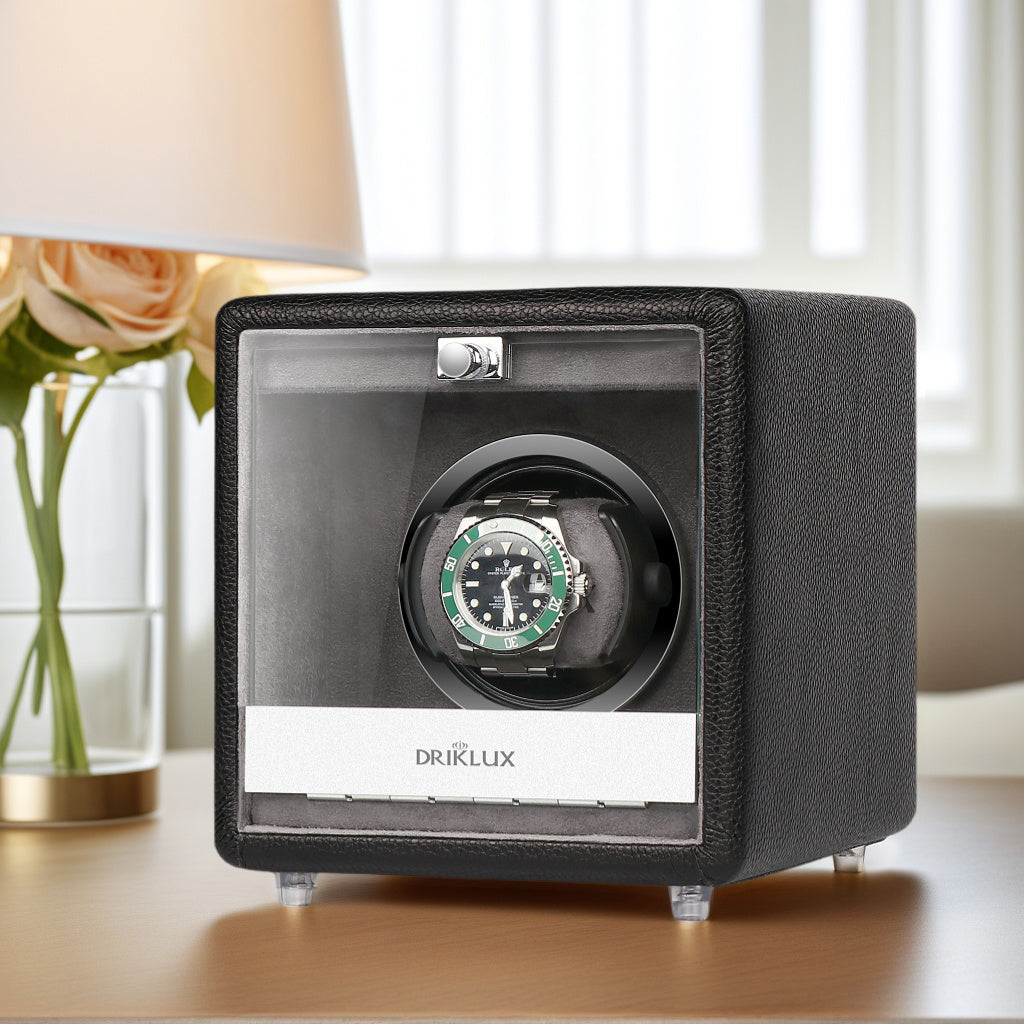
| Driklux TPD Single Winder | $150-$200 | Affordable leather, 650-2100 TPD, USB-powered, travel-friendly. | Tudor GMT or Hamilton Khaki Field (38mm auto); budget daily backups. | Stepper brushless motor (~15dB); 1-year warranty. |
Winner for most one-watch collectors: Driklux for Rolex-heavy users—proven 5+ year lifespan, fits 36-44mm cases like the Submariner perfectly.
Many collectors benefit from understanding finding the perfect watch winder.
FAQs
What should I know about The 'One Watch' Collector?
For the 'One Watch' collector who wears the same automatic daily—like a Rolex Submariner with Caliber 3135 or Datejust powered by Caliber 3235—a single watch winder is not strictly necessary. Your wrist provides ample motion (typically exceeding 650-900 turns per day) to keep the mainspring fully wound, with power reserves of 48-70 hours covering overnight rest without harm to the movement. Modern automatics like Omega or Tudor models self-lubricate during regular wear, avoiding oil drying i
What are the most common mistakes to avoid?
-
Problem: Cheap winders run continuously without rest periods, mimicking excessive motion that strains the slip clutch or dries lubricants faster than natural wear—especially risky for unidirectional calibers like vintage Patek Philippe or bidirectional ones in Omega/Tudor.
- Solution: Match your watch's specs exactly: Set bidirectional rotation with intermittent cycles (e.g., 800 TPD in 2-3 sessions with 8-12 hour pauses) to replicate wrist movement. For a Rolex Daytona (Cal
What should I consider when buying?
For the one-watch collector who wears their daily driver consistently, a single watch winder is often unnecessary—automatic movements like Rolex's Caliber 3135 or 3235 (found in the Submariner or Datejust) gain ample power reserve from wrist motion alone, typically 70 hours when fully wound, outlasting a standard 40-48 hour reserve without it.
Conclusion
Mastering the 'one watch' collector: is a single winder necessary if you wear the same watch daily? ensures your luxury timepieces receive proper care. By investing in quality equipment and following best practices, you protect your investment for years to come.
Further Reading
For deeper understanding of the topics covered in this guide, explore these authoritative resources:
- Automatic Watch - Wikipedia — Wikipedia
Galería de productos