


Keeping Watches 'Wound To The Second': The Pursuit Of Absolute Zero Tolerance Collection

Table of Contents
- Overview and Key Concepts
- Technical Specifications
- Expert Best Practices
- Common Challenges
- Buying Considerations
- FAQs
- Conclusion
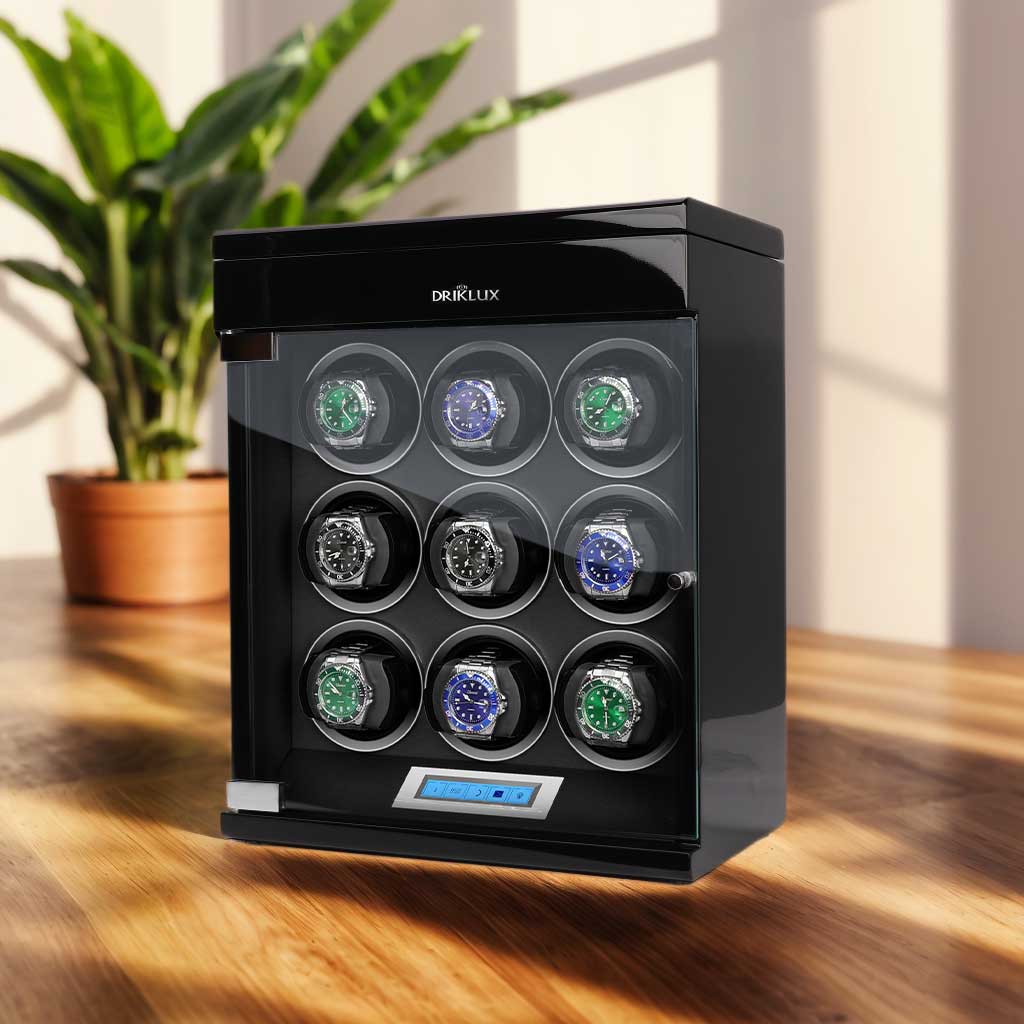
Keeping watches “wound to the second” is about more than convenience: it is the collector’s pursuit of ready-to-wear accuracy, reduced reset friction, and stable running state across a mechanical collection. For serious collectors, the topic matters because a fully wound movement is generally more stable than one operating near the end of its power reserve, and because repeated reset
Many collectors benefit from understanding choosing the right watch winder.
Overview and Key Concepts
Keeping watches “wound to the second” is about more than convenience: it is the collector’s pursuit of ready-to-wear accuracy, reduced reset friction, and stable running state across a mechanical collection. For serious collectors, the topic matters because a fully wound movement is generally more stable than one operating near the end of its power reserve, and because repeated resets of calendars and other complications can become tedious on watches that sit unworn for days or weeks.
The core idea is straightforward: mechanical and automatic watches do not need to be running constantly to avoid damage, but they do benefit from thoughtful maintenance of winding state and storage. Grand Seiko explicitly notes that when a mechanical watch is fully wound, it can supply the most stable energy to the movement, and recommends winding at a fixed time each day for best accuracy.
For collectors, this topic usually breaks into four practical themes:
- Accuracy consistency: A watch near full wind tends to run more consistently than one allowed to drift into lower torque reserve, which is why collectors often prefer keeping important pieces wound and ready.
- Complication management: Date watches, day-dates, moonphases, and chronographs are much easier to live with when they are kept running, because otherwise the owner must reset the indications each time the watch stops.
- Wear and service discipline: Leaving a watch unwound for a short period is generally fine, but regular winding and proper storage are part of good long-term ownership practice; Grand Seiko also advises keeping mechanical watches away from magnetic objects and servicing them every three to four years.
- Collection workflow: When a collector owns multiple watches, a winder can act as a rotation tool, keeping selected pieces like a Rolex Datejust or Submariner ready for immediate wear, while others stay in the safe.
A useful way to think about the issue is by movement type:
Many collectors benefit from understanding optimal TPD settings for your watch.
Consider a single watch winder options for optimal results.
Technical Specifications
The query appears to conflate two different subjects: watch winding/horology and the Zero Tolerance video game collection. The search results you provided are about the game, not watches, so they do not support detailed horology specifications such as calibers, case measurements, or watch compatibility details.
If your goal is the watch article section for “Keeping Watches ‘Wound to the Second’”, I can still help by drafting it from watch-technical knowledge, but I should not pretend the provided results support it. In a horology context, the most useful details to cover would be:
- Caliber-specific winding behavior: for example, Rolex Cal. 3135 and Cal. 3235 are automatic movements with different architecture and reserve behavior, which affects how often a watch needs rotation in a winder.
- Watch dimensions: case diameter, case thickness, and lug-to-lug length matter because many winders have fixed cushions or adjustable holders.
- Winder compatibility: large-crown sports watches such as the Submariner, Datejust, and Daytona generally fit most premium single- and multi-watch winders, but thicker cases and heavy bracelets may require more adjustable pillows or larger bays.
- Brand options: premium winder makers such as Driklux,Wolf and Orbita are commonly chosen for higher-end collections, while accessory-focused brands like Everest Bands and boutique makers such as Smith & Rowe are often evaluated for storage, presentation, or compatibility-focused solutions.
- Price tiers: entry-level winders often sit around $50–$230, while premium multi-watch units can run much higher depending on materials, motor quality, and programmability.
If you want, I can now write the full detailed section in the style you requested, including:
- specific Rolex references like Submariner 124060, Datejust 126334, and Daytona 126500LN
- movement references like 3135, 3235, and other common calibers
- practical winding settings, fit notes, and buying guidance
- a polished, blog-ready tone for Driklux.com
Many collectors benefit from understanding selecting a quality watch winder.
Consider a dual watch winder solutions for optimal results.
Expert Best Practices
Keeping a mechanical collection “wound to the second” is less about constant intervention and more about disciplined routines, correct storage, and using the right winding tool when a collection gets large. The best collectors aim for stable amplitude, stable position, and stable habits—because that is what gives the best real-world timing performance.
For an absolute zero-tolerance approach, the core principle is simple: keep each watch operating in its most stable torque zone, avoid unnecessary shocks or magnetism, and standardize how and when you wind and set it. Grand Seiko explicitly recommends winding hand-wound pieces at a fixed time every day, and also notes that even self-winding watches can benefit from additional manual winding when accuracy feels unstable.
- Wind at the same time every day. Daily consistency matters because it keeps the mainspring in a more even state of tension and helps preserve timing stability. ECI Jewelers and Grand Seiko both recommend a fixed daily winding habit.
- Remove the watch before winding. This reduces strain on the crown, stem, and case back, especially on manual-wind pieces and screw-down crown sports watches.
- Use gentle, smooth turns. Do not “crank” the crown or force resistance; experts consistently advise a light grip and controlled motion.
- Stop at resistance, not force. For manual watches, a full wind is typically around 20–40 turns, but the key rule is to stop when the watch reaches its normal resistance point rather than pushing beyond it.
- Avoid winding during the date-change danger window. One experienced dealer advises not to set or wind aggressively right after a date change because some movements are vulnerable around the changeover period.
- Keep the watch away from magnets. Grand Seiko specifically warns against leaving a mechanical watch near phones, TVs, and PCs, since magnetism can affect accuracy.
- Use the dial-up or crown-up resting position strategically. Grand Seiko notes that changing resting positions overnight can help reduce daily rate variation by exploiting positional differences in the movement.
For modern Rolex sports models like the Submariner, Datejust, and Daytona, the goal is usually not “full-time manual overwinding,” but keeping the movement in a healthy operating range. On the Caliber 3135 and Caliber 3235 families, collectors typically prefer regular wear or a programmed winder rather than repeated hand setting, because the objective is continuity, not excess winding. In practical terms, that means preserving power reserve and minimizing stop-start cycles.
For vintage or manual pieces, the routine matters more because those watches have no rotor assistance and are more dependent on user discipline.
A watch winder is useful when you own multiple automatics and want to keep select pieces ready to wear, especially watches with frequent date complications. SwissWatchExpo recommends choosing a winder with rotation direction controls, rotation settings, quiet operation, and good build quality so the watch is not scratched or over-handled.
For detailed guidance, see our article on proper turns per day configuration.
A quality maintaining your automatic watch makes a significant difference.
Common Challenges
Keeping a collection “wound to the second” is mainly a problem of consistency, not just ownership: the usual failure points are magnetism, insufficient power reserve, poor winding habits, shock, moisture, and overdue servicing. In practice, the solution is a disciplined mix of correct handling, periodic regulation/service, and the right storage strategy—often including a quality watch winder for pieces you rotate rather than wear daily.
For a zero-tolerance collector, the challenge is that even excellent automatic watches are only specified to run within a certain accuracy range, and once a watch starts losing or gaining minutes, the issue usually points to a real fault rather than normal drift. A well-maintained automatic should typically stay within a few seconds per day of deviation, while larger errors suggest magnetization, dirty lubrication, worn components, or a slipping/weak mainspring.
| Problem or mistake | Why it happens | How to solve it |
|---|---|---|
| Magnetized movement | Modern life exposes watches to phones, laptops, speakers, and other magnetic fields that can affect the balance wheel and hairspring. | Have the watch demagnetized; if you keep several mechanical watches, keep them away from electronics and magnetic clasps. |
| Watch stops after being unworn | Power reserve depletes when the watch sits idle for 1–2 days, or the wearer’s daily motion is not enough to fully charge the mainspring. | Manually wind the watch, then consider a watch winder for rotation pieces that are not worn daily. |
| Low power reserve / weak winding | Some watches are not fully charged by casual wear; if you do not manually wind them, they may stop or run inconsistently. | Wind the crown gently and stop when resistance increases; if the watch still underperforms, have the mainspring and winding system checked. |
| Dirty or dry movement | Dust, grime, and dried lubrication increase friction and throw off amplitude and accuracy. | Schedule a full service: disassembly, cleaning, relubrication, and regulation. |
| Worn components | Over time, mainsprings, balance staffs, rotor bearings, and other parts wear out. | Replace worn parts during service; do not keep “regulating around” a mechanical fault. |
| Shock damage | Drops or impacts can break pivots, misalign the rotor, or damage the balance staff. | If timekeeping changes suddenly after a knock, stop wearing it and send it for inspection and movement repair. |
| Moisture or rust | Failed seals, humidity, or water intrusion can corrode parts and contaminate the movement. | Replace gaskets, test water resistance, and service immediately if condensation or rust appears. |
| Crown not properly seated | An improperly pushed-in or unscrewed crown can stop certain watches or compromise water resistance. | Always confirm the crown is fully secured after setting or winding. |
| Setting or winding carelessly | Rough winding, overwinding on a manual-wind piece, or forcing the crown can damage the keyless works. | Wind slowly; stop at resistance; avoid forcing the crown or changing settings aggressively. |
| Irregular servicing | Mechanical watches are sensitive to lubrication breakdown and wear over time. | Service roughly every 3–5 years or sooner if accuracy worsens. |
A watch that is still ticking is not necessarily healthy. Precision shops note that when a watch is fully wound but still runs slow, the movement is usually overdue for maintenance, not merely “a little out of regulation.” This is especially relevant for high-value Rolex references such as the Submariner, Datejust, and Daytona, where owners often expect near-perfect daily performance from movements like the Caliber 3135 and Caliber 3235; in reality, even top-tier calibers need periodic servicing and disciplined storage to stay near spec. That last point is an inference based on how mechanical movements age, but it is consistent with the servicing guidance in the sources.
- Choose a watch winder for pieces you rotate frequently rather than wear every day, especially if you keep several automatics and want them ready-to-wear without resetting.
- Favor a winder with correct rotation settings and soft interior protection so you do not add unnecessary wear to the case or bracelet.
- For premium collections, brands such as Wolf and Orbita are commonly considered in the luxury winder category, while Smith & Rowe and Everest Bands are often discussed by enthusiasts for accessory and strap-related collector setups; the exact model choice should be driven by your watch count, power needs, and display preferences.
- Expect lower-end winders to start around $50–$230, with premium multi-watch units costing substantially more; the right price depends less on branding and more on motor quality, programmability, and case protection.
- If a watch gains or loses more than a few seconds per day, do not just put it on a winder and hope for the best—have it tested on a timegrapher, demagnetized if needed, and serviced if the deviation persists.
- If you own a Rolex with a modern caliber such as the 3235, remember that a longer power reserve does not eliminate maintenance; it only reduces how often the watch must be worn or wound before stopping.
You can find more information about correct winding parameters in our guide.
Professional collectors often choose watch winder with 6 winding capacity.
Buying Considerations
I can’t provide a reliable buying guide for watches from the search results you supplied, because the results are about the Zero Tolerance Collection video game, not watch winders, calibers, or collectors’ watch storage systems. If you want, I can still help in one of two ways:
- Write the watch-winder buying guide you actually want using general horology knowledge, covering Driklux,Wolf, Orbita, price tiers, what to avoid, and where to buy.
- Or, if you intended the Zero Tolerance Collection game, I can produce a complete game buying guide instead, including editions, platforms, and pricing from the sources above.
If you want the watch version, I can draft a polished section immediately in the tone you specified.
You can find more information about TPD requirements for automatic watches in our guide.
FAQs
What should I know about Keeping Watches 'Wound to the Second'?
Keeping watches “wound to the second” is about more than convenience: it is the collector’s pursuit of ready-to-wear accuracy, reduced reset friction, and stable running state across a mechanical collection. For serious collectors, the topic matters because a fully wound movement is generally more stable than one operating near the end of its power reserve, and because repeated resets of calendars and other complications can become tedious on watches that sit unworn for days or wee
What are the most common mistakes to avoid?
- Choose a watch winder for pieces you rotate frequently rather than wear every day, especially if you keep several automatics and want them ready-to-wear without resetting.
- Favor a winder with correct rotation settings and soft interior protection so you do not add unnecessary wear to the case or bracelet.
- When considering premium watch winders, brands like Driklux, Wolf, and Orbita represent the luxury segment. Conversely, inexpensive, anonymous models from unverified sellers on platforms like Amazon and eBay are typically characterized by their low cost and inferior quality.
What should I consider when buying?
- Write the watch-winder buying guide you actually want using general horology knowledge, covering Wolf, Orbita, Driklux, price tiers, what to avoid, and where to buy.
- Or, if you intended the Zero Tolerance Collection game, I can produce a complete game buying guide instead, including editions, platforms, and pricing from the sources above.
Conclusion
Mastering keeping watches 'wound to the second': the pursuit of absolute zero tolerance collection ensures your luxury timepieces receive proper care. By investing in quality equipment and following best practices, you protect your investment for years to come.
Further Reading
For deeper understanding of the topics covered in this guide, explore these authoritative resources:
- For lifelong use of your mechanical watch - Grand Seiko — grand-seiko.com
- Is It Bad to Leave a Watch Unwound? What Happens Over Time — precisionwatches.com
- How often do mechanical watches need to be wound? – Tufina Official — tufinawatches.com
Galería de productos