


Is It Safe To Ship A High-End Automatic Watch While It Is Still Inside A Portable Winder?

Table of Contents
- Overview and Key Concepts
- Technical Specifications
- Expert Best Practices
- Common Challenges
- Buying Considerations
- FAQs
- Conclusion
Yes—usually, but only if the watch is securely immobilized, the winder is turned off, or the device is specifically designed for transport and can’t let the watch bounce, shift, or keep running during transit.
For detailed guidance, see our article on choosing the right watch winder.
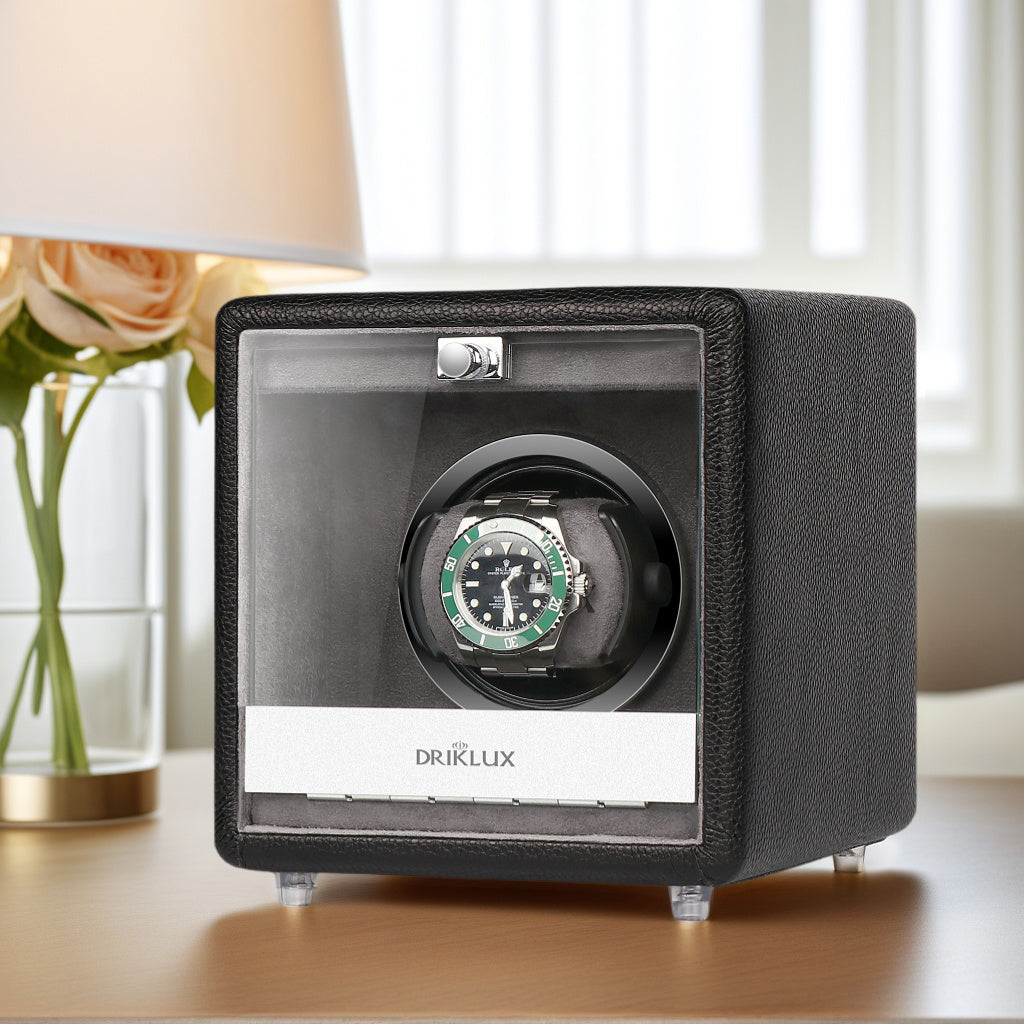
Overview and Key Concepts
Yes—usually, but only if the watch is securely immobilized, the winder is turned off, or the device is specifically designed for transport and can’t let the watch bounce, shift, or keep running during transit.
For serious collectors, the real issue is not whether an automatic movement can tolerate a winder in principle; it is whether shipping adds impact, vibration, temperature swings, and theft risk to a high-value mechanical object that is already delicate and often expensive to insure.
For a blog section aimed at collectors, the key themes are:
- Mechanical safety: Automatic watches are designed to be wound by motion, and reputable winders use controlled rotation and overwind protection, so normal winding itself is generally not considered harmful.
- Shipping risk: Even if the watch is safe inside the winder at home, shipping introduces shocks that can stress the case, bracelet, clasp, crown, rotor, and movement, especially on pieces like a Rolex Submariner, Datejust, or Daytona with calibers such as the 3135 or 3235.
- Packaging stability: The watch should not be able to move inside the winder or the outer box; any looseness can turn the winder into a secondary impact source during transit.
- Temperature and environment: Storage guidance for automatic watches emphasizes avoiding extreme temperatures and condensation risk, which matters when a parcel sits in trucks, depots, or unconditioned cargo spaces.
- Security and insurance: A high-end automatic watch shipped with a portable winder can look like a more valuable package, so the outer packaging should be discreet, insured, and trackable.
What collectors should know about portable winders specifically:
Many collectors benefit from understanding selecting a quality watch winder.
Professional collectors often choose watch winder safe options.
Technical Specifications
Shipping a high-end automatic watch inside a portable winder is usually not the safest choice; the watch should be secured separately in a padded travel case, and the winder should generally be shipped as an empty accessory or packed with the watch fully immobilized. A properly designed winder is not inherently harmful to an automatic movement, but shipping adds shock, vibration, and crush risk that a running winder is not designed to absorb.
For context, automatic watches are built to tolerate winding, and modern movements cannot be “overwound” in normal use because of built-in protection mechanisms such as slipping bridle systems; watch winders themselves also use programmed TPD settings and direction cycles to avoid excessive winding. The issue during shipping is not over-winding so much as impact damage, cushion slippage, and movement-on-case abrasion if the watch shifts inside the winder during transit.
For a collector-grade watch, the safest practice is to remove the watch from the winder and pack it as a standalone timepiece, especially if it is a Rolex Submariner, Datejust, or Daytona with a caliber such as 3135, 3235, or a chronograph movement that can be more costly to service if damaged. A travel winder such as a compact unit from brands like Wolf, Orbita, Smith & Rowe, or similar portable models can be useful for storage or display, but the product examples in the results are designed for winding and presentation—not for impact-rated shipping protection.
If you still want to ship the watch while it remains in a portable winder, use these precautions:
- Lock the watch in place on a correctly sized cushion so it cannot rotate or slide inside the winder case.
- Turn the winder off before packing it; do not ship it actively rotating.
- Place the winder inside a secondary rigid box with dense foam on all sides to prevent crushing and shock transfer; the internal watch case should not touch the outer carton.
- Choose a shipping box that minimizes empty space, because movement inside the carton is a bigger threat than the winding function itself.
- Avoid extreme temperatures; one storage guide recommends keeping watches away from conditions below -20°C/-4°F and above 60°C/140°F, which is especially relevant if the package will sit in a truck or warehouse.
- Use insured, trackable, signature-required shipping for any watch with significant value.
For detailed guidance, see our article on watch winder buying guide.
A quality protecting your watch collection makes a significant difference.
Expert Best Practices
Shipping a high-end automatic watch inside a portable winder is usually not recommended unless the winder is specifically designed as a travel case with secure padding, locked rotor support, and shock isolation. For most collectors, the safest practice is to remove the watch from the winder, cushion it separately, and ship the winder in its own box.
The main issue is not that an automatic movement is fragile in normal use; it is that shipping vibration and impact can cause the rotor to move continuously, which can add unnecessary stress if the watch is not immobilized well. Watch winders are designed to mimic wrist motion at controlled intervals, while safe-style winders and luxury storage systems are marketed for storage and display, not rough transit.
For a watch like a Rolex Submariner, Datejust, or Daytona, especially with modern calibers such as the Caliber 3135 or 3235, the movement itself is robust, but that does not make the entire package shipping-safe if the watch is bouncing inside a moving winder. A high-end automatic is best shipped as if it were a precision instrument: fixed in place, surrounded by soft but non-compressing materials, and isolated from any battery motor or spinning mechanism.
What experienced collectors and watch-service professionals generally do is:
- Remove the watch from the winder before shipping.
- Stop the winder completely and remove batteries or disconnect power if the unit is traveling in the same parcel.
- Use the original watch box if available, then place that box inside a larger outer carton with ample cushioning.
- Separate the winder from the watch so the rotor, cushion, or pillow cannot transmit shock to the case or bracelet.
- Ship via insured, tracked service with signature confirmation for any watch worth thousands of dollars.
- Photograph the watch, serial number, and condition before packing in case a damage claim is needed.
For detailed guidance, see our article on how to choose a watch winder.
Professional collectors often choose secure watch storage solutions.
Common Challenges
Shipping a high-end automatic watch inside a portable winder is usually not the safest choice unless the winder is fully secured, powered off, and packed as a separate protected component. The real risks are impact damage, movement inside the case, cushion compression, and accidental activation, not overwinding during transit itself.
For premium pieces like a Rolex Submariner, Datejust, or Daytona—especially with modern calibers such as the 3135 and 3235—the safest approach is typically to remove the watch from the winder, secure the watch head separately, and ship the winder as its own item. That is the approach most aligned with how reputable winder makers describe safe use: the watch must be held securely, the holder must not allow movement, and the winder should use controlled settings rather than constant rotation.
-
Problem: The watch shifts inside the winder during shipping.
Even a well-made winder can allow micro-movement when the package is dropped or inverted, which can stress the crown, bracelet, and case back. Secure packing matters because watch winders are designed for stationary display and rotation, not shipment under vibration and impact.
Solution: Remove the watch from the winder if possible, then wrap the watch head separately in soft microfiber and place it in a rigid travel case or watch roll. If it must remain inside the winder, immobilize the holder and fill all voids with dense foam so the watch cannot rattle. -
Problem: The winder turns on in transit.
A powered or battery-equipped portable winder can activate from vibration or accidental switch contact, which is unnecessary during shipping and can create extra wear over time.
Solution: Turn the unit fully off, remove batteries if practical, and disable any auto-on feature before packing. Ship it with the expectation that the watch will be stored, not actively wound, during transit. -
Problem: Cheap or poorly engineered winders do not hold the watch firmly.
Lower-cost winders are more likely to have weak cushions, loose holders, or noisier motors; those design weaknesses are exactly the kind of issue collectors criticize when discussing wear and overwinding concerns.
Solution: Use a quality brand with better fit and finish—examples in the premium segment include Wolf, Orbita, and luxury travel-oriented pieces from names such as Driklux or Aevitas. In the broader market, you will see prices ranging roughly from $80 to $350 for many portable models, with higher-end cases and multi-watch units costing more depending on materials and motor quality.
For detailed guidance, see our article on watch winder selection tips.
Professional collectors often choose watch winder security features.
Buying Considerations
Short Answer: No, it is generally not recommended to ship a high-end automatic watch while it is still running inside a portable watch winder.
While portable winders are excellent for storage and travel (keeping the watch ready to wear), shipping them introduces significant risks:
- Mechanical Strain: The constant motion of the winder during transit places unnecessary strain on the watch's intricate internal mechanisms (mainspring, gear train).
- Battery Failure: Portable winders rely on batteries. If the battery dies or leaks during transit, it can damage the watch or the winder's casing.
- Lack of Cushioning: Winders are designed to hold the watch, not to absorb the high-impact shocks of a shipping environment. They lack the multi-layer foam and bubble wrap required for safe logistics.
- Manufacturer Protocols: Major luxury brands (Rolex, Omega, Patek Philippe) and shipping insurers explicitly advise unwinding the watch and removing it from any active device before shipping.
Best Practice: Remove the watch from the winder, unwind it manually (stop the mainspring tension), and pack it in its original box or a dedicated, cushioned shipping container.
When preparing a high-end watch for shipment, avoid these common pitfalls that lead to damage or insurance denial:
Many collectors benefit from understanding finding the perfect watch winder.
FAQs
What should I know about Is It Safe to Ship a High-End Automatic Watch While It is Still Inside a Portable Winder??
- Mechanical safety: Automatic watches are designed to be wound by motion, and reputable winders use controlled rotation and overwind protection, so normal winding itself is generally not considered harmful.
- Shipping risk: Even if the watch is safe inside the winder at home, shipping introduces shocks that can stress the case, bracelet, clasp, crown, rotor, and movement, especially on pieces like a Rolex Submariner, Datejust, or Daytona with calibers such as the 3135 or
What are the most common mistakes to avoid?
-
Problem: The crown or winding stem takes a hit.
The crown is one of the most vulnerable points on an automatic watch, and a rigid winder mount can transmit shock directly to that area if the package is dropped.
Solution: Make sure the crown is not bearing any load from the holder. For watches with screw-down crowns—common on Rolex sports models—confirm the crown is fully secured before packing, then support the case so the crown is not the contact point.
What should I consider when buying?
When preparing a high-end watch for shipment, avoid these common pitfalls that lead to damage or insurance denial:
Conclusion
Mastering is it safe to ship a high-end automatic watch while it is still inside a portable winder? ensures your luxury timepieces receive proper care. By investing in quality equipment and following best practices, you protect your investment for years to come.
Further Reading
For deeper understanding of the topics covered in this guide, explore these authoritative resources:
- What Is a Watch Winder (and Do You Really Need One?) — precisionwatches.com
- Is using a watch winder bad for an automatic watch? — watchwinders.com
Galería de productos