

Should 'New Old Stock' (Nos) Watches Ever Be Put On A Watch Winder?

Table of Contents
- Overview and Key Concepts
- Technical Specifications
- Expert Best Practices
- Common Challenges
- Buying Considerations
- FAQs
- Conclusion
No, 'New Old Stock' (NOS) watches should generally not be put on a watch winder, as their decades of inactivity can lead to lubricant degradation that continuous motion may exacerbate, risking mechanical damage in pristine, unworn timepieces valued by serious collectors.
Many collectors benefit from understanding choosing the right watch winder.
Overview and Key Concepts
No, 'New Old Stock' (NOS) watches should generally not be put on a watch winder, as their decades of inactivity can lead to lubricant degradation that continuous motion may exacerbate, risking mechanical damage in pristine, unworn timepieces valued by serious collectors.
NOS watches—factory-sealed, unworn automatics like a 1970s Rolex Submariner with Caliber 3135 or an Omega Seamaster from the same era—represent a collector's holy grail, often fetching $10,000-$50,000 on platforms like 1stDibs or Second Hand Horology. These pieces, untouched since production, preserve original oils and components in a dormant state, unlike daily drivers.
- Lubricant Breakdown: Vintage calibers such as Rolex Caliber 3235 (post-2005 NOS) or older 3135 rely on thickened greases that have settled over 20-50 years. A winder's constant rotation (e.g., 650-800 TPD at 38-45 RPM, standard for Barrington or Wolf models) distributes degraded lubricants unevenly, accelerating wear on pivots and jewels.
- Seal and Gasket Fatigue: NOS cases, like those on a Daytona Caliber 4130, have untouched gaskets prone to hardening. Vibration from winders (even quiet ones like Orbita Siena, $800-$1,200) can micro-stress seals, inviting moisture ingress without regular wrist testing.
- Over-Winding Myth vs. Reality: Modern Rolex service manuals specify no harm from over-winding due to slipping clutches, but NOS lacks post-factory calibration. Collectors report mainspring "set" in dormant pieces, where winders fail to mimic human arm variability.
Real-world cases: Forums and auction houses note NOS Datejust refs (e.g., 1601) serviced prematurely after winder use, dropping value 20-30% from "unmolested" status.
- Short-Term Display Only: Use a gentle winder like Wolf Cub ($230-$350) or Everest Bands single-module ($50-$150) at minimal TPD (400-500) for 4-8 hours weekly. Monitor for heat or noise.
- Post-Service NOS: If bench-tested by a specialist (e.g., Smith & Rowe authorized service, $800-$1,500 for Rolex), pair with brand-specific settings—Rolex 650 TPD bidirectional via Barrington Regency ($400-$900).
- Quartz or Manual-Wind NOS: No issue—skip winders entirely (e.g., vintage Bulova Hi-Beat NOS from Second Hand Horology).
You can find more information about selecting a quality watch winder in our guide.
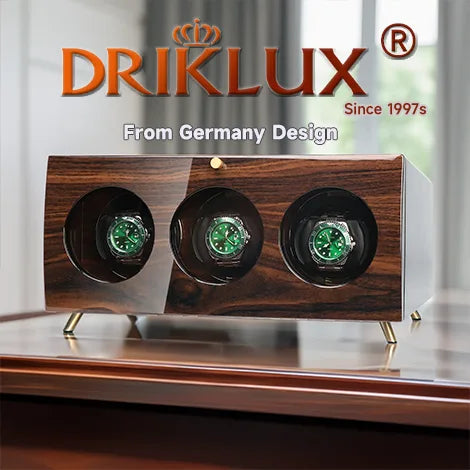
Professional collectors often choose triple wood watch winders for automatic watches.
Technical Specifications
No, 'New Old Stock' (NOS) watches should generally not be put on a watch winder unless they are confirmed automatic movements with verified modern lubricants and bidirectional winding compatibility—prioritizing manual winding or storage to preserve their pristine, unaged condition. NOS pieces, often vintage Rolex models like the Submariner Date ref. 16613LN or GMT-Master II ref. 116718LN, sit decades unworn in original boxes, retaining factory grease that can degrade with constant motion.
NOS automatics feature calibers such as Rolex's Caliber 3135 (found in Submariner Date 16610, 40mm case, ~31 jewels, 48-hour power reserve) or Caliber 3235 (newer Datejust 41 refs like 126300, 70-hour reserve, Paraflex shock system), which rely on synthetic oils applied in the 1980s-2000s. Continuous winder rotation (e.g., 650 TPD bidirectional for most Rolex) accelerates lubricant breakdown, leading to metal-on-metal wear in the rotor and gear train—especially problematic for NOS where seals remain airtight and untested.
- Overwear on rotor: Bidirectional winders simulate wrist motion but exceed natural variance; vintage Caliber 3035 in Oyster Perpetual ref. 114300 (34mm) risks uneven polishing on the microstella balance weights at 650-800 TPD.
- Lubricant migration: Motion pushes aged oils into escapement jewels (e.g., 24-29 jewels in Daytona Cosmograph Caliber 4130, 44mm, 72-hour reserve), causing gumming absent in hand-wound use.
- Manual-wind NOS exceptions: Many NOS are manual-wind (e.g., Rolex Cellini Time ref. 50509, Caliber 7040/1, 30mm-38mm cases), incompatible with winders lacking rotor simulation—winders only suit autos.
Vintage Omega NOS like Speedmaster Moonwatch (manual Caliber 1861, 42mm) explicitly reject winders.
For confirmed bidirectional automatic NOS post-1980s with service history:
- Set 650 TPD bidirectional (CW+CCW) for Rolex Submariner 16613LB (Caliber 3135, 40mm x 13mm thick).
- Use premium winders like Wolf Cub Single ($200-$350, adjustable 600-800 TPD, soft leather-lined holders for 36-52mm watches) or Orbita Siena ($500-$800, programmable rotors, fits 38-50mm lugs).
- Everest Bands silicone straps ($50-$100) secure NOS bracelets without stress; avoid cheap plastic cups scratching Oyster cases.
Many collectors benefit from understanding watch winder buying guide.
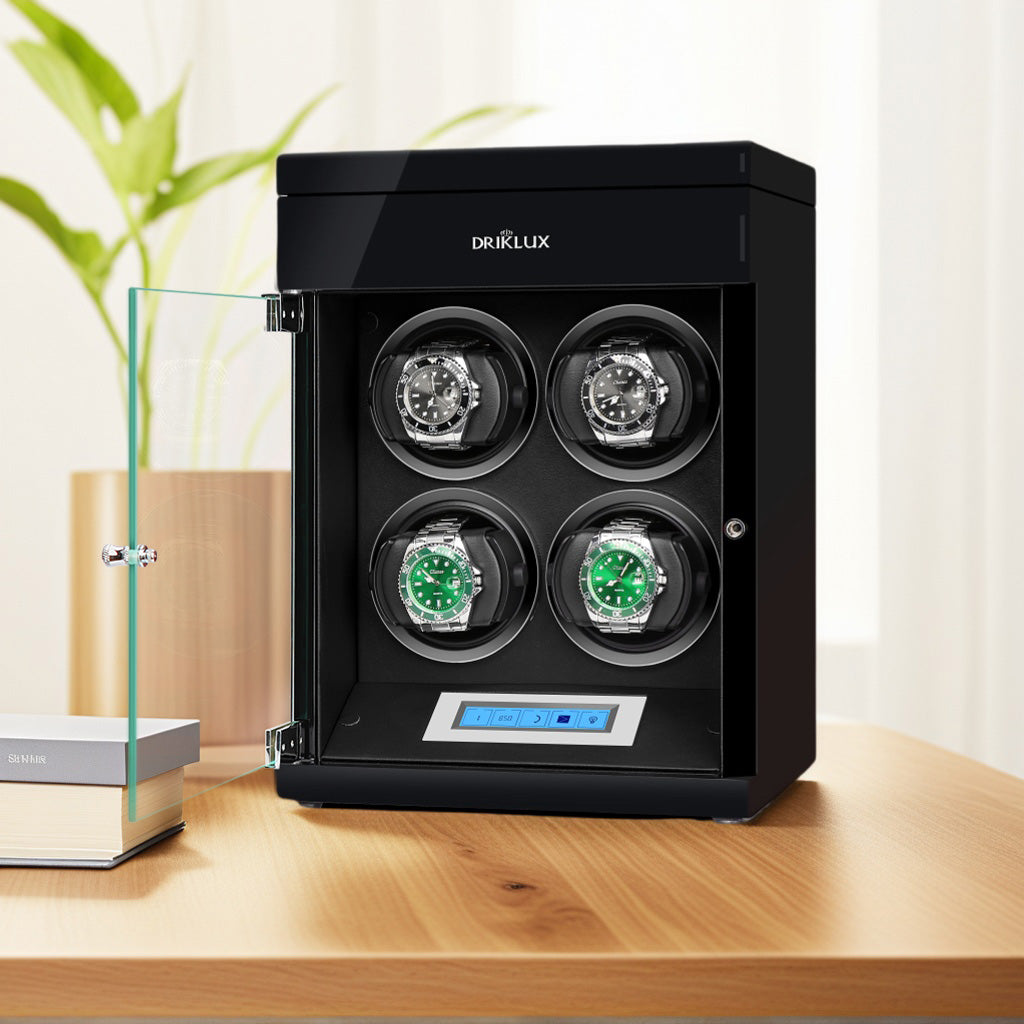
Professional collectors often choose 4 wood watch winders for automatic watches.
Expert Best Practices
No, 'New Old Stock' (NOS) watches should generally not be put on a watch winder. These pristine, unworn timepieces from past production runs—often featuring vintage calibers like Rolex's Caliber 3135 in a Submariner ref. 16610 or Caliber 3035 in a Datejust ref. 16030—risk unnecessary mechanical stress that could compromise their untouched condition and future collectible value.
Experienced collectors and horologists prioritize preserving the "new" status of NOS pieces, which haven't seen wrist time or lubrication migration from prolonged operation. Constant rotation on a winder introduces friction in the mainspring barrel, where the slipping bridle (designed to prevent overwinding) rubs inner walls over time, accelerating wear—especially critical for dormant NOS movements unused for decades.
- Mainspring fatigue: 24/7 winding fatigues the mainspring without rest periods, a concern amplified in NOS Rolex Daytonas with Caliber 4130 or Omega Speedmasters with Caliber 861, where oils may have dried.
- Lubrication issues: Unrun NOS watches have static lubricants; motion disperses them unevenly, potentially gumming up gears in ETA-based calibers like the 2824 found in many NOS TAG Heuer or Breitling models.
- Overwinding simulation: Even with safeguards, winders exceed natural wrist motion, wearing crowns and stems—costly repairs ($200-$500) for screw-down crowns on NOS Submariners.
Bob's Watches notes bidirectional winders suit modern Rolexes at 650 TPD, but vintage or NOS calibers (e.g., Caliber 1570) demand caution, as unidirectional winders like those for Jaeger-LeCoultre may mismatch. Teddy Baldassarre advises manual winding then letting NOS run down monthly to mimic natural use and inspect.
Top collectors store NOS watches fully wound but static, checking quarterly. Here's how:
Many collectors benefit from understanding maintaining your automatic watch.
A quality single watch winder options makes a significant difference.
Common Challenges
New Old Stock watches require exceptional caution on winders due to decades-old lubricants, potentially compromised movements, and the irreversible nature of damage to collectible timepieces. The decision to wind a NOS watch demands understanding both the specific vulnerabilities of aged movements and the technical requirements of modern winding devices.
NOS watches—typically unworn pieces manufactured 20-50+ years ago—carry movement conditions fundamentally different from contemporary timepieces. Over decades of storage, the synthetic oils and greases originally applied during manufacture have often degraded, thickened, or migrated into critical components like the hairspring. This degradation creates a paradox: while the watch appears pristine externally, the internal movement may be fragile and unpredictable under sustained mechanical stress.
The primary risk isn't the winder itself, but rather exposing a delicate, aged movement to continuous rotation without professional evaluation. A winder operating at even modest settings (typically 400-600 TPD for most automatics) applies consistent mechanical force that a 40-year-old movement may not tolerate safely.
The Problem: Aged lubricants diffuse into hairsprings, causing them to stick or bind. Additionally, vintage movements may have been exposed to magnetic fields during storage, resulting in magnetized balance wheels or hairsprings that cause erratic timekeeping.
Why It Matters for NOS: A winder cannot correct magnetization or internal lubricant migration. Continuous rotation may actually accelerate hairspring stiction, causing the watch to run progressively slower or stop entirely.
Many collectors benefit from understanding how to choose a watch winder.
Professional collectors often choose dual watch winder solutions.
Buying Considerations
New Old Stock (NOS) watches—unworn, vintage pieces like Omega Seamaster models or Bulova Precisionists from the 1960s-1980s—should rarely, if ever, be placed on a watch winder. Their long-term lubrication has likely dried or thickened, risking mechanical damage from constant motion, especially in older calibers without modern synthetic oils. For Rolex NOS examples such as a Caliber 3135 Datejust or Submariner (often $10,000-$50,000 on sites like 1stDibs), experts recommend hand-winding sparingly and storing them static to preserve originality and value.
- Lubrication Breakdown: NOS pieces, sitting decades in original boxes, suffer from oil evaporation. Running a Caliber 3235 Daytona NOS on a winder could accelerate wear on the escapement, unlike serviced modern automatics.
- Vintage Caliber Specifics: Avoid winders for unserviced Omega Co-Axial calibers or Bulova's high-beat movements (e.g., 10.67mm thick models); they need professional inspection first.
- Collector Consensus: Vintage enthusiasts prefer Barrington Watch Winders only for actively worn pieces, not pristine NOS to maintain "unmolested" status.
Exception: If authenticated and serviced by a specialist (cost: $500-$1,500), a gentle winder setting (e.g., 900 TPD bidirectional) may be safe short-term—but test manually first.
Prioritize low-TPD (turns per day), quiet, jewelry-grade winders from Driklux or proven brands. Match to your NOS caliber's power reserve (e.g., Rolex 3135 needs ~650-800 TPD). Avoid cheap plastic units that vibrate and damage delicate NOS cases.
| Brand/Model | Capacity & Key Features | Price Range | Best For NOS Collectors | Drawbacks |
|---|---|---|---|---|
| Wolf Chelsea | 1-8 watches; leather interior, 900-1,800 TPD bidirectional, battery/mains option | $200-$800 | Gentle for serviced Rolex Submariner NOS; silk lining prevents scratches | Higher-end models bulky for travel |
| Orbita Siena | Single watch; programmable 650-1,200 TPD, rotor-style (mimics wrist), wood cabinet | $400-$1,200 | Ideal for Omega NOS; minimal wear simulation | Single-watch limit; premium pricing |
| Driklux | 4 watches; brushless stepper motor motors, 4 directions, storage for quartz backups | $400-$700 | for 4 watch winder which Vintage collectors' favorite; fits Datejust arrays safely post-service | Requires app for custom TPD |
| Rapport Optima Time Capsule | 1 watch; futuristic porthole view, brass cogs, 900-2,300 TPD | ~$2,000 | Display piece for one prized Daytona NOS | Overkill cost for most |
Many collectors benefit from understanding watch winder selection tips.
FAQs
What should I know about Should 'New Old Stock' (NOS) Watches Ever Be Put on a Watch Winder??
No, 'New Old Stock' (NOS) watches should generally not be put on a watch winder, as their decades of inactivity can lead to lubricant degradation that continuous motion may exacerbate, risking mechanical damage in pristine, unworn timepieces valued by serious collectors.
What are the most common mistakes to avoid?
The primary risk isn't the winder itself, but rather exposing a delicate, aged movement to continuous rotation without professional evaluation. A winder operating at even modest settings (typically 400-600 TPD for most automatics) applies consistent mechanical force that a 40-year-old movement may not tolerate safely.
What should I consider when buying?
New Old Stock (NOS) watches—unworn, vintage pieces like Omega Seamaster models or Bulova Precisionists from the 1960s-1980s—should rarely, if ever, be placed on a watch winder. Their long-term lubrication has likely dried or thickened, risking mechanical damage from constant motion, especially in older calibers without modern synthetic oils. For Rolex NOS examples such as a Caliber 3135 Datejust or Submariner (often $10,000-$50,000 on sites like 1stDibs), experts recommend hand-winding spari
Conclusion
Mastering should 'new old stock' (nos) watches ever be put on a watch winder? ensures your luxury timepieces receive proper care. By investing in quality equipment and following best practices, you protect your investment for years to come.
Further Reading
For deeper understanding of the topics covered in this guide, explore these authoritative resources:
- Automatic Watch - Wikipedia — Wikipedia
Galerie de produits