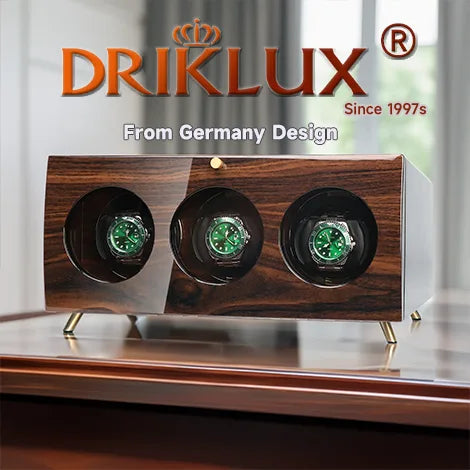
For any serious watch collector, protecting your timepieces is a top priority. This protection extends beyond simple storage; it involves safeguarding against theft, environmental damage, and ensuring the mechanical health of your automatic watches. This leads to a critical question: what is the smarter investment for superior protection—a dedicated watch winder safe or a high-quality standard safe?
While both offer security, they serve fundamentally different purposes. A standard safe provides passive protection, while a watch winder safe offers an integrated solution for both security and maintenance. This guide compares them across protection, usability, and value to help you decide which is the right choice for your collection.
What Is a Watch Winder Safe?
A watch winder safe is a specialized security cabinet that integrates one or more powered watch winders into its design. It's a holistic solution designed for collectors who need to keep multiple automatic watches not only secure but also perfectly wound and ready to wear.
Typical features include:
-
Multiple Rotors: To accommodate growing collections.
-
Programmable Settings: Customizable Turns Per Day (TPD) and rotation directions for each watch.
-
Luxury Finishes: Premium interior lighting, fine leather, and wood finishes that turn security into a display piece.
The primary use case is for the collector with several automatic timepieces who values the convenience of having them always running and set correctly.
What Is a Standard Safe in This Context?
A standard safe is a security container designed for general-purpose protection of valuables. In this context, it's a safe without built-in winding capabilities. These safes are often rated for both burglary and fire resistance.
Common types include:
- Wall safes, floor safes, and standalone home safes.
- Bank safe deposit boxes.
Their main advantage is flexibility. You can store watches (often in watch boxes), jewelry, important documents, cash, and other valuables together.
Types of Protection Compared
When evaluating safes, protection can be broken down into three categories:
-
Physical Security: Resistance to forced entry, drilling, prying, and tampering.
-
Environmental Protection: Shielding from fire, heat, humidity, and dust.
-
Functional Protection: The ability to keep watches wound and lubricated versus simply storing them statically. This is a key differentiator and crucial for keeping watches running.
Security Features: Watch Winder Safe vs. Standard Safe
Both types of safes can offer robust security, but their focus differs.
-
Locking Systems: Watch winder safes often feature high-tech electronic or biometric locks for quick, convenient access. Standard safes offer a wider range, from traditional mechanical dials to high-security electronic keypads.
-
Body and Door Construction: Steel thickness, bolt work, and hinge design determine a safe's resistance to physical attack. High-end models in both categories offer excellent construction, but standard high-security safes are often built to more rigorous certification standards.
-
Alarm Integration: Many modern safes, both standard and winder-equipped, can be integrated with home security systems, featuring sensors for motion, tilt, or forced entry.
Comparison Table – Security Aspect
| Feature |
Watch Winder Safe |
Standard Safe |
| Primary Purpose |
Secure and keep watches wound |
Secure storage of various valuables |
| Lock Options |
Often electronic/biometric with a luxury focus |
Wide range: mechanical, electronic, high-security |
| Anti-Theft Construction |
Good to excellent (varies by brand/grade) |
From basic home use to high-security/bank-grade |
| Alarm Integration |
Sometimes included or optional |
Available on many mid- to high-end models |
Protection for the Watches Themselves
This is where the watch winder safe truly shines.
A watch winder safe keeps your automatic watches in optimal condition by ensuring they are always running. This reduces the need to reset the time, date, and complex complications. More importantly, it keeps the movement's lubricants evenly distributed, which is vital for long-term health.
A standard safe offers strong passive protection from external threats, but the watches inside will stop. While this isn't inherently damaging for short periods, long-term static storage can cause lubricants to settle. The debate between active winding and static storage is a classic one, but most experts agree that controlled motion is preferable to none at all, as explored in the watch winder vs. manual winding debate.
Fire, Humidity, and Environmental Considerations
-
Fire Rating: Standard safes are more likely to carry a formal fire rating (e.g., 1-2 hours at a certain temperature). While some high-end watch winder safes offer fire protection, it's a feature more commonly associated with traditional safes.
-
Humidity Control: Both safe types can create a sealed environment where humidity can be a concern. This is typically managed with desiccants or electronic dehumidifiers.
-
Light and Dust: Both options provide excellent protection from light and dust when closed. The interior materials (suede, leather) also help create a stable micro-environment.
Convenience and Everyday Use
For a collector who rotates their watches frequently, convenience is key.
-
Watch Winder Safe: Offers true "grab-and-go" readiness. Your watch is always set, wound, and ready to be worn. The open safe can also serve as a beautiful display.
-
Standard Safe: Requires you to manually wind and set your watch before wearing it. This can be a cherished ritual for some but a hassle for others, especially for watches with complex perpetual calendars or moonphase complications. Optimizing watch winder settings in a winder safe automates this entire process.
Capacity, Modularity, and Future Expansion
Your collection is likely to grow, so planning for the future is smart.
-
Watch Winder Safe: Has a fixed number of winders. While you can buy a large one, you may outgrow it. Expansion often means buying a new, larger unit.
-
Standard Safe: Offers superior flexibility. You can fill it with watch trays, rolls, and boxes. If you decide you need winders, you can add standalone units inside, making it easy to upgrade as your needs change. This is a key consideration when deciding whether to get a single or multi-watch winder.
Cost and Value Analysis
-
Upfront Cost: A watch winder safe is almost always a larger initial investment due to the integrated motors, electronics, and luxury finishing.
-
Operating Costs: A winder safe will consume a small amount of electricity. A standard safe has no operating costs.
-
Long-Term Value: A watch winder safe adds value through convenience, proper watch care, and the luxurious experience it provides. It signals that you are a serious collector.
Comparison Table – Cost & Practicality
| Factor |
Watch Winder Safe |
Standard Safe |
| Upfront Price |
Higher (mechanism + luxury finishing) |
Wide range; basic to high-security |
| Operating Cost |
Power usage, possible motor servicing |
Minimal (no power, low maintenance) |
| Watch Readiness |
Always set and running |
Requires winding and setting before wearing |
| Versatility |
Optimized for watches |
General-purpose for many valuables |
Who Should Choose a Watch Winder Safe?
A watch winder safe is the ideal choice for:
-
Enthusiasts with multiple automatic watches, especially those with complex complications that are tedious to reset.
-
Collectors who frequently rotate their watches and demand instant readiness combined with high security.
-
Owners who value an integrated, high-end presentation and see the safe as part of their room's aesthetic.
Who Should Choose a Standard Safe?
A standard safe is often the better choice for:
-
Owners with mixed collections that include quartz watches, manual-wind models, jewelry, and documents.
-
Buyers who prioritize a certified high-security or fire rating above all else.
-
Budget-conscious users who prefer a lower upfront cost and the flexibility to add separate winders later.
The Hybrid Strategy: Best of Both Worlds
For ultimate protection and flexibility, consider a hybrid approach: place standalone Driklux watch winders inside a high-quality standard safe.
This strategy gives you the top-tier security and fire rating of a standard safe while providing the winding benefits for your automatic watches. It's a modular solution that can grow with your collection. Just be sure to consider power routing, as some safes can be ordered with internal power outlets.
Conclusion
Neither option is universally "better." The right choice depends entirely on your collection, habits, security needs, and budget.
- A watch winder safe is an investment in convenience, presentation, and the functional health of your automatic watches.
- A standard safe is an investment in versatile, high-grade security and environmental protection.
For many serious collectors, the ultimate goal is to combine high-grade security with quality winding solutions. Whether you choose an all-in-one watch winder safe or a hybrid strategy, you are taking the necessary steps to protect your valuable timepieces for generations to come.