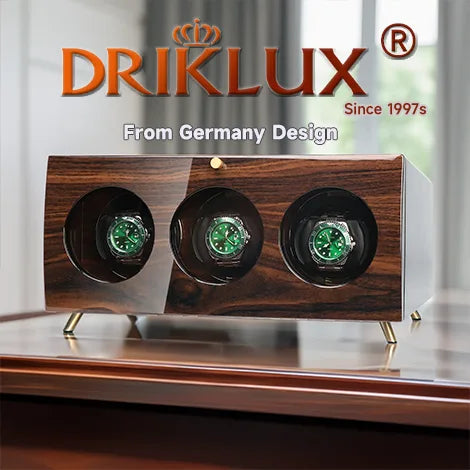


The Time Tax: How Watch Winders Save You Minutes And Prevent Setting Errors

Table of Contents
- Understanding the Fundamentals
- Technical Specifications
- Best Practices and Recommendations
- Common Challenges and Solutions
- Buying Guide
- Expert FAQs
- Conclusion
Watch winders save users minutes daily by eliminating manual time resets on automatic watches and prevent setting errors, especially for complex complications like perpetual calendars, by continuously simulating wrist motion to maintain full power reserve.
At The Top 10 Watch Winders for Your Automatic Timepieces, we specialize in premium solutions for luxury watch care and maintenance.
Understanding the Fundamentals
Watch winders save users minutes daily by eliminating manual time resets on automatic watches and prevent setting errors, especially for complex complications like perpetual calendars, by continuously simulating wrist motion to maintain full power reserve.
Automatic (self-winding) watches rely on a rotor or bumper system that winds the mainspring through wrist movement, typically providing 38-72 hours of power reserve before stopping. When not worn, the watch halts, imposing a time tax: users must manually wind and reset the time—and often date, day, month, or moonphase—each rotation from storage. For simple time-only models, this takes seconds; for perpetual calendars or GMTs, it can consume 5-15 minutes per reset, multiplying across a collection. Winders eliminate this by keeping watches running accurately, ready for immediate wear.
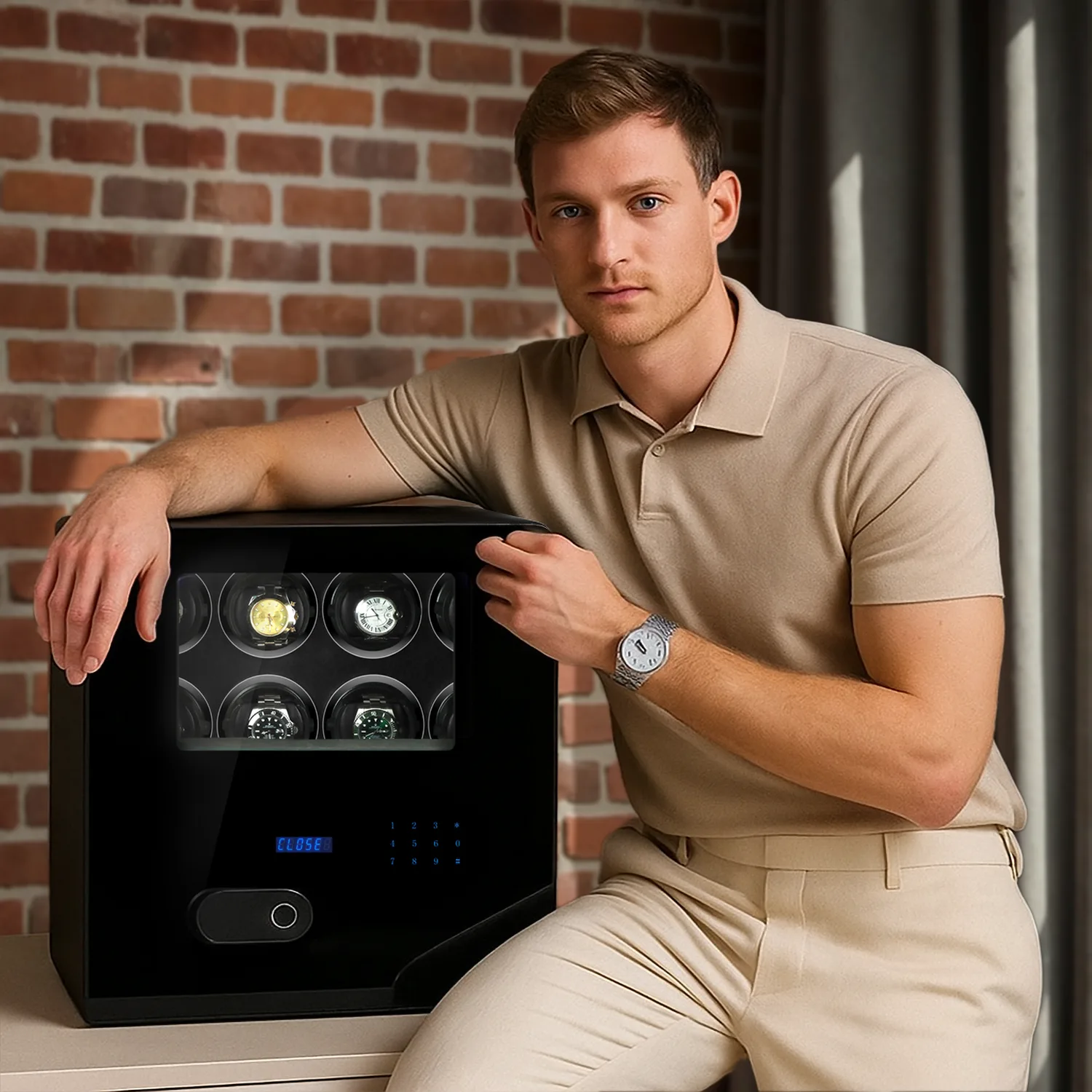
Watch winders are motorized devices (AC or battery-powered) with a cushioned holder that rotates the watch to mimic arm motion, activating the rotor to wind the mainspring. Key engineering principles include:
- Intermittent Rotation with Rest Periods: Winders cycle short bursts (e.g., 30 seconds to 6 minutes) followed by pauses (e.g., 53-55 minutes), simulating natural wear and distributing lubricant evenly to avoid mechanical strain—continuous spinning risks accelerated wear if unserviced.
- Protection Against Overwinding: A mainspring bridle (slip-gear) disengages at full tension, making overwinding impossible regardless of winder settings.
- Power Sources: Quiet Japanese motors are common in premium models for minimal vibration.
Adjustable Tpd (650-1950) And Directions
Adjustable TPD (650-1950) and Directions: Verify against your calibers (e.g., Rolex Oyster Perpetual: 650-800 TPD bi-directional).
For more details, see our guide on Watch Winder Settings Guide: Recommended Turns Per Day (TPD).
Quiet Motors And Features
Quiet Motors and Features: LCD displays, flex cushions for 30-120mm straps, multiple programs.
For more details, see our guide on Your Friendly Guide to Watch Winder Settings.
Build Quality
Build Quality: Avoid cheap models with constant rotation; test for vibration.
For more details, see our guide on Maximizing Your Ulysse Nardin Watch's Performance with the Right Winding guide and tpd setting.
Learn more: Discover the Top 10 Benefits of Triple Watch Winders.
Explore our Elegant Compact Double Watch Winders for optimal watch care.
Explore our Compact Classic Triple Best Watch Winders for rolex for optimal watch care.
Technical Specifications
I don't have search results that specifically address "The Time Tax: How Watch Winders Save You Minutes and Prevent Setting Errors" as a titled work or concept. The search results provided contain general watch winder specifications and guidance, but they don't discuss this particular topic or framework.
However, I can infer what you're likely asking about based on the search results: watch winders prevent time-related inconveniences by maintaining automatic watch accuracy and eliminating the need for manual resetting.
Rotation Direction Control
Rotation Direction Control
For more details, see our guide on Anti-Magnetic Shielding in Watch Winders: Essential Protection for Modern Movements.
The Search Results Provided Contain General
The search results provided contain general watch winder specifications and guidance, but they don't discuss this particular topic or framework.
However, I can infer what you're likely asking about based on the search results: watch winders prevent time-related inconveniences by maintaining automatic watch accuracy and eliminating the need for manual resetting.
Here's what the search results reveal about how winders address these practical concerns:
Maintaining Accuracy Without Manual Intervention
Automatic watches require regular winding to maintain power reserve and accurate timekeeping
For more details, see our guide on Winding the Perpetual Calendar: Optimal TPD Settings for High-Complication Watches.
Without A Winder
Without a winder, stopped watches must be manually wound and reset—a process that costs time and introduces the risk of setting errors
For more details, see our guide on Why Quality Matters: The Ultimate Guide to Watch Winders 2025.
Learn more: The Ultimate Expert Guide to H. Moser & Cie. Watch Winders.
Explore our Dual Self-Winding Double Watch Winders Box for optimal watch care.
Explore our TPD Single Watch Winder for optimal watch care.
Best Practices and Recommendations
Watch winders eliminate the recurring burden of manual winding and resetting automatic watches, a task that compounds significantly across collections. For serious collectors, this "time tax" represents hours annually—time reclaimed through consistent automation and error prevention.
Every time an automatic watch stops, you face a dual penalty: the immediate task of winding it, plus the often-tedious process of resetting complications. For watches with perpetual calendars, moon phases, or multiple time zones, this resetting becomes genuinely time-consuming and error-prone. A single perpetual calendar reset can require careful manipulation of multiple pushers and extensive trial-and-error to verify accuracy.
With multiple watches rotated regularly, this burden escalates dramatically. Collectors managing several timepieces face the constant friction of deciding which watch needs winding, then executing the reset sequence each time.
Time And Date Remain Accurate Without
Time and date remain accurate without manual intervention
For more details, see our guide on Small Space Big Collection: The Best Compact Watch Winders for Apartment Living.
Complex Complications Stay Synchronized Without Risk
Complex complications stay synchronized without risk of miscalibration
For more details, see our guide on The 5 Best Silent Watch Winders for Your Bedroom or Office.
No Data Loss Occurs On Watches
No data loss occurs on watches tracking perpetual calendars or astronomical functions
For more details, see our guide on Why We Choose Stepper Brushless Motors as the Drive for Watch Winders A Deep Dive into Driklux Materials.
Learn more: The Watch World’s "Secret": 10 -Known Facts About Watch Winders.
Explore our Quadruple Auto Watch Winders Box for automatic watch for optimal watch care.
Explore our 6 Watch Winders Box for automatic watch for optimal watch care.
Common Challenges and Solutions
Watch winders save users minutes daily by eliminating manual winding and time resets on automatic watches, while preventing setting errors on complications like perpetual calendars or moon phases that require tedious adjustments after stopping. They simulate wrist motion through customizable rotations (e.g., clockwise, counterclockwise, or bi-directional) at specific Turns Per Day (TPD) settings, typically 650-800 TPD for most calibers like ETA 2824 or Sellita SW200, keeping lubricants circulating and power reserves full.
Manually winding multiple automatics or resetting stopped watches imposes a cumulative burden: 1-2 minutes per watch for winding, plus 5-10 minutes for complications (e.g., aligning a perpetual calendar across date, day, month, and leap year). For a 5-watch collection rotated weekly, this adds 30-60 minutes monthly. Winders eliminate this by maintaining continuous operation, ensuring watches are grab-and-go ready.
Watch winders enhance convenience but introduce mechanical and operational challenges. Below is a table of prevalent issues, drawn from expert analyses, with targeted solutions incorporating technical specs like TPD (critical for movements such as Rolex Caliber 3135 at ~720 TPD bi-directional).
Or Under-Winding Damages Movements If Tpd
or under-winding damages movements if TPD, direction, or rest periods mismatch the caliber (e.g., Seiko NH35 needs 650-800 TPD clockwise). | Select winders with programmable modes: set exact TPD (e.g., 650, 800), direction (CW/CCW/bi), and rest cycles mimicking wrist use. Consult manufacturer specs for your watches. |
For more details, see our guide on The Perfect Gift Guide for Watch Enthusiasts: From Watch Winders to All the Accessories They'll Love.
Caliber-Specific Setup
Caliber-Specific Setup: Rolex (e.g., Cal. 3235: 650-700 TPD bi-directional); Omega Co-Axial (e.g., 8500: 650 TPD CW). Test for 48 hours and monitor accuracy (±5s/day).
For more details, see our guide on The Great Debate: Do Watch Winders Really Shorten Your Watch’s Service Interval?.
Historical Context
Historical Context: Winders evolved post-WWII with growing collections; modern units (e.g., Barrington) integrate smart controls since the 2010s for precision.
For more details, see our guide on The Aesthetics of Engineering: Why Carbon Fiber Is the Top Choice for Luxury Watch Winders.
Learn more: Maximizing Your Time: The Expert Guide to Choosing a Watch Winder Safe.
Explore our Quadruple Auto Watch Winders Box for Rolex for optimal watch care.
Explore our 9 Watch Winders Box for automatic watch for optimal watch care.
Buying Guide
Watch winders save time by automatically maintaining power reserves in automatic watches—eliminating daily manual winding or resetting dates and times—and prevent errors like incorrect date changes or over-winding when watches stop and restart. They rotate watches to simulate wrist movement, typically providing 650–1,950 Turns Per Day (TPD), matching requirements for calibers like Rolex's Caliber 3135 (around 650–800 TPD clockwise) or Omega's Co-Axial movements (bidirectional, 650–900 TPD).
Select a winder based on your collection size, watch specifications, and usage environment. Focus on these technical essentials:
- Adjustable Rotation Direction and TPD: Essential for compatibility. Opt for models supporting clockwise, counterclockwise, and bidirectional modes, with customizable TPD from 650 to 1,950. This accommodates diverse calibers—e.g., some Rolex and Omega prefer clockwise, while others like TAG Heuer are bidirectional.
- Quiet, High-Quality Motor: Choose Japanese Mabuchi motors (under 5 dB noise) to avoid disturbance. Budget models often lack this, while premium ones (e.g., Wolf or Barrington) offer silent operation and programmable patterns with rest periods.
- Capacity and Independent Controls: Match to your needs—single for one watch, double/quad for pairs or small collections, or multi-unit (up to 12+) for larger sets. Each slot should have separate settings to prevent mismatched winding.
- Build Quality and Fit: High-grade materials like wood, leather, or glass ensure durability. Verify interior dimensions fit your watch's size/weight (e.g., cushions for 40–50mm cases) and exterior suits your space.
- Power Options and Extras: AC adapter, battery, or USB for flexibility. Look for LCD displays, LED lighting, "jump" functions for linking units, and energy-saving modes.
This Accommodates Diverse Calibers—E.G
This accommodates diverse calibers—e.g., some Rolex and Omega prefer clockwise, while others like TAG Heuer are bidirectional.
For more details, see our guide on The Ultimate Guide to Watch Winder Safes: Keep Your Timepieces Safe.
Adjustable Rotation Direction And Tpd
Adjustable Rotation Direction and TPD: Essential for compatibility. Opt for models supporting clockwise, counterclockwise, and bidirectional modes, with customizable TPD from 650 to 1,950. This accommodates diverse calibers—e.g., some Rolex and Omega prefer clockwise, while others like TAG Heuer are bidirectional.
For more details, see our guide on Maximizing Your Time: Choosing a Watch Winder Safe.
Quiet
Quiet, High-Quality Motor: Choose Driklux brushless motor , or Japanese Mabuchi motors (under 5 dB noise) to avoid disturbance. Budget models often lack this, while premium ones (e.g., Wolf or Barrington) offer silent operation and programmable patterns with rest periods.
For more details, see our guide on How to Choose the Perfect Watch Winder.
Learn more: The Ultimate Guide to Using a Watch Winder box in 2025.
Explore our 12 Watch Winders Box for automatic watch for optimal watch care.
Explore our Best 15 Watch Winders Box for automatic watch for optimal watch care.
Expert FAQs
What are the key considerations for the time tax: how watch winders save you minutes and prevent setting errors?
Watch winders save users minutes daily by eliminating manual time resets on automatic watches and prevent setting errors, especially for complex complications like perpetual calendars, by continuously simulating wrist motion to maintain full power reserve.
Learn more: Are Watch Winders Bad for Your Automatic Watch? We Asked 5 Expert Watchmakers.
How do I choose the right watch winder?
Watch winders save time by automatically maintaining power reserves in automatic watches—eliminating daily manual winding or resetting dates and times—and prevent errors like incorrect date changes or over-winding when watches stop and restart. They rotate watches to simulate wrist movement, typ
Learn more: Watch Winder vs. Watch Box: Choosing the Right Storage for Your Timepieces.
What mistakes should I avoid with the time tax: how watch winders save you minutes and prevent setting errors?
Watch winders save users minutes daily by eliminating manual winding and time resets on automatic watches, while preventing setting errors on complications like perpetual calendars or moon phases that require tedious adjustments after stopping. They simulate wrist motion through customizable rot
Learn more: Top 3 Reasons Why Silent Watch Winders are Essential.
How often should I maintain my watch winder?
Watch winders eliminate the recurring burden of manual winding and resetting automatic watches, a task that compounds significantly across collections. For serious collectors, this "time tax" represents hours annually—time reclaimed through consistent automation and error prevention.
Learn more: Choose a Watch Winder: Ensuring the Health of Your Timepiece.
Are expensive options worth it for the time tax: how watch winders save you minutes and prevent setting errors?
I don't have search results that specifically address "The Time Tax: How Watch Winders Save You Minutes and Prevent Setting Errors" as a titled work or concept. The search results provided contain general watch winder specifications and guidance, but they don't discuss this particular topic or frame
Learn more: Are Watch Winders a Necessity or a Marketing Gimmick? An Expert Deep Dive.
Conclusion
Mastering the time tax: how watch winders save you minutes and prevent setting errors requires understanding both technical principles and practical application. By investing in premium driklux solutions, you ensure your luxury timepieces receive the professional care they deserve.
معرض المنتج