


Maximizing Performance: The Perfect Tpd And Winding Direction For Grand Seiko Movements

Table of Contents
- Understanding the Fundamentals
- Technical Specifications
- Best Practices
- Common Challenges
- Buying Considerations
- FAQs
- Conclusion
Grand Seiko movements lack universally specified optimal TPD (turns per day) or winding direction due to their advanced automatic winding systems, such as the bidirectional Magic Lever, which efficiently capture rotor motion regardless of direction for maximum performance. Owners should prioritize natural wrist movement over manual winding, targeting 800–1,000 TPD via a watch winder when stori
Many collectors benefit from understanding optimal TPD settings for your watch.
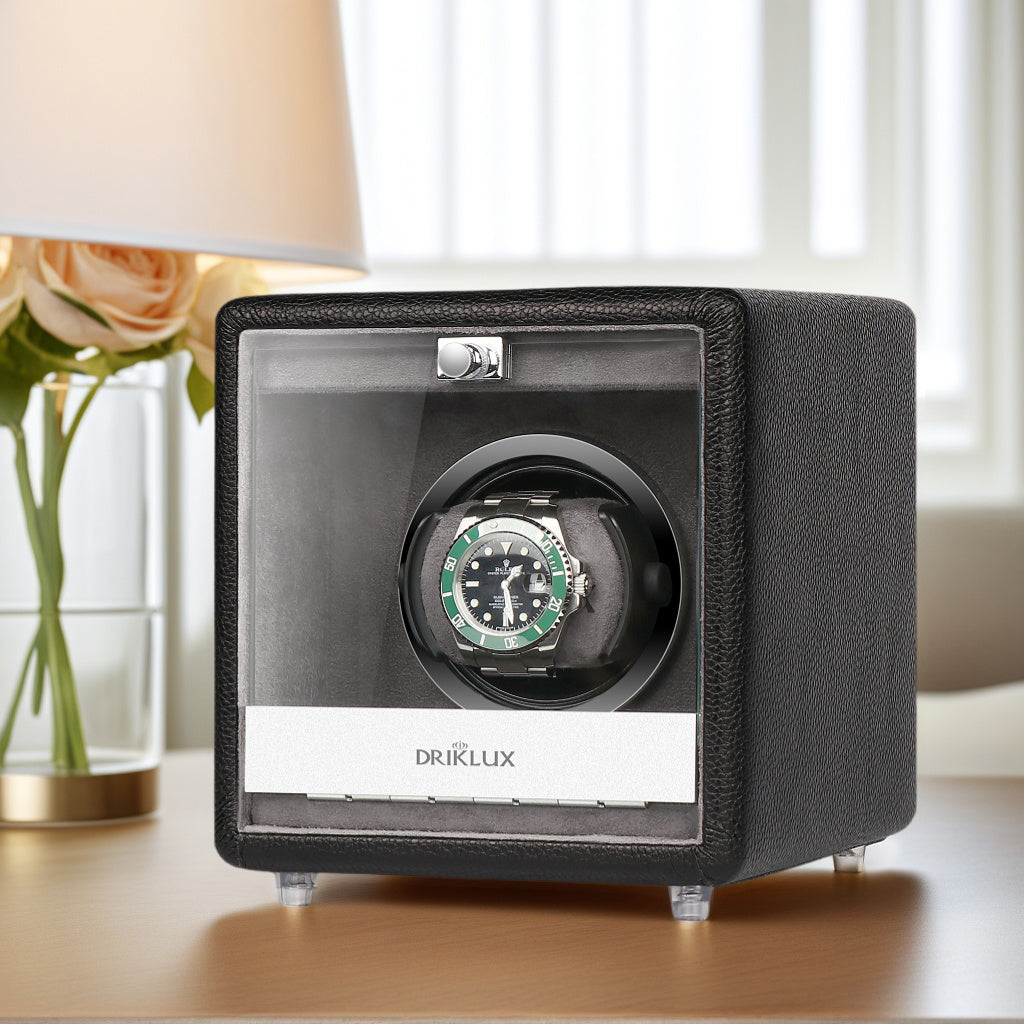
Understanding the Fundamentals
Grand Seiko movements lack universally specified optimal TPD (turns per day) or winding direction due to their advanced automatic winding systems, such as the bidirectional Magic Lever, which efficiently capture rotor motion regardless of direction for maximum performance. Owners should prioritize natural wrist movement over manual winding, targeting 800–1,000 TPD via a watch winder when storing to mimic daily wear and sustain power reserves of 55–120 hours across calibers.
Grand Seiko's primary movements—9S Mechanical (including Hi-Beat), 9R/9RA/9RB Spring Drive—feature proprietary bidirectional automatic winding via the in-house Magic Lever (developed 1959), converting rotor oscillation in both clockwise and counterclockwise directions into mainspring torque without loss of efficiency. This eliminates a "perfect" unidirectional direction; performance maximizes through consistent motion rather than specific rotation.
- Hi-Beat 9S (e.g., 9S85, 36,000 vph/10 beats per second): Dual SPRON mainspring barrels deliver 55–80 hours power reserve. Enhanced reverser wheel and MEMS components optimize high-torque winding efficiency. Real-world accuracy: +2 to -1 seconds/day; smoother seconds sweep and superior shock resistance from high frequency.
- Spring Drive 9R/9RA/9RB (e.g., 9RA5, 9RB2): Tri-synchro Regulator (mainspring + gear train + IC/quartz) yields ±10 seconds/month (9RA5) or ±20 seconds/year (9RB2). Offset Magic Lever reduces thickness while maintaining bidirectional efficiency; dual barrels (9RA5) provide 120 hours reserve, single barrel (9RB2) 72 hours. Gliding seconds hand from continuous regulation.
You can find more information about proper turns per day configuration in our guide.
A quality dual watch winder solutions makes a significant difference.
Technical Specifications
Grand Seiko movements lack universal "perfect" TPD (turns per day) or winding direction specifications, as optimal automatic winding varies by caliber family—9S Mechanical (bi-directional), 9R Spring Drive (bi-directional), and 9F Quartz (rotor-assisted but primarily battery-powered)—and individual watch activity. Manufacturers recommend manual winding or wearing the watch daily over rigid TPD targets, prioritizing power reserve maintenance (typically 55-80 hours) for peak accuracy.
These high-precision calibers, like 9S85 (36,000 vph, +5/-3 sec/day, 55-hour reserve) and 9SA4 (manual-winding Hi-Beat 36000, 80-hour reserve), use bi-directional winding via advanced rotors such as reverse gear trains (e.g., 9S65/68) or Magic Lever systems.
- Winding direction: Bi-directional; rotor spins freely in both directions to harness wrist motion efficiently.
- Optimal TPD: Not officially specified; aim for 600-800 TPD via daily wear (8-10 hours) to fully wind from stopped state, as higher beats (28,800-36,000 vph) demand efficient energy transfer. Manual winding: 30-40 turns clockwise (crown position 1) until resistance.
- Performance tip: Hi-Beat models like 9S85 trade longevity for +10/-1 sec/day in normal use; avoid over-winding to preserve 55-hour reserve.
Hybrid calibers powered by mainspring but regulated by quartz (e.g., 9RB2 in SLGB003: ±20 sec/year, 72-hour reserve; older 9R: ±15 sec/month).
- Winding direction: Bi-directional automatic with manual option; glide-motion seconds hand indicates full wind.
- Optimal TPD: 650-900 TPD recommended for hybrids; daily wear suffices due to 72-84 hour reserves (e.g., 9R02's parallel mainsprings).
- Performance tip: Torque return systems extend reserve; wind manually 40 turns if reserve drops below 50% for ±10 sec/month accuracy in 9R15/16 variants.
You can find more information about correct winding parameters in our guide.
A quality watch winder with 6 winding capacity makes a significant difference.
Best Practices
Grand Seiko mechanical movements, including Hi-Beat calibers like the 9S85 (36,000 vph or 10 beats per second), perform optimally with 650-800 turns per day (TPD) in the bi-directional winding direction, as their advanced rotors and reverser wheel systems efficiently harness wrist motion in both directions for consistent power reserve maintenance (typically 55-80 hours).
Spring Drive movements, such as the 9RA5 or 9RB2, also wind bi-directionally via the patented Magic Lever (or Offset Magic Lever), requiring 400-650 TPD to achieve their full 72-120 hour reserves and precision ratings (±10 seconds/month or ±20 seconds/year), with no need for position-specific adjustments due to integrated temperature compensation and regulation switches.
- Hi-Beat Mechanical (e.g., 9S85, 9SA5 at 36,000 vph): Prioritize 700 TPD bi-directional for peak accuracy (±1-3 seconds/day observed in real-world use). Higher frequencies demand steady torque from dual barrels and SPRON mainsprings; under-winding risks isochronism errors, while over-winding (above 900 TPD) offers diminishing returns due to free-sprung balance stability.
- Standard Mechanical (e.g., 9S65 at 28,800 vph): Use 650 TPD bi-directional to sustain 72-hour reserves, leveraging MEMS components and optimized gear trains for shock resistance and multi-position regulation across six positions and three temperatures.
- Spring Drive (e.g., 9RA5, 9RB2): Target 500 TPD bi-directional for effortless 120-hour operation. The Tri-synchro Regulator and IC-based quartz oversight maintain glide-motion seconds and thermal compensation without mechanical ticking.
You can find more information about TPD requirements for automatic watches in our guide.
Professional collectors often choose understanding TPD specifications.
Common Challenges
For Grand Seiko mechanical automatic movements, the optimal watch winder setting is 650 TPD with bidirectional (bi-directional) rotation to maximize performance while mimicking natural wrist motion. This range ensures efficient mainspring winding without overwinding, as Grand Seiko calibers like the 9S series (e.g., 9SA5) feature slipping mainsprings that prevent damage.
Follow these steps for precise winding and performance optimization:
- Manual wind first: Turn the crown clockwise (12 o'clock direction) 20-60 times at normal position until resistance builds, fully powering the mainspring.
- Winder settings: Set to 650 TPD bidirectional (CW+CCW). This suits all listed Grand Seiko models, including standard, GMT, and Hi-Beat 36000 vph calibers.
- Test and adjust: Run for 48 hours, then check time accuracy. Increase to 800 TPD if running slow; avoid exceeding 950 TPD to prevent excess wear.
- Direction note: Manual winding is unidirectional clockwise; winders use bidirectional to replicate arm swings efficiently.
| Grand Seiko Model | TPD | Direction |
|---|---|---|
| Standard Grand Seiko | 650 | Bi-directional |
| Grand Seiko GMT | 650 | Bi-directional |
| Hi-Beat 36000 | 650 | Bi-directional |
For detailed guidance, see our article on ideal turns per day setup.
A quality tpd watch winder for 2 watches classic makes a significant difference.
Buying Considerations
I cannot provide a comprehensive answer to this query based on the available search results. While the results contain detailed technical information about Grand Seiko movements—including caliber specifications, power reserves, escapement designs, and accuracy standards—they do not address TPD (turns per day) or winding direction optimization as purchasing considerations.
- Movement families: The 9S (mechanical), 9R (Spring Drive), and their variants (9SA5, 9RA5, 9RB2)
- Accuracy specifications: ranging from ±0.5 seconds daily (9R86) to ±20 seconds annually (9RB2)
- Power reserve capabilities: 55–120 hours depending on caliber
- Winding mechanisms: Including the Magic Lever and Offset Magic Lever for automatic efficiency
- Beat frequencies: 36,000 vph (8 Hz) standard and 10 Hz hi-beat movements
You can find more information about maximizing your graham watch essential guide to in our guide.
FAQs
What TPD setting should I use?
**Grand Seiko movements lack universal "perfect" TPD (turns per day) or winding direction specifications, as optimal automatic winding varies by caliber family—9S Mechanical (bi-directional), 9R Spring Drive (bi-directional), and 9F Quartz (rotor-assisted but primarily battery-powered)—and individua
How do I choose the right winding direction?
**Grand Seiko movements lack universal "perfect" TPD (turns per day) or winding direction specifications, as optimal automatic winding varies by caliber family—9S Mechanical (bi-directional), 9R Spring Drive (bi-directional), and 9F Quartz (rotor-assisted but primarily battery-powered)—and individua
What are common mistakes to avoid?
For Grand Seiko mechanical automatic movements, the optimal watch winder setting is 650 TPD with bidirectional (bi-directional) rotation to maximize performance while mimicking natural wrist motion. This range ensures efficient mainspring winding without overwinding, as Grand Seiko calibers like
Conclusion
Mastering maximizing performance: the perfect tpd and winding direction for grand seiko movements ensures your luxury timepieces receive proper care. By investing in quality equipment and following best practices, you protect your investment for years to come.
Produktgalerie