


Keeping Perpetual Calendars Safe During Daylight Saving Time Adjustments

Table of Contents
- Overview and Key Concepts
- Technical Specifications
- Expert Best Practices
- Common Challenges
- Buying Considerations
- FAQs
- Conclusion
For serious collectors, daylight saving time (DST) matters because it is one of the few routine moments when a highly complex watch can be nudged out of alignment if it is adjusted carelessly, especially if the piece is a perpetual calendar or combines calendar, moonphase, and time-zone complications. The core issue is not the one-hour DST change itself so much as the way owners interact
For detailed guidance, see our article on choosing the right watch winder.
Overview and Key Concepts
For serious collectors, daylight saving time (DST) matters because it is one of the few routine moments when a highly complex watch can be nudged out of alignment if it is adjusted carelessly, especially if the piece is a perpetual calendar or combines calendar, moonphase, and time-zone complications. The core issue is not the one-hour DST change itself so much as the way owners interact with the watch during that transition: incorrect setting, setting at the wrong time window, or forcing calendar functions can create avoidable risk.
A perpetual calendar is designed to account automatically for the varying lengths of months and leap years, but it still relies on a mechanical logic train that can be harmed by improper manual correction. Traditional perpetual calendars use pushers or crown-based correctors to set the day, date, month, and moonphase when the watch has stopped, and those correctors should be used carefully rather than hurriedly during a DST change. That is why collectors often treat DST weekend as a “do-not-rush” maintenance moment rather than a simple time reset.
The topic matters for collectors for three reasons:
- Mechanical fragility during correction: perpetual calendars are sophisticated systems with multiple linked indications, so forcing the calendar during vulnerable periods can stress the mechanism.
- Frequent owner interaction: DST happens twice a year in many markets, meaning even well-kept watches face repeated manual handling.
- High-value replacements and servicing: watches with perpetual calendar complications are often premium pieces, and unnecessary wear can turn a simple adjustment into a service bill or long-term damage risk.
For context, the DST transition itself is standardized in many countries as a one-hour shift forward in spring and back in autumn, and the repeated local hour during the fall transition can create confusion for both people and mechanical routines. In the United States, for example, DST begins on the second Sunday in March and ends on the first Sunday in November. That recurring schedule is why many collectors build a habit around checking their watch movement state before touching the crown or correctors.
Many collectors benefit from understanding selecting a quality watch winder.
Professional collectors often choose watch winder safe options.
Technical Specifications
A perpetual calendar should not be adjusted casually during DST changes unless the movement is expressly designed for crown-setting in both directions; for most traditional calibers, the safest method is to keep the watch running through the transition and correct only by the maker’s prescribed procedure if the calendar is already out of sync. The key risk is not daylight saving time itself, but forcing the mechanism during its changeover window, when the calendar train is already engaged and vulnerable to damage.
For a technical section, the most important point is that a perpetual calendar is built around a 1461-day mechanical memory—a four-year cycle that automatically accounts for 28-, 29-, 30-, and 31-day months, but usually still requires manual correction for centennial exceptions such as 2100. In practical terms, this means owners should avoid “quick-setting” the calendar around midnight and should instead move the hands to a safe setting zone before making corrections, then advance through midnight in the normal direction.
-
Movement architecture matters most. Classic perpetual calendars often use recessed case pushers that are operated with a correction pin, while newer systems can allow calendar correction through the crown.
-
Crown-only adjustment is safer and easier. Audemars Piguet’s calibre 7138, introduced in 2025, is highlighted for allowing calendar corrections forwards and backwards via the crown, which reduces the need for external correctors and makes DST-related setting less stressful.
-
Power reserve affects safety. A watch that stops during a DST weekend is more likely to need a full reset; examples include Jaeger-LeCoultre calibre 868 with 70 hours of power reserve and Frederique Constant FC-776 with 72 hours.
-
Case size influences usability. JLC’s Master Ultra Thin Perpetual Calendar in steel uses a 39 mm case with a 4.72 mm thick calibre and 21 mm lug width, which matters if you are matching it to a winder or strap system.
-
Water resistance and daily wear matter. Frederique Constant’s Classic Perpetual Calendar Manufacture is listed at 40 mm × 12.1 mm and 50 m / 30 m water resistance depending on variant, useful when comparing daily-wear suitability to more delicate dress-watch perpetuals.
-
Patek Philippe Caliber 26-330 S Q: Patek identifies this as a perpetual-calendar caliber in its calendar-watch family, and Patek also notes that most perpetual calendars require manual adjustment at the next centennial exception, including 2100.
-
Patek Philippe Caliber R TO 27 PS QR: another perpetual-calendar architecture used for higher-complication calendar watches.
-
Patek Philippe Caliber CH 29-535 PS Q: cited in collector coverage as a manually wound movement combining chronograph and ultra-thin calendar functions.
-
Rolex Caliber 5134 / 7134 family context: collector coverage notes the 5134 driving a perpetual calendar with a 41 mm case and a week counter in certain Rolex perpetual-calendar references.
-
Jaeger-LeCoultre Master Ultra Thin Perpetual Calendar: uses calibre 868, 70-hour reserve, 26 mm diameter, 4.72 mm thickness, and functions including day, date, month, year, moon phase, and perpetual calendar.
-
Frederique Constant Classic Perpetual Calendar Manufacture: powered by FC-776, with 72-hour reserve and functions covering day, date, month, leap year, and moon phase.
-
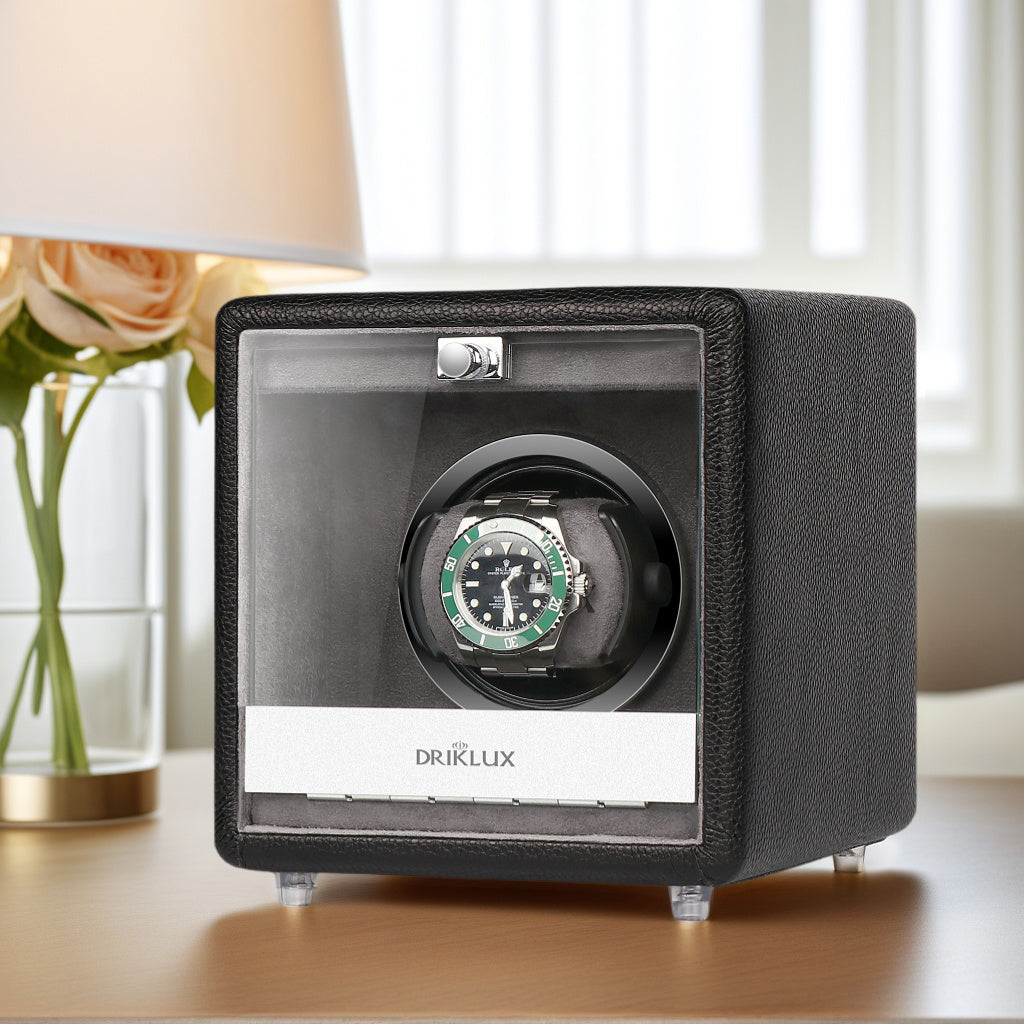
Rotor-driven perpetual calendars should be kept running on a winder if they are worn infrequently, because the complication is only “correct” when powered and synchronized.
-
For automatic perpetual calendars, a watch winder is most useful when the power reserve is modest or when the owner rotates among several watches; a winder reduces the need to reset day, date, month, moon phase, and leap-year indication.
-
If the watch has a flying crown correction system or crown-only calendar setting, the winding profile should be gentle and the watch should be seated securely so the crown is not stressed during rotation.
-
If the movement uses case pushers, avoid any case pressure from a tight watch box insert or poorly sized winder cushion, because recessed correctors and thin case walls are more vulnerable to impact during handling.
For detailed guidance, see our article on watch winder buying guide.
A quality protecting your watch collection makes a significant difference.
Expert Best Practices
Perpetual calendars are safest during DST changes when you avoid unnecessary manual setting and verify the watch’s date-change logic before the time shift. The key habit is to only adjust the time if your watch is not in its sensitive changeover window, because perpetual calendars are mechanically coordinated to advance date, day, month, leap-year indication, and often moonphase together.
For a collector-focused approach, the safest practice is to treat DST as a time-only adjustment, not a calendar reset. U.S. DST changes occur at 2:00 a.m. local time on the second Sunday in March and the first Sunday in November, which means the hour you should be most cautious about is the late-night/early-morning transition window when many calendar mechanisms are moving or about to move. Even if your watch is not a perpetual calendar, calendar watches can be stressed if you try to correct them while the movement is in its date-change zone; that same caution is even more important for perpetuals.
A practical rule used by experienced collectors is:
-
Do not quickset the calendar during the changeover zone.
For many mechanical calendars, the unsafe period is roughly from late evening to after midnight, when gear trains begin preparing the date change. If you are unsure of the caliber’s exact safe zone, assume the broadest caution and avoid all calendar corrections near midnight. -
If you only need to change the hour for DST, set the hands by moving them forward in the direction of normal operation.
This is the least disruptive approach for most modern automatic watches and avoids forcing the calendar backward.
For detailed guidance, see our article on how to choose a watch winder.
Consider a secure watch storage solutions for optimal results.
Common Challenges
Perpetual calendars are vulnerable to human error during DST adjustments, not to DST itself, because the mechanism is already programmed for leap years and month lengths; the real risk comes when owners try to change the time at the wrong moment or with the wrong crown/pusher sequence. The safest approach is to treat the DST change as a time-setting event, not a calendar-setting event, and to use a proper winder and the manufacturer’s reset procedure if the watch has stopped.
-
Changing the date or calendar while the mechanism is in the danger zone
Many perpetual calendars have a restricted window, often around late evening, when the date-change train is partially engaged; forcing calendar corrections then can damage gears, levers, or corrector switches. The fix is to consult the watchmaker’s instructions and only adjust the calendar outside the unsafe range, typically using the watch’s recommended “safe” hours and correction order.
-
Trying to “fix” DST by advancing the calendar instead of the hands
DST changes require moving the time forward or backward, not altering the date display manually. If you correct the date to match the clock during the switchover, you can desynchronize the perpetual calendar logic and create extra wear.
-
Using the wrong correction sequence after the watch stops
A perpetual calendar that has run down often needs a precise reset order for day, date, month, moonphase, and time; skipping steps can leave the calendar partially misaligned. The solution is to follow the manufacturer’s reset sequence exactly, or let a certified watchmaker reset it if the layout is unusually complex, such as on multi-register or roller-based calendars.
-
Forgetting that some perpetual calendars are wound enough to keep running, but not enough to stay accurate
A watch can have power reserve left and still be close to stopping, which makes the calendar more prone to sluggish engagement. Keeping it on a quality winder helps maintain motion and reduces the number of full resets after inactivity.
Many collectors benefit from understanding watch winder selection tips.
A quality watch winder security features makes a significant difference.
Buying Considerations
Daylight Saving Time (DST) creates a unique challenge for watch enthusiasts: while digital devices adjust automatically, mechanical watches with perpetual calendars (which track leap years and month lengths) do not. In fact, adjusting a perpetual calendar twice a year for DST can be mechanically risky if the watch lacks a specific "DST-safe" mechanism.
This guide focuses on acquiring watches that either automatically handle DST or are engineered to minimize the risk of damage during manual adjustments, ensuring your perpetual calendar remains accurate and intact.
A perpetual calendar is a complex mechanism that accounts for 31-day, 30-day, 28-day months, and leap years.
- The Risk: If your watch does not have a dedicated DST lever, you must manually advance the calendar by one hour (or one day, depending on the mechanism) twice a year.
- The Danger: Forcing the calendar mechanism when the watch is not in a "safe" state (e.g., between 1:00 AM and 3:00 AM) can jam the gears or break the date wheel.
- The Solution: Buy a watch with a World Time/DST mechanism (like the Bovet Récital 28) or a Perpetual Calendar with a DST-safe correction system (common in high-end Swiss brands).
For detailed guidance, see our article on finding the perfect watch winder.
FAQs
What should I know about Keeping Perpetual Calendars Safe During Daylight Saving Time Adjustments?
For serious collectors, daylight saving time (DST) matters because it is one of the few routine moments when a highly complex watch can be nudged out of alignment if it is adjusted carelessly, especially if the piece is a perpetual calendar or combines calendar, moonphase, and time-zone complications. The core issue is not the one-hour DST change itself so much as the way owners interact with the watch during that transition: incorrect setting, setting at the wrong time window, or forc
What are the most common mistakes to avoid?
-
Keep a movement-specific reset guide handy
Perpetual calendars vary widely in architecture, from traditional corrector-pusher layouts to more unusual systems like Bovet’s roller-based calendar displays. A reset guide, or a note from your watchmaker, saves time and prevents mistakes when the watch needs full restoration after inactivity.
What should I consider when buying?
- Ask for the "DST Lever": When inquiring about a watch, ask: "Does this perpetual calendar have a dedicated DST adjustment lever, or must it be manually corrected?"
- Verify the Power Reserve: Perpetual calendars consume significant energy. Ensure the watch has a minimum 72-hour power reserve (Bovet has 10 days) to prevent the calendar from stopping during DST transitions.
- Check the Service History: If buying a vintage perpetual calendar, ensure it has been serviced by
Conclusion
Mastering keeping perpetual calendars safe during daylight saving time adjustments ensures your luxury timepieces receive proper care. By investing in quality equipment and following best practices, you protect your investment for years to come.
Further Reading
For deeper understanding of the topics covered in this guide, explore these authoritative resources:
- 7 tips to get ahead of daylight saving time - Assembled — assembled.com
- Daylight Saving Time — aa.usno.navy.mil
- Outlook calendar events do not adjust for when Daylight Savings ... — learn.microsoft.com
Product Gallery