


Auction House Preparation: Why Maintaining Watch Power Reserve Proves Movement Health Before Sale

Table of Contents
- Overview and Key Concepts
- Technical Specifications
- Expert Best Practices
- Common Challenges
- Buying Considerations
- FAQs
- Conclusion
Maintaining a watch's power reserve is a critical proof of movement health for auction preparation, as it directly signals the mainspring's efficiency, lubrication integrity, and absence of internal resistance—key indicators that auction houses like Christie's and Sotheby's scrutinize to justify top-dollar bids on pieces like Rolex Submariner or Daytona models.
Many collectors benefit from understanding choosing the right watch winder.
Overview and Key Concepts
Maintaining a watch's power reserve is a critical proof of movement health for auction preparation, as it directly signals the mainspring's efficiency, lubrication integrity, and absence of internal resistance—key indicators that auction houses like Christie's and Sotheby's scrutinize to justify top-dollar bids on pieces like Rolex Submariner or Daytona models.
A consistent power reserve—typically 40-72 hours for modern automatics—demonstrates that the watch has been actively kept wound, preserving oils and preventing the dry starts that accelerate wear on components like the escapement and balance wheel. For collectors prepping for auction, a watch that reliably hits its spec (e.g., 70 hours on a Rolex Caliber 3235 in a Datejust 41) reassures buyers of low service needs, potentially boosting value by 10-20% over serviced but undocumented pieces. Neglect shows in shortened reserves from debris, magnetization, or poor habits, flagging hidden issues that pros detect via timing tests. This topic is vital because auctions demand provenance of care: a "weekend-proof" 60+ hour reserve (common in Omega Co-Axial or newer ETA-based calibers) proves rotation-friendly maintenance without stops that stress the movement.
Understand your watch's spec to benchmark health—auction experts cross-reference against factory claims:
| Caliber Example | Model Fit | Standard Reserve | Auction Implication |
|---|---|---|---|
| Rolex 3135 | Submariner Date | 48 hours | Reliable daily driver; full reserve post-storage signals no mainspring slippage. |
| Rolex 3235 | Datejust 41 or Explorer II | 70 hours | "Weekend-proof"; ideal for collectors rotating pieces—proves superior barrel efficiency. |
| ETA 2824-2 (base for many indies) | Custom builds or serviced Daytonas | 38-42 hours | Industry baseline; underperformance hints at overdue service, docking bids. |
| Longines L888 | Heritage models | **64 hours | Extended reserve from low-vibration (25,200 vph); auction favorite for value retention. |
Shorter reserves (e.g., under 36 hours) often trace to mechanical drag, like date-change power draws halting the watch overnight—a red flag for resistance in unserviced movements.
You can find more information about maintaining your automatic watch in our guide.
Professional collectors often choose single watch winder options.
Technical Specifications
Maintaining a watch's power reserve—the duration a fully wound mechanical movement runs before stopping, typically 38-80 hours—demonstrates optimal mainspring tension, gear train lubrication, and escapement efficiency to auction houses like Christie's or Sotheby's, signaling a healthy caliber ready for expert scrutiny without red flags like inconsistent runtime or erratic indicators.
Auction appraisers prioritize watches arriving with near-full power reserve (e.g., 90-100% on indicators), as it evidences recent servicing and avoids issues like mainspring slippage or dry pivots that could slash bids by 10-20% on high-value lots. A Rolex Submariner ref. 124060 (Caliber 3230, 70-hour reserve) fully wound to 68-70 hours runtime proves the free-sprung balance and Parachrom hairspring perform without torque loss, unlike a depleted reserve hinting at overdue maintenance. Similarly, a Daytona ref. 126500 (Caliber 4131, 72-hour reserve) at full capacity showcases chronograph reliability, critical for lots fetching $50,000-$150,000, where buyers demand verified health via timed run-down tests.
Longer reserves correlate with superior engineering: reduced balance frequency (e.g., 3Hz vs. 4Hz) minimizes energy draw while extending mainsprings, as in Longines' Powermatic 80 (80 hours), TUDOR Black Bay 58 (70 hours, Caliber MT5402), or Omega Seamaster (60+ hours, Co-Axial Master Chronometer). Manual-wind pieces like IWC Big Pilot (Caliber 52110, 7-day/168-hour reserve) demand hand-winding to 40 turns for proof of barrel efficiency, preventing low bids from perceived neglect.
| Model Reference | Caliber | Power Reserve | Key Specs | Auction Relevance |
|---|---|---|---|---|
| Rolex Submariner 124060 | 3230 | 70 hours | 28,800 vph, 31 jewels, 4Hz balance; bidirectional rotor | Proves Paraflex shock resistance; full reserve avoids service deductions on $10,000-$20,000 bids |
| Rolex Daytona 126500 | 4131 | 72 hours | 28,800 vph, 31 jewels, vertical clutch | Confirms chronograph torque; essential for $50,000+ lots |
| Rolex Datejust 126300 | 3235 | 70 hours | 28,800 vph, 31 jewels, Chronergy escapement | Demonstrates 15% efficiency gain; ideal for $8,000-$15,000 sales |
| Longines Spirit | Powermatic 80 | 80 hours | 21,600 vph (3Hz), larger mainspring | Lower frequency extends runtime; buffers rotation for collectors |
| TUDOR Black Bay 58 | MT5402 | 70 hours | 28,800 vph, COSC-certified, silicon hairspring | Weekend-proof for non-daily wear; boosts mid-$10,000 bids |
| IWC Big Pilot | 52110 | 168 hours (7 days) | Dual barrels, Pellaton winding | Marathon reserve proves robustness; premium for $20,000-$40,000 auctions |
Measurements: Standard mainsprings measure 0.1-0.15mm thick x 20-30cm long in dual-barrel setups; power indicators use linear cams tracking 38-120 hour scales, with inconsistencies (e.g., hopping hands) signaling 20-30% torque loss from poor lubrication.
Many collectors benefit from understanding selecting a quality watch winder.
A quality proper watch care techniques makes a significant difference.
Expert Best Practices
Maintaining full power reserve in your luxury watch—typically 36-48 hours for manual-wind movements like the Rolex Caliber 3135 in a Submariner or 70+ hours in modern automatics like the Caliber 3235 Datejust—directly signals a healthy movement to auction houses such as Christie's or Sotheby's, where buyers scrutinize runtime as proof of mechanical integrity before bidding on pieces fetching $20,000-$500,000.
Auction experts and collectors prioritize watches that hold advertised power reserve because it reveals underlying issues like mainspring creep (common in older Rolex Daytonas), magnetization, or worn components—problems that can slash resale value by 20-40% if undetected. A fully wound Caliber 4130 chronograph in a Daytona, for instance, should run 72 hours off the wrist; failure indicates service needs, eroding buyer confidence and potentially dropping hammer prices on a steel model from $40,000 to under $30,000. Pre-sale checks at auction houses often include timing machines verifying reserve, demagnetization tests, and visual inspection of the balance wheel—failing these flags "needs service," deterring premium bids.
Experienced collectors like those on RolexForums and independent watchmakers emphasize proactive maintenance to showcase reserve:
-
Daily Winding Routine: For manual-wind pieces (e.g., vintage Rolex Oyster Perpetual), wind clockwise 30-40 turns each morning until resistance, face-up to protect the stem—ensures consistent 36-48 hour reserve. Automatics like the Submariner self-wind via rotor but benefit from initial hand-winding for full mainsprings, preventing short runtime when stored.
-
Use a Quality Watch Winder: Rotate non-worn watches to mimic wrist motion, preserving reserve without overwinding (modern movements slip automatically). Recommendations:
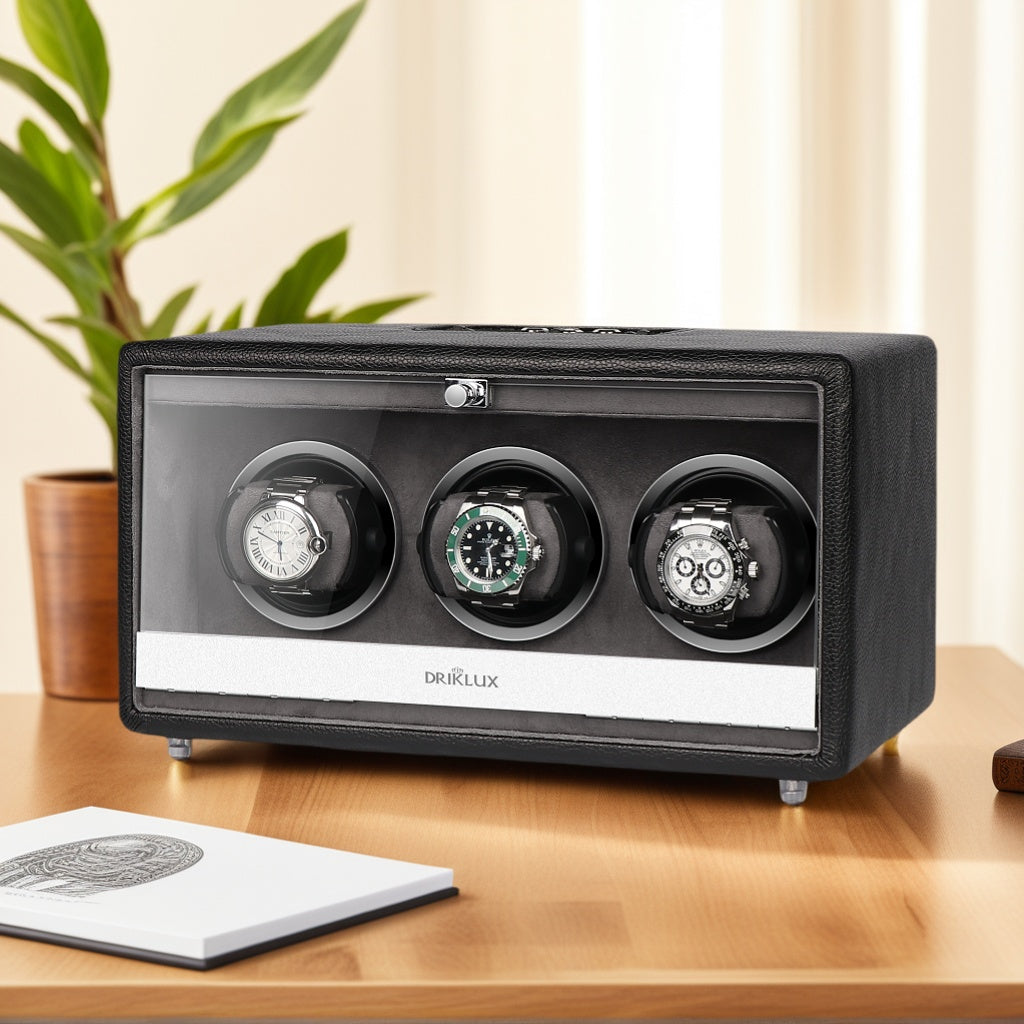
Brand/Model Price Range Key Features for Auction Prep Best For Wolf Heritage Single $200-$350 650-900 TPD, bi-directional, leather interior Rolex Cal. 3135/3235 (Submariner, Datejust) Orbita Siena $400-$600 Programmable TPD (matches Rolex 650), quiet rotor High-value Daytonas, prevents mainspring creep Driklux $86-$250 Portable, brand-specific programs (e.g., Rolex) Collectors rotating single or multiple pieces
Set to manufacturer TPD (turns per day): Rolex 650, Patek Philippe 800—run 8-12 hours daily to maintain reserve without excess wear.
For detailed guidance, see our article on watch winder buying guide.
Professional collectors often choose watch winder with 6 winding capacity.
Common Challenges
Maintaining a full power reserve—typically 36-48 hours for manual-wind movements like the Rolex Caliber 3135 in a Submariner or Datejust, or up to 70 hours in modern upgrades like the Caliber 3235—directly signals movement health to auction houses such as Christie's or Sotheby's. Buyers and appraisers scrutinize this via timing machines; a weak reserve flags underlying issues, potentially slashing resale value by 20-40% on models like a Daytona (ref. 116500LN, fetching $30,000-$50,000 at auction). Here are the most frequent problems, rooted in collector experiences and service guides, plus targeted solutions.
-
Why it happens: Often "mainspring creep," where the mainspring slips, common in Rolex automatics like Caliber 3135 after heavy use. Active wearers (e.g., golfers or pilots) may not generate enough rotor action, or magnetization disrupts the balance wheel.
- Auction impact: Appraisers test fully wound watches; failure here suggests service overdue, eroding trust and value on high-stakes lots.
- Solution: Demagnetize first—free at most watchmakers—before full service. Use a Wolf single watch winder ($150-$230) set to 650-800 TPD (turns per day) matching your caliber's rotor direction (e.g., bi-directional for Rolex). Wind manually 30-40 crown turns daily until resistance, then wear actively. Service every 3-5 years; expect $800-$1,200 for Rolex.
-
Why it happens: Automatics like those with ETA 2824 or Sellita SW200 calibers lose reserve if not pre-wound before winder use, or if seals degrade, mimicking low power.
- Auction impact: Houses like Phillips run 24-72 hour reserve tests; inconsistent performance hints at lubrication breakdown, devaluing pieces by up to 40%.
- Solution: Invest in a premium winder like Orbita Siena ($500-$800) with programmable TPD for precise simulation of wrist motion—avoid cheap models under $50 that over-spin and wear bearings. For storage, fully wind via crown first, then winder. Document with service papers from authorized centers (e.g., Rolex Service Center) to prove health.
-
Why it happens: Collectors forget daily winding on manual movements like the Rolex Caliber 1030 in vintage Datejusts, leading to full depletion and perceived "dead" movements.
- Auction impact: Manual winds must show full 36-48 hour reserve; stops signal potential pivot wear, tanking bids on rarities ($10,000-$25,000 range).
- Solution: Wind clockwise face-up, once daily when low, stopping at resistance—never force. Pair with Everest Bands travel case winders ($100-$200) for on-the-go maintenance. Pre-auction, get a regulation check; aim for +6/-4 seconds/day accuracy.
-
Why it happens: Proximity to phones/magnets affects hairspring in calibers like Omega Co-Axial 8500 or Rolex 3235, causing fast/slow rates and apparent reserve loss.
- Auction impact: Timing reports are mandatory; deviations flag neglect, reducing premiums on steel sports models (e.g., Submariner no-date at $15,000-$20,000).
- Solution: Demagnetize immediately (under $50), then test reserve on a winder like Driklux E series ($189-$500). Avoid home magnets; service if persists, including water resistance pressure test.
For detailed guidance, see our article on optimal TPD settings for your watch.
Consider a essential watch maintenance tips for optimal results.
Buying Considerations
Power reserve performance is the single most reliable indicator of mechanical movement integrity before auction, revealing whether a watch's mainspring, gear train, and escapement are functioning optimally or require costly intervention. When a collector or auction house evaluates a timepiece, a watch that maintains its specified power reserve—whether 38 hours for a Seiko NH35 movement or 70+ hours for a Rolex Caliber 3235—demonstrates that the movement has been properly maintained and hasn't accumulated the wear that necessitates imminent service.
For auction preparation, this distinction matters enormously. A Submariner or Datejust arriving at Christie's or Sotheby's with documented full power reserve commands premium pricing because buyers recognize it as proof of movement health. Conversely, a luxury sports watch—say a Daytona with Caliber 4130—that runs down in 30 hours instead of its rated 72 hours signals potential mainspring degradation, worn pivots, or contaminated lubricant, immediately triggering buyer concerns about hidden service costs.
Auction specialists use power reserve testing as a non-invasive diagnostic tool before lot acceptance. A watch that maintains 80-90% of its rated reserve over a full power-down cycle indicates the movement requires no immediate service, while one that drops below 80% suggests the mainspring may have lost elasticity or the gear train has accumulated wear. This distinction directly affects lot estimates and buyer confidence.
The practical reality: A Rolex GMT-Master II with full Caliber 3235 power reserve (approximately 70 hours) might be cataloged with an estimate of $12,000-$16,000, while an identical reference with compromised reserve could be valued $2,000-$4,000 lower due to anticipated service costs.
Before consigning your watch, establish baseline performance using this methodology:
Many collectors benefit from understanding how to choose a watch winder.
FAQs
What should I know about Auction House Preparation?
Maintaining a watch's power reserve is a critical proof of movement health for auction preparation, as it directly signals the mainspring's efficiency, lubrication integrity, and absence of internal resistance—key indicators that auction houses like Christie's and Sotheby's scrutinize to justify top-dollar bids on pieces like Rolex Submariner or Daytona models.
What are the most common mistakes to avoid?
-
Why it happens: Often "mainspring creep," where the mainspring slips, common in Rolex automatics like Caliber 3135 after heavy use. Active wearers (e.g., golfers or pilots) may not generate enough rotor action, or magnetization disrupts the balance wheel.
- Auction impact: Appraisers test fully wound watches; failure here suggests service overdue, eroding trust and value on high-stakes lots.
- Solution: Demagnetize first—free at most watchmakers—before full service. Use a
What should I consider when buying?
For watches you plan to consign within 30 days, consider using a Wolf Vaults or Orbita watch winder ($150-$400 range) to maintain consistent power reserve during the pre-auction period. This prevents the watch from stopping completely, which can cause mainspring "set" (permanent loss of elasticity) and artificially depress reserve readings when the auction house tests the movement. A watch that's been dormant for months may show 10-15% lower reserve than its true capability simply due to lub
Conclusion
Mastering auction house preparation: why maintaining watch power reserve proves movement health before sale ensures your luxury timepieces receive proper care. By investing in quality equipment and following best practices, you protect your investment for years to come.
Further Reading
For deeper understanding of the topics covered in this guide, explore these authoritative resources:
- From The Comments: Practical Power Reserves And Nothing Less — aBlogtoWatch
-
How to Prepare Your Luxury Watch for Sale | Step-by-Step Guide — the1916company.com
Product Gallery